
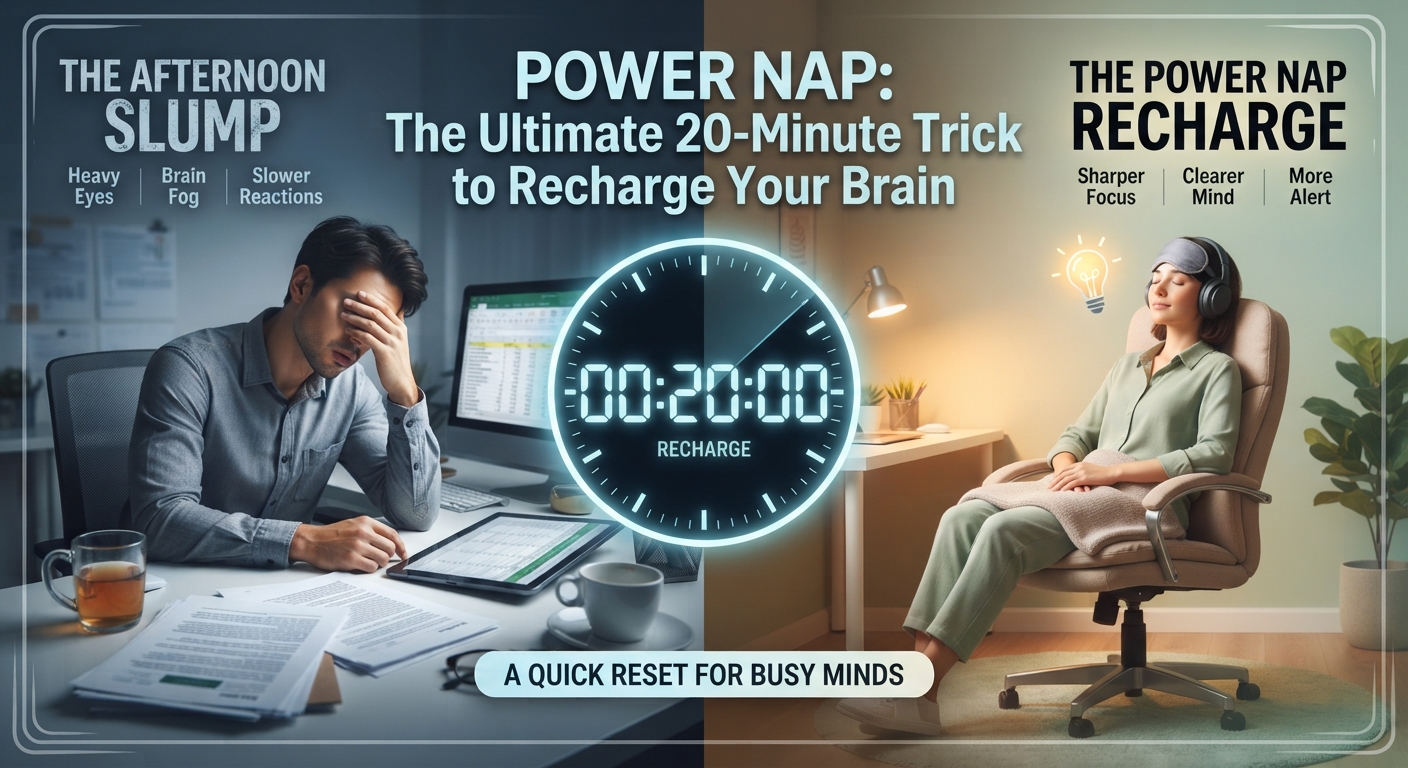
It is the middle of the afternoon. Your lunch has settled, your screen has started to blur, and you have just read the same sentence three times. Your tea is cold, and so is your motivation.
Sound familiar?
Most of us fight this slump by pushing through. We grab another cup of coffee or a sugary snack and hope for the best. But what if the smartest fix was something simpler, cheaper and surprisingly quick?
Enter the power nap.
It will not turn you into a different person, but done right, it can leave you sharper, calmer and more alert within minutes. And you do not need a bed, a special pillow or a free afternoon to try it.
In this guide, we will look at what a power nap really is, six signs your body is asking for one, what happens in your brain while you doze, and exactly how to take the perfect nap. Let’s wake up your afternoon.
So, What Exactly Is a Power Nap?
A power nap is a short sleep during the day, usually lasting about 10 to 20 minutes. The goal is not to sleep for hours. The goal is a quick reset, and that is why a power nap suits busy schedules so well.
Here is what makes it different from a regular nap:
- It is short, usually 10 to 20 minutes, and sometimes up to 30.
- It is taken during the day, ideally in the early afternoon.
- It keeps you in light sleep, so waking up feels easy.
- It is meant to boost alertness, not to replace a full night of sleep.
That last point matters. A power nap is a helpful extra, not a substitute for proper rest. Most adults need at least 7 hours of sleep each night, and no nap can fully make up for weeks of short nights.

Think of it like charging your phone for a few minutes when the battery is low. It will not give you a full charge, but it can get you through the next few hours.
The best part is how little it asks of you. There is nothing to buy, nothing to learn and no special skill involved. If you can close your eyes for a few minutes, you can do this.
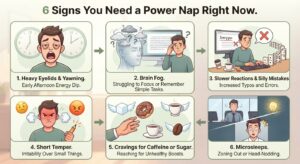
6 Signs You Need a Power Nap Right Now
Wondering whether you are due for one? These six signs are the most common clues.
1. Heavy eyelids and constant yawning. This hits many people in the early afternoon, when the body naturally feels sleepy.
2. Brain fog. You reread the same paragraph, forget why you walked into a room or struggle to focus on simple tasks.
3. Slower reactions and silly mistakes. Typos, dropped items and missed details start piling up.
4. A short temper. Tired brains are irritable brains. Small things suddenly feel big.
5. Cravings for caffeine or sugar. You keep reaching for snacks or drinks just to stay awake.
6. Microsleeps. You zone out for a few seconds, your head nods, or you suddenly “come back” in the middle of a meeting or a movie.
If you notice a few of these signs now and then, a quick nap can help. If they show up every single day, even after a full night of sleep, it may point to a sleep problem, and a doctor should take a look.
Who Gets the Most Out of a Power Nap?
Almost anyone can try one, but some people notice the difference more than others.
- Students. Long study sessions drain focus, and a short rest helps the brain take in new material.
- Office workers. Hours in front of a screen make the early afternoon dip hit hard.
- Parents of young children. Broken nights are common, and a quick daytime reset can take the edge off.
- Shift workers and drivers. Irregular hours make alertness a safety issue, not just a comfort issue.
- Athletes. Rest supports recovery, and a short nap before training can help you feel fresher.
The common thread is simple, and it has nothing to do with age or job title. If your day demands focus and your sleep is imperfect, a power nap is a handy tool to have.
What Happens in Your Brain During 20 Minutes of Sleep?
Sleep is not one single state. Your brain moves through stages, starting with light sleep and slowly dropping into deep sleep. One full cycle lasts around 90 minutes and includes light sleep, deep sleep and dreaming sleep, known as REM.
A power nap works because it stops early. In 10 to 20 minutes, you only visit the lighter stages. That is enough to calm your mind and clear some of the mental tiredness, yet shallow enough that you can wake up easily.
Cross into deep sleep, though, and trouble starts. Waking up from deep sleep can leave you with sleep inertia, the dazed, heavy and slightly confused feeling that can last from a few minutes to half an hour.
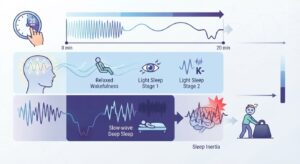
Ever napped for an hour and felt worse afterward? That was sleep inertia at work. It is exactly why the length of your power nap matters so much.
There is one more detail worth knowing. People who are already very sleep deprived tend to feel sleep inertia more strongly and for longer. So if you are running on empty, give yourself a little extra time to wake up before you jump into anything demanding.
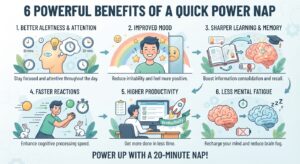
6 Powerful Benefits of a Quick Nap
Research links short daytime naps with a long list of benefits:
- Better alertness and attention. This is the most reliable benefit of all.
- Improved mood. A short rest can take the edge off irritability and stress.
- Sharper learning and memory. Sleep helps your brain process what it has just taken in.
- Faster reactions. Useful for drivers, students, athletes and anyone doing precise work.
- Higher productivity. Many people work faster and make fewer errors after a rest.
- Less mental fatigue. A short break clears out the mental clutter.
A well known NASA study of long haul pilots found that a nap of about 26 minutes improved performance by 34 percent and alertness by 54 percent. Those pilots did high pressure, high focus work, so the results show just how valuable a short rest can be.
The 20 Minute Rule: Why Shorter Beats Longer
Here is the golden rule of napping: keep it short.
Researchers have compared different nap lengths, and the sweet spot keeps landing in the same place. One often cited study tested naps of 5, 10, 20 and 30 minutes. Among those lengths, the 10 minute nap gave the quickest and strongest boost in alertness and thinking, with benefits lasting for a couple of hours.
The Sleep Foundation notes that a nap shorter than about 20 minutes can improve alertness and performance right away, with little or no grogginess after waking (source). sleepfoundation
Here is how different lengths compare:
- 10 to 20 minutes: the sweet spot. Quick, refreshing and easy to wake from.
- 30 to 60 minutes: the grogginess zone. You may slip into deep sleep and wake up foggy.
- 90 minutes: a full sleep cycle. You wake from lighter sleep, but it takes more time and can affect your night.
If you are badly short on sleep, a 90 minute nap can help. For everyday energy, though, 20 minutes is plenty.
A useful habit is to treat your first power nap as an experiment. Try 15 minutes one day and 20 the next, then notice how you feel an hour later. Your body will tell you which length suits you best.
When Is the Best Time for a Power Nap?
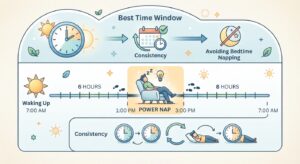
Timing matters almost as much as length. Most people feel a natural dip in energy in the early afternoon, so that is usually the best window for a power nap.
Here is a simple guide:
- Aim for the early afternoon, ideally before about 3 PM.
- Keep it consistent. Napping at the same time each day trains your body.
- Avoid napping close to bedtime, since it can make falling asleep harder at night.
If you wake up very early or work night shifts, base your timing on your own day. A good nap usually comes about six to eight hours after you wake up.
Also think about your schedule. A quick nap during a lunch break is easy to protect, while a nap squeezed in right before an important meeting leaves no room to wake up properly. Give yourself at least ten minutes after the alarm before you need to perform.
How to Take the Perfect Power Nap: A Step by Step Guide
You do not need anything fancy. Just follow these steps:
- Set a timer for 20 minutes. This lets you relax without worrying about oversleeping.
- Find a quiet, dim spot. A bed, sofa, reclined chair or even a parked car (in a safe place) will do.
- Silence your notifications. Keep only the alarm.
- Cover your eyes. An eye mask or a scarf blocks light and helps you drift off faster.
- Get comfortable. Loosen tight clothing and keep a light blanket nearby, because your body temperature dips slightly as you doze.
- Slow your breathing. Breathe in for four counts, out for six, and let your thoughts float by.
- Do not force sleep. If it does not happen, lying quietly with your eyes closed can still feel restful.
- Get up as soon as the alarm rings. Skip the snooze button.
When you wake, splash water on your face, drink a glass of water and step into natural light. That helps shake off any leftover grogginess.
No bed at work? No problem. Many people take a power nap in a quiet meeting room, in a reclined chair, or even in the car during a lunch break. Use headphones with soft sounds if the surroundings are noisy, and let a colleague know where you are if that suits your workplace.
Power Nap vs Coffee vs Energy Drinks: Which Wins?
When tiredness hits, most people reach for caffeine first. It works for a while, but it only covers up sleepiness instead of reducing it. Too much can also leave you jittery, anxious and unable to sleep at night.
A power nap works differently. It gives your brain a short stretch of actual rest, which is what it was asking for in the first place. There is no crash afterward, no sugar and no cost.
That does not mean you have to choose one or the other. Used wisely, both can work together, as the next section shows. Just remember that if you need three coffees and a sugary drink to get through the day, your body is probably asking for more sleep, not more stimulants.
The Coffee Nap: Double the Energy
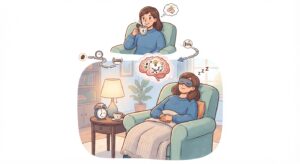
This one sounds backwards, but it works for many people. You drink a cup of coffee, then take your power nap right away.
Why does it work? Caffeine takes roughly 20 minutes to be absorbed and start working. So by the time your alarm rings, the caffeine is kicking in just as the nap clears your tiredness. Some studies suggest the combination reduces sleepiness better than either one alone.
A few tips:
- Drink the coffee quickly, not slowly over an hour.
- Keep the nap to about 20 minutes.
- Avoid caffeine within about eight hours of bedtime.
This trick is not for everyone. If you are sensitive to caffeine, pregnant or have a heart condition, ask your doctor first.
5 Power Nap Mistakes That Ruin Your Rest
Even a good habit can backfire. Watch out for these common errors:
- Sleeping too long. Anything beyond 30 minutes risks sleep inertia.
- Napping too late. A nap at 6 PM can steal sleep from your night.
- Hitting snooze. Those extra minutes often push you into deeper sleep.
- Napping in a bright, noisy place. You will spend half the time just trying to relax.
- Covering for chronic short nights. If you rely on naps every day because you sleep too little at night, fix the night first.
Who Should Be Careful With Naps?
Naps help many people, but they are not right for everyone.
- People with insomnia. Daytime naps can make it harder to sleep at night, so a doctor may advise skipping them.
- Anyone who needs long naps every day. Constant sleepiness, even after enough sleep, can point to conditions such as sleep apnea. Get checked.
- Frequent long nappers. Some research links regular naps longer than an hour with health risks, although this may reflect poor night sleep or existing health problems rather than the naps themselves.
One more safety point. If you feel drowsy while driving, do not push on. Pull over somewhere safe and take a short nap. Drowsy driving is dangerous.
A Global Habit: Naps Around the World
The idea of a daytime rest is far from new. In Spain and many Latin American countries, the siesta is a long standing tradition. In Japan, there is a custom called inemuri, where dozing briefly during the day is often seen as a sign of hard work instead of laziness.
Many Muslim communities also follow qailulah, a short rest around midday, which is very close in spirit to a modern power nap. And Winston Churchill was famous for his afternoon naps, which he treated as part of his daily routine.
Different cultures, same idea: a short pause can make the rest of the day better.
It is also worth noticing how each tradition treats the nap. It is not a punishment or a luxury. It is a normal part of the day, planned and respected. Modern workplaces that make room for a short rest are simply catching up with an old and sensible habit.
3 Power Nap Myths You Can Stop Believing
Myth 1: Napping is lazy. In reality, a power nap is a recovery tool, much like stretching after exercise. Even the NASA study above used it to improve performance in demanding jobs.
Myth 2: The longer the nap, the better. Not so. Longer naps often bring grogginess, and they can disturb your night.
Myth 3: You must fall fully asleep for it to work. Falling asleep gives the biggest boost, but a quiet rest with your eyes closed can still help you feel calmer.
How to Build a Power Nap Habit That Sticks
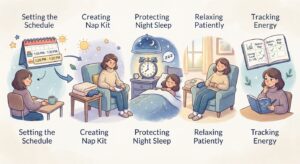
Like any new routine, a nap habit works best when it is easy and predictable.
- Pick a fixed slot. For example, right after lunch, so it becomes automatic.
- Prepare your kit. Keep an eye mask, earplugs and a small blanket in one place.
- Protect your night first. Go to bed at a reasonable hour and keep a steady wake up time.
- Track how you feel. Note your energy before and after for a week. The pattern will show you whether the nap is helping.
- Be patient. The first few tries may feel awkward. Your body needs time to learn that this short pause is safe and routine.
If you notice that your power nap keeps stretching into an hour or that you cannot function without it, step back and look at your night sleep, your stress levels and your overall health. A short nap should add to a healthy routine, not hold it together.
Quick Answers to Common Questions
How long should a power nap be? Aim for 10 to 20 minutes. That keeps you in light sleep and helps you wake up refreshed.
Can I take one every day? Most healthy adults can, as long as it does not disturb their night sleep.
What if I cannot fall asleep? Do not stress. Rest quietly with your eyes closed for the full 20 minutes. Many people fall asleep faster as the habit grows.
Is it okay to nap after dinner? A late nap can make it harder to fall asleep at night, so earlier in the day is better.
Will a power nap fix a bad night of sleep? It can take the edge off tiredness for a few hours, but it cannot fully replace a full night of sleep.
Do I need an alarm? Yes. A timer keeps you from drifting into deeper sleep and gives you peace of mind.
Final Thoughts: A Small Pause With a Big Payoff
You do not need an extra hour in the day to feel better. Sometimes you just need 20 minutes and a quiet corner.
Try a power nap tomorrow. Set a timer, dim the lights and let your brain reset. Give the habit a week or two, because it often feels awkward at first.
And remember, a nap is a helpful tool, not a cure for chronic tiredness. Protect your night sleep first, and use that afternoon pause as a bonus.
Your brain works hard all day. It deserves a short break, and a power nap is one of the simplest ways to give it one.



