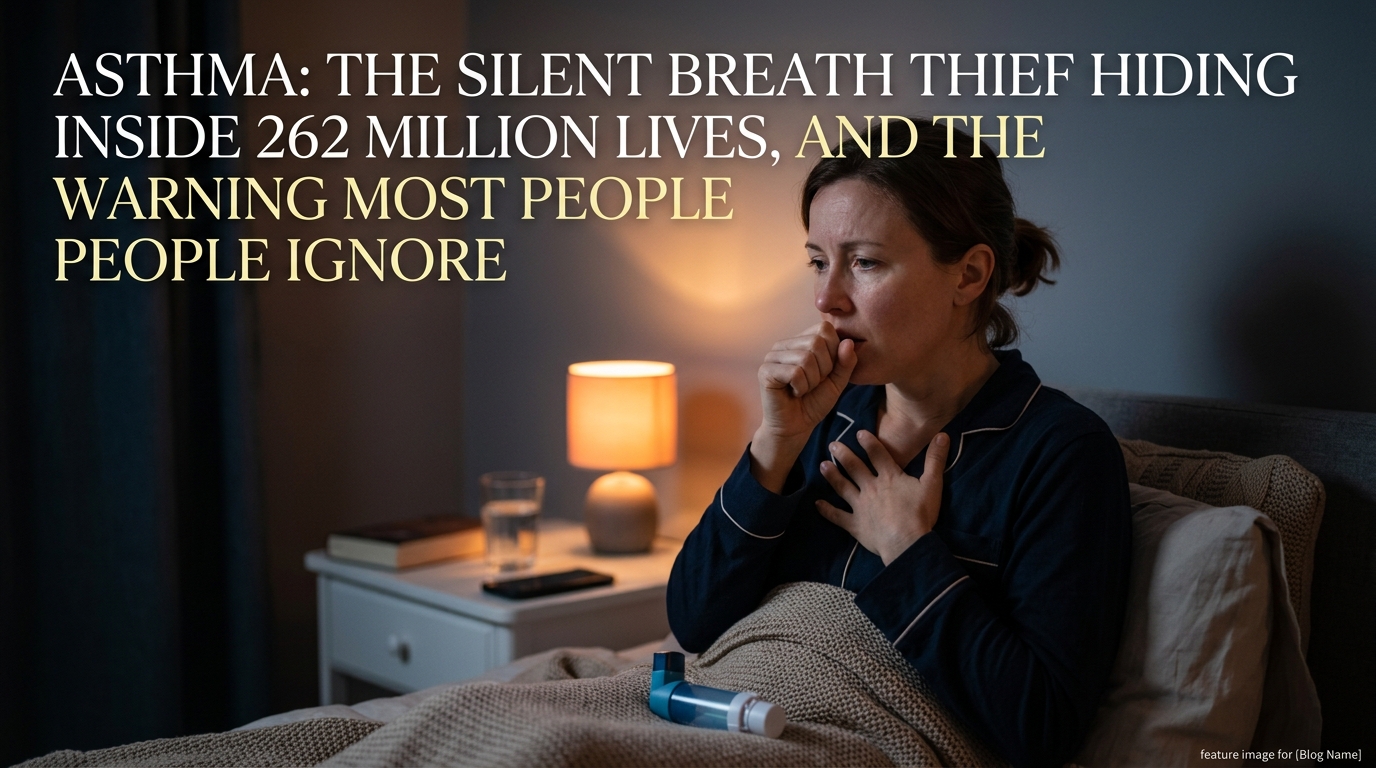
It is 3 in the morning. The house is quiet, but you are awake, again. A dry cough will not stop, and your chest feels tight, as if someone has tied a belt around it. You sit up, take a few slow breaths and tell yourself it is just a cold.
For millions of people, this is how asthma announces itself. Not with a dramatic collapse, but with small, easy to dismiss moments that keep coming back.
That is why asthma is called a silent breath thief. It steals sleep, energy, school days, sports and confidence a little at a time, and many people never connect the dots.
The good news is that it can be controlled in most people. The right medicines, a simple plan and a few smart habits can let you breathe, sleep and play without fear.
In this blog, we will talk about the warning signs, what happens inside your lungs, the medicines, the triggers and the myths that put people at risk. Plain words, honest facts, no confusing jargon.
Let us start with the warning that most people ignore.
The Warning Most People Ignore
Here it is. The warning is not a dramatic wheeze. It is a night time cough, or needing your quick relief inhaler more and more often.
When the airways are inflamed, they become extra sensitive. They react to dust, cold air, smoke or even laughter. Before a serious flare up, the body often sends quiet signals:
- Waking up at night with a cough or breathlessness
- Coughing after play, exercise or laughing
- Needing a reliever inhaler more often than usual
- Feeling tired or short of breath during normal activity
- Wheezing or chest tightness with every cold
Many people shrug these off for months or even years. They get used to the cough and treat it as part of life. It is not. Hidden inflammation is exactly why uncontrolled asthma can suddenly turn dangerous.

Here is a useful rule of thumb. If you need your quick relief inhaler more than twice a week, or you wake at night because of symptoms, your asthma may not be well controlled. Speak to your doctor.
6 Signs of Asthma Your Body May Be Showing
Asthma looks different from person to person. Some people have mostly a cough, while others mostly wheeze. Here are six signs that deserve attention. One sign alone proves nothing, but a pattern is worth a doctor’s visit.
Sign 1: A Whistling Sound When You Breathe
Wheezing is a high pitched whistle, usually heard when breathing out. It happens because air squeezes through narrowed airways. Not every person with this condition wheezes, so its absence does not rule it out.
Sign 2: A Cough That Loves the Night
A dry cough that gets worse at night or early in the morning is one of the most common signs, especially in children. In some people, cough is the only symptom, which is called cough variant asthma.
Sign 3: Tightness in the Chest
It may feel like a heavy weight, a squeezing band or someone sitting on your chest. It can come and go, often with triggers like cold air or exercise.
Sign 4: Shortness of Breath
Breathing may feel hard, fast or shallow, even while resting. You may find yourself pausing to catch your breath while talking or climbing stairs.
Sign 5: Broken Sleep
Waking up at night with cough, wheeze or tightness is a strong clue that the airways are not well controlled. Poor sleep then leads to tiredness, poor focus and mood changes the next day.
Sign 6: Running Out of Steam Quickly
Getting breathless much faster than others during play or exercise, or avoiding sports without saying why, can be a sign, especially in children.
These signs can also be caused by other conditions, such as infections, heart problems or allergies. Only a proper medical check can tell. If you notice several of them, ask your doctor about asthma.

What Really Happens Inside Your Airways
Picture your airways as a network of tiny tubes, like the branches of an upside down tree. Air flows in and out freely, carrying oxygen to your lungs.
During an asthma flare up, three things happen at once:
- The lining of the airways swells and becomes inflamed
- The muscles around the airways tighten and squeeze them
- Extra thick mucus clogs the narrowed tubes
The result feels like breathing through a thin straw. Air struggles to get in, and struggles even more to get out. That trapped air creates the wheeze and the cough.
Here is the key point. Asthma is a long term condition. The airways stay sensitive even when you feel completely well, which is why treatment must go beyond handling attacks.
Asthma by the Numbers: A Global Silent Problem
Here is a figure that deserves attention. The World Health Organization estimates that asthma affected about 262 million people in 2019 and caused about 455,000 deaths.
Most of these deaths happen in low and middle income countries, where diagnosis and treatment are often hard to reach.
Asthma is also one of the most common long term conditions in childhood. Yet it is often underdiagnosed and undertreated. People assume it is a weak chest, a seasonal cough or something that will pass. Every missed diagnosis is a missed chance to protect someone’s lungs.

Triggers: The Everyday Things That Tighten Airways
A trigger is anything that irritates sensitive airways and sets off symptoms. Triggers differ from person to person. Common ones include:
- Allergens: Dust mites, pollen, pet dander, mould and cockroaches
- Smoke: Cigarette smoke, wood or coal smoke, incense and smoke from burning rubbish
- Air pollution: Smog, traffic fumes and dust storms
- Infections: Colds, flu and other respiratory infections
- Weather: Cold air and sudden temperature changes
- Exercise: Especially in cold or dry air
- Strong smells: Perfumes, cleaning sprays and paint fumes
- Emotions: Stress, crying or laughing hard
- Some medicines: Aspirin and certain painkillers can trigger symptoms in some people, so tell your doctor if you notice this
Keeping a simple diary of when symptoms appear can reveal patterns you never noticed. Tracking what makes your asthma worse is one of the smartest steps you can take.
Who Is More Likely to Develop It?
Anyone can develop asthma at any age. But some factors raise the chances:
- A family history of asthma or allergies
- Allergic conditions such as eczema or hay fever
- Exposure to tobacco smoke, especially in childhood or pregnancy
- Being born early or with a low birth weight
- Living in areas with heavy air pollution
- Being overweight
- Workplace exposure to chemicals, dust or fumes
Having one risk factor does not mean you will definitely develop it. And some people with no obvious risk factors develop it anyway.
How Doctors Find the Answer
There is no single test, so doctors put the pieces together:
- Your story: When symptoms happen, what triggers them and who in the family has asthma
- A physical exam: Including listening to your chest
- Spirometry: A breathing test where you blow into a machine to measure how much air you can push out and how fast
- Peak flow readings: A small handheld device that tracks airflow over days
- Other tests: Sometimes allergy tests or other checks to rule out different conditions
Spirometry is often repeated after a quick relief medicine to see if the airways open up. That response is a strong clue.
Two Inhalers, Two Very Different Jobs
This is the part many people get confused about, and it matters a lot.
- Reliever (rescue) inhaler: Works within minutes to relax the muscles around the airways. It is for sudden symptoms. It treats the squeeze, but not the inflammation
- Controller (preventer) inhaler: Usually contains a low dose inhaled steroid. It calms the inflammation over time, so it works only if taken regularly, even when you feel well
The mistake that costs many people dearly is using only the reliever and skipping the controller. Quick relief feels good, but the inflammation underneath keeps growing.
Some newer international guidelines now advise that people with asthma avoid relying on a reliever alone, and include anti inflammatory treatment in their plan. Your doctor will decide what suits you best.
A few tips that help:
- Use a spacer if advised, especially for children, because it helps more medicine reach the lungs
- Rinse your mouth and spit after using a steroid inhaler to prevent mouth thrush
- Ask a doctor, nurse or pharmacist to check your technique, because many people use inhalers incorrectly
- Do not stop the controller just because you feel fine

Inhaled steroids are not the same as the muscle building steroids that make headlines. At the low doses used in inhalers, they act mainly in the lungs and are considered safe and effective for most people when used as directed. Treating asthma early with the right controller protects the lungs for the long run.
Your Asthma Action Plan: One Simple Page That Can Save a Life
A written action plan is a short document from your doctor that tells you exactly what to do and when. Think of it as a traffic light:
- Green zone: You feel well. Take your controller medicine as prescribed
- Yellow zone: Symptoms are starting or getting worse. Use your reliever as directed and follow the steps for extra treatment or calling your doctor
- Red zone: Severe symptoms or no relief. Follow the emergency steps and get urgent help
Plans often use peak flow readings, comparing today’s number with your personal best. Ask your doctor to write one, keep a photo on your phone and share copies with family, school or your workplace. A plan like this is one of the most effective tools for people living with asthma.
When It Becomes an Emergency
Some situations need urgent medical help right away. Call emergency services or go to the nearest hospital if:
- Breathing is very hard and the person cannot speak full sentences
- The reliever is not helping, or the relief wears off very quickly
- Lips, face or fingernails look blue or grey
- The skin around the ribs, neck or collarbone sucks in with each breath
- The person is confused, extremely drowsy or exhausted from the effort of breathing
While you wait for help, sit upright, stay as calm as possible, loosen tight clothes and use the reliever as directed in your action plan or on the label. Do not lie flat.
A very quiet chest can be a danger sign in a severe asthma attack, because too little air may be moving to make a sound. Never wait for it to pass.
Little Lungs: When Children Have Trouble Breathing
Children’s airways are smaller, so even slight swelling can make breathing hard. Watch for:
- A frequent night cough or a cough that lingers after colds
- Wheezing after running, laughing or crying
- Avoiding play or getting tired quickly
- Poor sleep and tiredness at school
Untreated childhood asthma can mean missed school, broken sleep and sitting out of sports. Some children improve as they grow, but many carry the condition into adult life, so regular follow up matters.
Tips for parents:
- Share the action plan with teachers and caregivers
- Keep a reliever and spacer at school
- Learn your child’s triggers
- Check inhaler technique together at every visit
Exercise, Yes: Staying Active With Sensitive Airways
Many people avoid exercise because it brings on symptoms. But being active actually helps the lungs and heart. The goal is control, not avoidance.
Exercise can narrow the airways in many people with asthma, but these habits help:
- Warm up slowly for about 10 minutes before intense activity
- Use your reliever before exercise only if your doctor has advised it
- Choose activities you enjoy. Swimming, walking, cycling and yoga are often well tolerated
- In cold or polluted air, cover your nose and mouth or avoid the worst pollution hours
- Stop and use your reliever if symptoms start
Make Your Home a Breathing Zone
Your home is where you spend many hours, and small changes can make a big difference to asthma:
- Wash bedding in hot water every week and dry it well
- Use dust mite proof covers on mattresses and pillows if you are allergic
- Keep pets out of the bedroom
- Fix leaks and damp walls to prevent mould
- Do not allow smoking indoors, and avoid incense, mosquito coils and strong sprays
- Ventilate the kitchen when cooking, especially with wood, coal or gas
- Dust with a damp cloth instead of a dry duster
- Check air quality reports and limit outdoor activity on heavily polluted days
Also ask your doctor about a yearly flu vaccine, because infections are a major trigger.
Myths That Keep People Gasping
Myth: Asthma is contagious.
Truth: It cannot be passed from person to person like a cold. Colds, however, can trigger symptoms.
Myth: Inhalers are addictive.
Truth: Inhalers are not addictive. Needing a reliever more often is a sign that control is poor, not a sign of addiction.
Myth: You can stop the controller when you feel better.
Truth: Feeling well is often a sign that the medicine is working. Stopping can let the inflammation return.
Myth: People with asthma should avoid exercise.
Truth: With the right plan, most people can stay active and enjoy sports.
Myth: Children always outgrow it.
Truth: Some do, but many do not, and symptoms can come back later.
Myth: Asthma is just a weak chest or anxiety.
Truth: It is a real airway condition. Stress can trigger symptoms, but it is not the cause.
Quick Answers to Questions People Often Ask
Can it be cured?
There is no cure at present, but good treatment can control symptoms so well that many people live active lives with few or no symptoms.
Can adults develop it?
Yes. It can begin at any age, including adulthood.
Is it safe to use a reliever every day?
Needing it daily is a sign that control is poor. Speak to your doctor about adjusting your treatment.
Can pregnant women use inhalers?
Poorly controlled symptoms can be risky for both mother and baby, so most inhaled medicines are continued during pregnancy. Always check with your doctor.
Can breathing exercises help?
They may help some people feel calmer and breathe more comfortably, but they should never replace prescribed medicines.
When should I see my doctor?
If you have night symptoms, use your reliever more than twice a week, or symptoms get in the way of daily life.
Final Thoughts: Breathing Easy Is Not a Luxury
Asthma is common, but it should never be ignored. Behind a stubborn cough or a tight chest may be airways crying for attention.
The best protection is simple: know the signs, use your medicines the right way, avoid your triggers and keep a written plan. Most people who do this can live full, active lives.
If you recognised a pattern in yourself or your child, book an appointment this week. Not next month. This week.
Share this blog with someone who coughs at night or carries an inhaler. It might be the reminder they need. And remember, asthma is not a weakness. It is a condition you can manage.
This blog is for education only and does not replace advice from a doctor.