
It starts like an ordinary stomach ache. Maybe you ate something heavy, maybe you are stressed, maybe it is just gas. You lie down, wait for it to pass and try to sleep.
But a few hours later, the ache is no longer around your belly button. It has moved lower, to the right side, and it hurts when you cough, walk or even take a deep breath. Now it does not feel ordinary at all.
This is how appendicitis often begins. It is also why one small, forgotten organ can turn a normal evening into an emergency room visit.
The tricky part is that appendicitis can look like many other things in the early hours. Many people wait, hope and hesitate. Doctors will tell you that waiting is the biggest risk.
In this blog, you will learn the warning signs, what happens inside the body, why timing matters so much, what treatment and recovery look like and which myths to ignore. Everything is explained in plain words, so you can spot the signs and act quickly.
Meet the Organ Nobody Thinks About
Your appendix is a small, finger shaped pouch attached to the large intestine. It sits in the lower right part of your abdomen and is usually about 2 to 4 inches long.
For most of your life, you never feel it and never think about it.
Then, in some people, it becomes blocked and inflamed. That is appendicitis, and it needs prompt medical care.
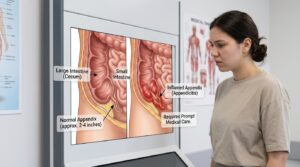
A little history: the first successful appendix removal is often credited to a surgeon named Claudius Amyand in 1735. Today, removing it is one of the most common emergency operations in the world.
6 Signs of Appendicitis You Should Never Brush Off
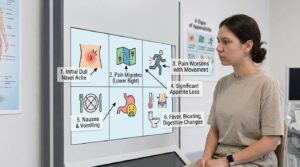
Appendicitis rarely arrives all at once, and not everyone has every sign. But these six are the most common. One sign alone proves nothing. A pattern, especially one that keeps getting worse, is a reason to get checked quickly.
Sign 1: A Dull Ache Around the Belly Button
The pain often begins as a vague, dull ache near the navel. Many people think it is indigestion or gas, so they wait.
Sign 2: Pain That Travels to the Lower Right
Within hours, the pain usually shifts to the lower right side of the abdomen and becomes sharper and more constant. This shift is one of the most classic clues, and doctors often press on the area to check for tenderness.
Sign 3: Pain That Jumps With Movement
Walking, coughing, sneezing, laughing or riding over a bumpy road can make the pain worse. Many people feel more comfortable lying still.
Sign 4: Losing Your Appetite
Suddenly not wanting to eat, even your favourite food, is a very common early sign. When a stomach ache comes with zero interest in food, take it seriously.
Sign 5: Nausea and Vomiting
Many people feel sick to the stomach, and some vomit. Often the pain comes first and the vomiting follows.
Sign 6: Fever, Bloating and Changes in the Bathroom
A mild fever, a swollen belly, constipation, diarrhoea or trouble passing gas can also appear. A higher fever and worsening pain may mean the infection is spreading.
These signs can also come from other problems, such as stomach infections, urinary issues or period pain. Only a medical check can tell. But if the pain is severe or getting worse, do not wait it out. Appendicitis is one of those conditions where hours matter.
What Goes Wrong Inside: The Blockage Story
The appendix has a narrow opening, and appendicitis usually begins when that opening gets blocked. Possible causes include:
- Hardened stool trapped inside, known as a fecalith
- Swollen lymph tissue, often after an infection
- Rarely, a growth that blocks the opening
Once blocked, bacteria multiply, the appendix swells and fills with pus, and blood flow can drop. If this continues, the wall weakens and may tear. That is called a rupture or perforation.
Researchers are still studying why appendicitis strikes some people and not others. In many cases there is no clear cause, so there is usually no point blaming yourself.
How Common Is It? The Numbers Behind the Title
Here is a fact that surprises many people. According to the NIDDK, somewhere between 5 and 9 people in every 100 develop appendicitis at some point in life. nih
The title says 1 in 20, which sits at the lower end of that range. Either way, it means almost everyone knows someone who has had it.
It happens most often in teenagers and people in their twenties, and it is slightly more common in males than in females. But it can strike at any age. nih
Appendicitis in Children, Pregnancy and Older Adults
The classic pain pattern does not always show up. Some groups need extra attention:
- Children: Young children cannot always explain their pain. Look for vomiting, refusing food, unusual quietness, fever or a child who cries when moved or touched on the belly
- Pregnancy: As the uterus grows, the appendix can be pushed higher, so the pain may not be in the usual place
- Older adults: Symptoms may be milder or vague, so the diagnosis can be delayed and complications may be more likely
That is why appendicitis in these groups is easy to miss. If a child or older relative has unexplained belly pain with vomiting or fever, do not assume it is a harmless bug. Ask for a medical check.

The 72 Hour Danger Zone: When the Appendix Bursts
Timing is everything with appendicitis. Doctors often say the risk of rupture rises within about 48 to 72 hours after symptoms begin, and sometimes it happens sooner.
When the appendix bursts, infection can spread through the abdomen. This can cause peritonitis, a serious infection, or a collection of pus called an abscess.
Warning signs that things may be getting worse:
- Severe pain that spreads across the whole belly
- A hard, rigid belly
- High fever and chills
- Fast heartbeat and fast breathing
- Looking very unwell, pale or weak
One tricky detail: some people notice a brief wave of relief around the time of a rupture. Do not take it as good news. If the pain eases but you still feel unwell, get checked.
The earlier appendicitis is treated, the fewer complications there are. Prompt care prevents most problems, which is why doctors treat this condition as an emergency.
Go to the Emergency Room Without Delay If
Go to the nearest emergency room right away if you have belly pain together with any of these:
- Pain that is severe or getting worse
- Pain that has moved to the lower right side
- Fever with belly pain
- Vomiting that will not stop
- A hard belly, or being unable to stand up straight
- A child who is unusually quiet, refuses food or cries when moved
- Pregnancy with new belly pain
Mistakes That Waste Precious Hours
Most delays come from well meaning mistakes. Avoid these:
- Assuming it is gas: Appendicitis pain keeps getting worse and tends to move to the lower right. Ordinary gas usually comes and goes
- Taking strong painkillers and waiting: Medicine can hide the pain and give a false sense of safety
- Using laxatives or enemas: Doctors advise against them for severe belly pain, because they can make an inflamed appendix worse
- Trying home remedies for hours: Herbal drinks, massage and hot compresses will not treat an infection
- Eating a big meal: If surgery is needed, an empty stomach is safer. Avoid eating and drinking until a doctor says it is fine
If you suspect appendicitis, go to a hospital. It is much better to hear “it is nothing serious” than to arrive late.
Appendicitis Diagnosis: How Doctors Find the Answer
There is no single test, so doctors put the pieces together:
- Your story: Where the pain started, how it moved and what makes it worse
- A physical exam: Gently pressing on the abdomen to check for tenderness
- Blood tests: To look for signs of infection
- Urine tests: To rule out a urinary infection or kidney stones
- A pregnancy test: For women of childbearing age, to rule out other causes
- Imaging: Ultrasound, CT scan or MRI to confirm the diagnosis or find another cause
Ultrasound is often chosen first for children and pregnant women because it does not use radiation. MRI may be used in pregnancy when the ultrasound is not clear.

Sometimes the diagnosis is clear from the exam alone, and sometimes doctors watch a person for a few hours. Do not worry if you are asked to wait, repeat the exam or have more tests. Careful checking helps avoid unnecessary surgery and missed cases of appendicitis.
What to Expect at the Hospital
Knowing what happens next can make the experience less scary.
You will be asked about your symptoms and examined. You may have blood tests and imaging. You may be asked not to eat or drink in case surgery is needed, and you may receive fluids through a drip, pain relief and antibiotics.
The surgical team will explain the plan and ask for your consent. If you can, bring:
- Your ID
- A list of your medicines and allergies
- A family member or friend for support
Tell the staff if there is any chance you are pregnant. And never be shy about asking questions.
Treatment: Surgery, Antibiotics and What Really Happens
Doctors typically treat appendicitis with antibiotics and with surgery to remove the appendix. The operation is called an appendectomy.
There are two main ways to do it:
- Laparoscopic (keyhole) surgery: A few small cuts, a tiny camera and special tools. It usually means less pain and a quicker recovery
- Open surgery: One larger cut in the lower right abdomen. It is used in some cases, such as when the appendix has burst or the infection has spread
Some mild cases of appendicitis may be treated with antibiotics alone. This approach is only for carefully selected people with uncomplicated disease, and some of them later need surgery anyway. It is a decision for your surgeon, not something to try at home.
If the appendix has burst, treatment may also include draining an abscess, stronger antibiotics and a longer hospital stay.
Surgery sounds scary, but the appendectomy is a very common operation, and most people recover well.
Recovery Road: What the Days After Surgery Look Like
Recovery depends on the type of surgery and whether the appendix burst. In general:
- After keyhole surgery, many people go home within a day or so
- After open surgery or a burst appendix, the hospital stay is often longer
- Shoulder pain is common after keyhole surgery because of the gas used to inflate the belly, and it usually settles quickly
- Most people return to light activity within days and to normal routines in a couple of weeks, but follow your surgeon’s advice
Tips for smoother healing:
- Walk gently every day, which helps prevent clots and constipation
- Take pain medicine and antibiotics exactly as prescribed
- Keep the wounds clean and dry as advised
- Eat light, fibre rich meals and drink plenty of fluids
- Do not lift heavy items until your surgeon says it is safe
Contact your doctor if you notice fever, redness or pus at the wound, worsening pain, repeated vomiting or swelling of the belly after surgery. Most people who have appendicitis treated promptly recover completely.

Life Without an Appendix
Yes, you can live a completely normal life without it. Many people have their appendix removed and never notice a difference in digestion.
Scientists believe the appendix may play a small role in the immune system and may act as a safe house for helpful gut bacteria. But it is not essential, and the body adapts well.
Once the appendix is removed, appendicitis is essentially no longer possible, apart from extremely rare cases where a small stump is left behind.
Can It Be Prevented?
Honestly, there is no guaranteed way to prevent it. Some studies link fibre rich diets with a lower risk, but the evidence is not strong enough to promise protection.
Eating plenty of vegetables, fruit and whole grains and staying hydrated is good for your gut anyway. But it should never replace seeking care when symptoms appear.
What you can control is how fast you act. The best way to protect yourself from the complications of appendicitis is to recognise the signs and get help early.
Myths That Cause Dangerous Delays
Myth: Appendicitis only affects children.
Truth: It is most common in teenagers and young adults, but it can happen at any age, including in older adults.
Myth: The pain is always on the right side from the start.
Truth: It often begins near the belly button and moves later.
Myth: Swallowing seeds or chewing gum causes it.
Truth: There is no strong evidence for this. Blockages have other causes.
Myth: If the pain suddenly stops, the problem is gone.
Truth: A sudden change can mean a rupture, not healing. Always get checked.
Myth: Appendicitis can be treated at home with herbs or painkillers.
Truth: It is an infection that needs medical treatment.
Myth: Life without an appendix means digestive problems.
Truth: Most people notice no difference.
Quick Answers to Common Questions
Can appendicitis go away on its own?
Very rarely, mild inflammation settles, but this cannot be predicted and waiting is unsafe. Always have it checked.
Does it always cause fever?
No. A mild fever is common, but some people have none, especially early on.
Can you have it without vomiting?
Yes. Not every person has every sign.
How soon should I get help?
As soon as you suspect it. If belly pain is severe, getting worse or moving to the lower right, see a doctor or go to the emergency room the same day.
Can appendicitis come back after antibiotics alone?
Yes. Some people treated with antibiotics alone have symptoms return later and need surgery.
Is surgery risky?
Every operation has some risk, but appendectomy is common and generally safe. The risks of delay are usually higher than the risks of surgery.
Final Thoughts: Your Gut Feeling Deserves to Be Heard
Your appendix is small, but the trouble it can cause is not. The good news is that appendicitis is well understood, and treatment works very well when it is started early.
Remember the pattern: a dull ache near the belly button, pain that moves to the lower right, pain that worsens with movement, loss of appetite, nausea and sometimes fever. If this sounds like you or someone you love, do not wait for it to pass.
Take pain seriously, even if you feel you are overreacting. Doctors would much rather examine ten stomach aches than miss one case of appendicitis.
Share this blog with a friend, parent or classmate. It might help someone recognise appendicitis in time.
This blog is for education only and does not replace advice from a doctor.