
You wake up already tired. Your shoulders ache, your legs feel heavy, and your brain seems to be wrapped in cotton. You tell a friend, a relative, maybe even a doctor, and the reply comes back soft but sharp: “But you look fine.”
If that sounds familiar, this blog is for you.
For decades, people living with fibromyalgia heard that their pain was stress, laziness, or imagination. Some were told to just sleep more. Others were sent from one specialist to the next with a folder full of normal test results and no answers.
Here is the good news. Medicine has moved a long way. Fibromyalgia is recognized by major medical organizations around the world, and researchers now understand a lot more about why it hurts.
So, is fibromyalgia real?
Yes.
And in the next few minutes, you will see why, what doctors actually want you to know, and what you can do about it starting today.
Let’s get into it.
That Look You Get When You Say You’re in Pain
Let’s start with something that rarely gets said out loud. Being doubted hurts almost as much as the symptoms do.
Imagine telling people you have pain that moves around your body, and then watching their faces. Some nod politely. Some offer advice that sounds like a magazine headline. A few quietly decide you are exaggerating.
This happens because fibromyalgia is an invisible condition. There is no cast, no swelling, no visible bruise. You can look completely healthy while your body feels like it has run a marathon every single night.

Many people with fibromyalgia describe the same cycle:
- They feel pain and exhaustion that no one else can see
- They hear that it is “just stress” or “just aging”
- They start doubting themselves
- They stop talking about it, which makes everything feel lonelier
If you have been through this, please hear this clearly. Doubting yourself is not a sign that you are wrong. It is a sign that you have been dismissed too many times.
And the science backs you up, which brings us to the next part.
So, What Exactly Is Fibromyalgia?
Fibromyalgia is a long term condition that causes widespread pain across the body, along with deep tiredness, poor sleep, and problems with memory and focus. It is one of the most common chronic pain conditions in the world. Research suggests that around 2 to 4 percent of adults live with it, and it is diagnosed far more often in women than in men.
The word itself gives a clue. “Fibro” refers to fibrous tissue, “my” refers to muscle, and “algia” means pain. Put together, it describes pain in the muscles and connective tissue.
Here is what the condition is not:
- It is not an autoimmune disease
- It does not damage your joints, muscles, or organs
- It is not a sign of weakness or a mental health problem
- It is not contagious or caused by something you did wrong
And here is what it is: a condition where the nervous system processes pain differently. Pain signals that should be quiet get turned up, like a volume knob stuck on high.
Most people notice a mix of these symptoms:
- Aching or burning pain in many areas, lasting at least three months
- Fatigue that sleep does not fix
- Trouble thinking clearly, often called “fibro fog”
- Headaches, including migraines
- Stomach problems such as bloating or irritable bowel symptoms
- Tingling or numbness in hands and feet
- Sensitivity to light, noise, smells, or temperature
Not everyone has all of them. Two people with the same diagnosis can have very different days. That is part of why this condition confuses so many people.

That one idea about the volume knob explains a lot, and we will come back to it in a moment.
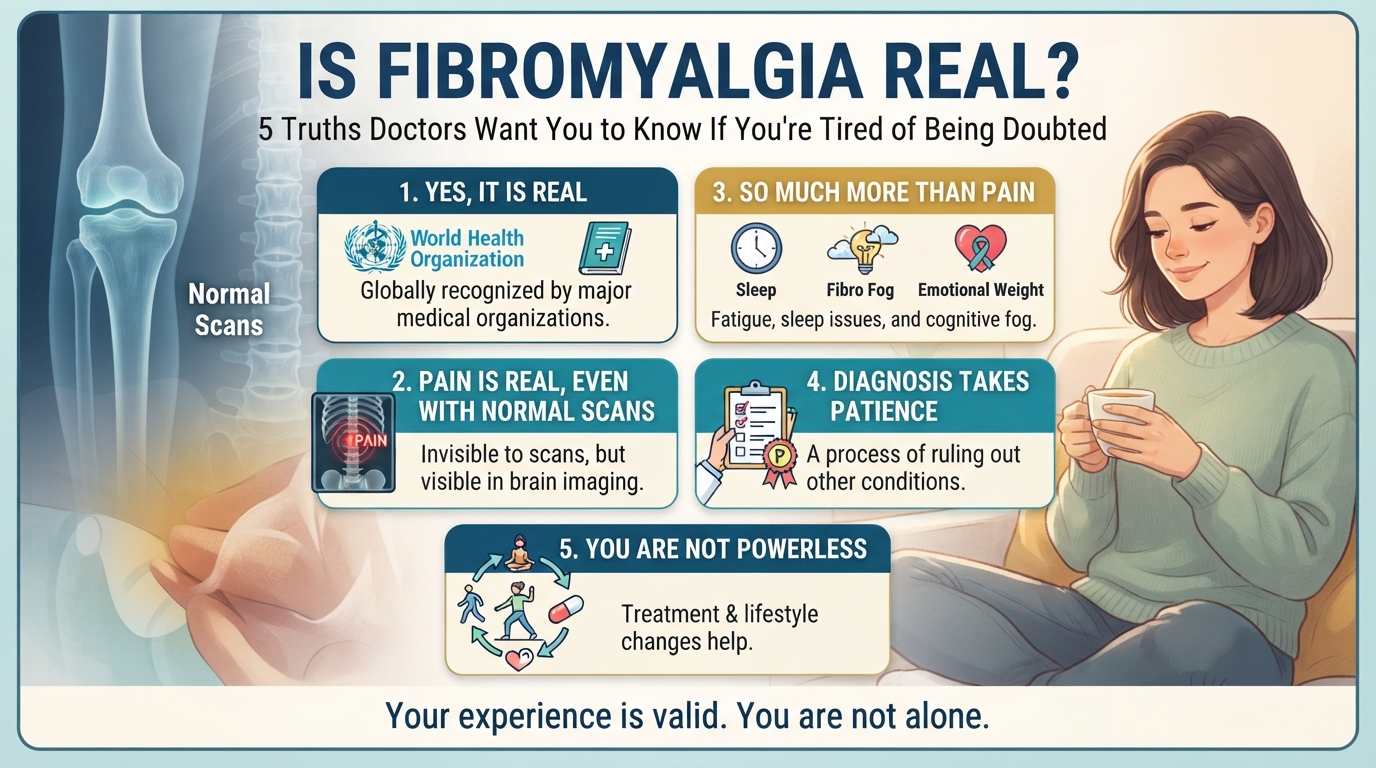
Truth 1: Yes, It Is Real, and Medicine Says So
Let’s answer the big question directly. Fibromyalgia is a real medical condition. The World Health Organization includes it in its international classification of diseases, and it is recognized by the American College of Rheumatology and other major medical bodies.
It was not always taken seriously, though. For a long time, many doctors had no clear way to diagnose it, and that uncertainty turned into doubt. Patients paid the price for that.
Things have changed. In 1990, the American College of Rheumatology published the first widely used classification criteria for fibromyalgia, based on widespread pain and tender points. Later versions moved away from tender point exams and put more weight on how widespread the pain is and how severe other symptoms feel, such as fatigue, unrefreshing sleep, and thinking problems.

Why does that matter to you? Because it means your experience is measurable, documented, and taken seriously by the medical community. You are not asking doctors to believe in something imaginary. You are asking them to follow guidelines that already exist.
Here is a simple line to remember: not being able to see a condition on a scan does not make it fake. Migraines, for example, do not show up on most routine scans either, and nobody calls those imaginary.
Truth 2: Your Pain Is Real Even When Your Scans Look Normal
This is the part that confuses people most. If you are in pain, shouldn’t something show up on an X-ray or blood test?
Not always. In fibromyalgia, the problem does not seem to be damage in the muscles or joints. Researchers believe it lies in how the brain and spinal cord handle pain signals. This is often called central sensitization, which simply means the nervous system becomes extra sensitive and turns the volume up.
Think of it like a smoke alarm that goes off when you make toast. The alarm works, but it is far too sensitive. The system is real, and it is simply reacting too strongly.

Brain imaging studies have found differences in how people with fibromyalgia process pain compared with people without it. Some research has also found higher levels of certain pain related chemicals in the spinal fluid of patients.
What does this feel like in daily life?
- A light touch can feel uncomfortable
- A normal amount of activity can leave you aching for days
- Pain can spread or shift from one area to another
- Cold weather or stress can make everything feel louder
Doctors also point out that several things may set the condition off or make a person more likely to develop it, including physical injury, serious infections, long periods of stress, and a family history of the condition. Experts still do not know one single cause, and that honesty matters. Not knowing the exact cause is different from not being real.
For a clear overview of symptoms and causes from a trusted medical source, you can read the Mayo Clinic’s guide to fibromyalgia here.
Truth 3: It Is So Much More Than Pain
If you only think of fibromyalgia as pain, you are missing half the picture. Many patients say the exhaustion and the brain fog are just as hard to live with, sometimes harder.
Let’s talk about the three big ones.
The tiredness that sleep does not fix. You can spend eight hours in bed and still wake up feeling like you ran all night. Doctors call this unrefreshing sleep, and it is one of the core features of the condition. Some sleep studies have found that people with fibromyalgia often have disrupted deep sleep, which may be one reason rest never feels like enough.
The fog. Forgetting words in the middle of a sentence, losing your keys, walking into a room and wondering why you came. People call it fibro fog. It is frustrating, and it can make you feel like you are losing your mind. You are not. Concentration and memory problems are a recognized part of the condition.

The emotional weight. Living with daily pain is heavy. Anxiety and low mood are common among people with fibromyalgia, partly because chronic pain affects mood and partly because being doubted adds more stress. This does not mean the condition is “mental.” It means the mind and body are connected and both need care.
Other symptoms can include headaches, jaw pain, digestive trouble, and a restless urge to move the legs at night. Not every person gets every symptom, and that is why a proper medical check matters.
Truth 4: Getting Diagnosed Takes Patience, but It Can Be Done
There is no single blood test or scan that confirms fibromyalgia. That is the honest truth, and it is why the path to a diagnosis can feel long.
Many people wait a long time for answers. That delay is frustrating, but it says more about how tricky the condition is to pin down than about whether you are telling the truth.
Doctors usually build the picture step by step. They listen to your story, check how widespread your pain is, and ask about sleep, fatigue, and thinking problems. A diagnosis is generally considered when symptoms have lasted at least three months.

Then comes an important step. Because other conditions can look similar, doctors often order tests to rule them out. These can include:
- Thyroid problems
- Rheumatoid arthritis and other inflammatory conditions
- Lupus
- Vitamin D deficiency
- Sleep disorders such as sleep apnea
Having fibromyalgia does not protect you from other conditions, and the reverse is true too. Some people have fibromyalgia alongside arthritis or lupus, which is why a thorough check matters.
Tips to help your appointment go better:
- Keep a simple symptom diary for two weeks
- Note where the pain is, how bad it is, and how you slept
- Write down any triggers you notice
- Bring a list of medicines and supplements
If one doctor dismisses you, it is fair to seek a second opinion. A rheumatologist is often the specialist who deals with this condition, although many family doctors manage it well too.
Truth 5: You Are Not Powerless, and Treatment Can Help
Here is the truth that deserves the loudest voice. Fibromyalgia has no cure yet, but it can be managed, and many people find real relief with the right plan.
Doctors usually recommend a mix of approaches instead of one magic fix. That is because the condition affects the body, the sleep, and the mind together.
Medication. In the United States, the FDA has approved three medicines for fibromyalgia: pregabalin, duloxetine, and milnacipran. Doctors sometimes use other drugs as well, depending on the person. Medication works differently for everyone, so decisions about it should always be made with your own doctor.
Movement. This one surprises people. When you hurt, resting feels logical. Yet research and medical guidelines consistently support gentle, regular exercise as one of the most effective tools. Walking, swimming, water exercise, yoga, and tai chi are common choices. The key is to start low and go slow. Even five or ten minutes counts at first.

Talking therapies. Cognitive behavioral therapy does not say the pain is imaginary. It teaches practical ways to manage pain, stress, and sleep, and studies show it can help many people cope better.
Sleep and stress care. Regular sleep times, a dark quiet room, and limiting caffeine late in the day all support better rest. Relaxation techniques like slow breathing or meditation can calm an overactive stress response.
Complementary options. Some people also find relief with massage, acupuncture, or warm water therapy. The evidence varies from person to person, so check with your doctor before trying something new.
Progress is rarely a straight line. Some weeks will be good, and some will bring flare-ups. That does not mean you are failing. It means you are living with fibromyalgia, a condition with ups and downs, and you are learning to work with it.
Quick Myth Check: What People Get Wrong
Before we move on, let’s clear up a few things you may have heard.
- Myth: It is all in your head. Fact: It involves real changes in how the nervous system handles pain.
- Myth: Only older women get it. Fact: It is more commonly diagnosed in women, but men and younger people can have it too.
- Myth: You should rest as much as possible. Fact: Gentle, steady movement usually helps more than long rest.
- Myth: It slowly destroys your joints. Fact: It does not damage joints or muscles, and symptoms often go up and down over time.
- Myth: There is nothing you can do. Fact: Treatment and lifestyle changes can make a real difference.
If you have believed any of these about yourself, you are in good company. Almost everyone does, until someone explains the facts.
Small Daily Habits That Make Hard Days Easier
No habit will cure fibromyalgia, and anyone who promises that is selling something. But small, steady choices add up, and many people find they take back a little control with each one.
Try a few of these and see what fits your life:
- Pace yourself. Break big tasks into small pieces and rest before you are exhausted. On good days, avoid doing three days of work in one afternoon.
- Keep a gentle routine. Short walks, stretching, or warm water exercise are easier on the body than intense workouts.
- Protect your sleep. Go to bed and wake up at roughly the same time. Keep screens away for an hour before bed.
- Use warmth. A warm bath, heating pad, or hot shower helps many people loosen stiff muscles.
- Eat regular, balanced meals. There is no proven fibromyalgia diet, but steady meals and plenty of water help energy stay more even.
- Make room for joy. Hobbies, music, time outdoors, and good company all matter. Pain feels heavier when life shrinks to only doctor visits.

And please be kind to yourself. People with fibromyalgia often push through bad days out of guilt, then crash harder afterwards. Listening to your body is not weakness. It is strategy.
When It Is Time to Call Your Doctor
Persistent pain deserves a proper check. See a doctor if you have widespread pain that lasts for weeks, or if you notice anything new or unusual, such as:
- Fever or unexplained weight loss
- Swollen, red, or hot joints
- Sudden weakness or numbness on one side of the body
- Chest pain or trouble breathing (seek emergency care)
- Feeling hopeless or unable to cope
These signs can point to other conditions that need different treatment, so do not assume everything comes down to one diagnosis. Getting checked is never overreacting.
If Someone You Love Has Fibromyalgia, Read This Part
Sometimes the hardest part for patients is not the pain. It is the way people around them react. If someone close to you has fibromyalgia, a few small things can mean the world.
- Believe them. If they say it is a bad day, it is a bad day.
- Skip the quick fixes. Please do not suggest that they just exercise more, drink more water, or think positive. They have probably heard it a hundred times.
- Be flexible. Plans may change at the last minute. A cancelled dinner is never personal.
- Offer specific help. Instead of “let me know if you need anything,” try “can I bring dinner on Thursday?”
- Ask and listen. “How are you really doing today?” is a gift.
Support from family and friends does more than most people realize. Research on chronic pain suggests that social support is linked with better coping.
And if you are the one living with fibromyalgia, you might share this blog with someone close to you. Sometimes the right words from a stranger open the door that you have been trying to open for years.
Your Pain Is Real, and So Is Your Strength
Let’s bring it all together.
So, is fibromyalgia real? Absolutely. And here is what doctors want you to remember:
- It is a recognized medical condition, not an imaginary one
- Normal scans do not cancel out real pain
- It affects sleep, thinking, and mood, not just muscles
- Diagnosis takes patience, but it is possible
- Treatment, movement, and daily habits can truly help
If you have spent years feeling brushed off, I hope this blog gave you some solid ground to stand on. You do not have to prove your pain to anyone who refuses to listen. You only have to keep looking for the people who will.
Find a doctor who listens. Build a small team around you, whether that is family, friends, a therapist, or an online community of people who truly understand. Start with one tiny habit this week, a short walk or an earlier bedtime, and let it grow from there.
Living with fibromyalgia is not easy, but it is also not the end of a good life. Many people build full, meaningful days around it, one careful step at a time.
You are not exaggerating. You are not weak. You are not alone. And you were right to ask the question from the start.
This blog is for general information only and does not replace professional medical advice. Please talk to your own doctor about your symptoms and treatment.



