

You swing your legs out of bed, plant your feet on the floor, and your knees quietly say, “Not so fast.”
Maybe it is your fingers that will not curl around the coffee cup. Maybe it is a hip, a shoulder, or the base of your thumb.
If that sounds familiar, you are far from alone. Arthritis pain is one of the most common reasons people visit a doctor about their joints, and it is not only an older person’s problem. It can show up in your thirties, your forties, and even in childhood.
The good news is that living with arthritis pain does not mean living on the sidelines. We now understand much more about why joints hurt, how to spot trouble early, and what truly helps.
In this guide, you will find:
- What arthritis actually is
- The main types and how they differ
- Warning signs worth taking seriously
- Causes and risk factors
- Treatments available today
- 8 daily habits to help you move freely again
Grab a warm drink and let us start at the beginning.
First Things First: What Is Arthritis, Really?
Many people believe arthritis is one single disease. It is not.
Arthritis is an umbrella term for conditions that cause inflammation, pain, and stiffness in and around the joints. Doctors recognize more than 100 types, and each one behaves a little differently.
A joint is any spot where two bones meet, like your knee, your elbow, or the tiny joints in your fingers. In a healthy joint, smooth cartilage cushions the bone ends, and a thin lining called the synovium keeps things lubricated.
When that system is worn down or inflamed, arthritis pain begins.
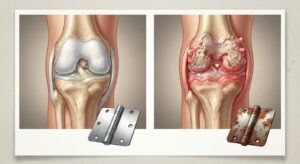
Think of a door hinge. When it is oiled and aligned, it swings quietly. When it rusts or swells, it creaks, sticks, and hurts to move. Your joints work in a similar way.
Meet the Main Players: Types of Arthritis You Should Know
You do not need to memorize 100 names. A handful of types account for most cases.
Osteoarthritis: The Wear and Tear Type
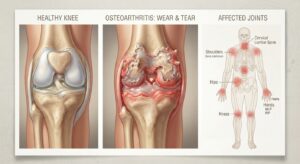
This is the most common form. Over time, the cartilage that cushions the ends of your bones thins out, and the joint can become sore and stiff.
It often affects:
- Knees
- Hips
- Hands
- Spine
It usually develops slowly. The arthritis pain often feels worse after activity and better with rest.
Rheumatoid Arthritis: When the Body Turns on Itself
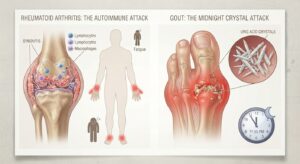
Rheumatoid arthritis is an autoimmune condition. That means the immune system, which should protect you, mistakenly attacks the lining of the joints.
It often affects the same joints on both sides of the body, such as both wrists or both hands. It can also bring fatigue and a general unwell feeling.
Early treatment matters a great deal here, because ongoing inflammation can permanently damage joints.
Gout: The Sudden Midnight Attack
Gout happens when uric acid builds up and forms sharp crystals inside a joint. The classic story is a big toe that suddenly turns red, hot, swollen, and painfully tender, often at night. The arthritis pain from a gout flare can be intense.
Psoriatic Arthritis
Some people with the skin condition psoriasis also develop joint inflammation. It can cause swollen fingers or toes, nail changes, and stiffness.
Other Types Worth Knowing
- Ankylosing spondylitis: mainly affects the spine and can cause long-term back stiffness
- Juvenile idiopathic arthritis: the most common form of chronic arthritis in children
- Septic arthritis: an infection inside a joint, which needs urgent medical care
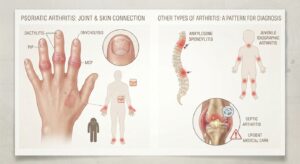
Each type has its own pattern, which is why a proper diagnosis matters before choosing any plan for arthritis pain.
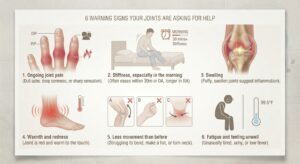
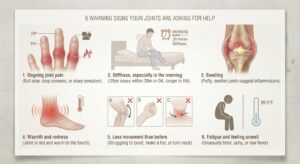
6 Warning Signs Your Joints Are Asking for Help
Your body usually whispers before it shouts. Here are the signs doctors commonly look for when someone has arthritis pain.
1. Ongoing joint pain. Pain that keeps coming back or lasts for weeks deserves attention. Arthritis pain may feel like a dull ache, a deep soreness, or a sharp, burning sensation.
2. Stiffness, especially in the morning. Many people feel stiff after waking up or after sitting for a long time. In osteoarthritis, morning stiffness usually eases within about 30 minutes. In rheumatoid arthritis, it often lasts longer.
3. Swelling. Puffy, swollen joints suggest inflammation inside or around the joint.
4. Warmth and redness. A joint that looks red and feels warm to the touch can signal active inflammation, or in some cases an infection.
5. Less movement than before. Struggling to bend your knee fully, make a fist, or turn your neck is a clue worth noting.
6. Fatigue and feeling unwell. Especially with autoimmune types, you may feel unusually tired, achy, or even run a low fever.
If you notice several of these for more than a few weeks, book an appointment. Waiting and hoping rarely helps.
Why Does It Happen? The Real Causes Behind Arthritis Pain
There is rarely one single cause. Arthritis usually comes from several factors working together.
Age
Joints take years of daily use. The risk of osteoarthritis rises as we get older.
Family History
Genes can make some people more likely to develop certain types, including rheumatoid arthritis.
Old Injuries
A torn ligament, a fracture near a joint, or an old sports injury can raise the risk of osteoarthritis in that joint years later.
Extra Body Weight
Your knees and hips carry your weight with every step. Extra weight adds stress to those joints and increases the risk of osteoarthritis, especially in the knees. It can also make arthritis pain harder to manage.
Sex
Women are more likely to develop rheumatoid arthritis, while gout is more common in men.
Smoking
Smoking is linked with a higher risk of rheumatoid arthritis and can make it more severe.
Repeated Joint Stress
Jobs or hobbies that involve a lot of kneeling, squatting, or heavy lifting can load certain joints harder.
Uric Acid and Diet
For gout specifically, high uric acid is the main driver. Red meat, organ meats, some seafood, alcohol (especially beer), and sugary drinks can raise uric acid in some people.
None of these risk factors guarantees you will get arthritis. And having one does not mean you did something wrong. Plenty of people dealing with arthritis pain did everything right and still developed it.
A Quick Reality Check: How Common Is This?
It helps to see the bigger picture. The CDC reports that more than 1 in 4 adults with arthritis live with severe joint pain, and it recommends proven approaches, including physical activity programs, to reduce arthritis pain: https://www.cdc.gov/chronicdisease/resources/publications/factsheets/arthritis.htm
So if you are struggling, please know this is a widespread health issue, and you deserve real support, not just a pat on the shoulder.
How Doctors Figure It Out: Getting a Proper Diagnosis
Guessing is not a strategy. A clear diagnosis tells you what you are dealing with and which treatment makes sense.
A doctor will usually begin with:
- A conversation about your symptoms, when they started, and what makes them better or worse
- A physical exam of your joints, looking for swelling, warmth, tenderness, and range of motion
Then, depending on what they find, they may suggest:
- Blood tests, such as markers of inflammation or specific antibodies linked to rheumatoid arthritis
- Imaging, such as X-rays, ultrasound, or MRI, to look at cartilage, bone, and soft tissue
- Joint fluid tests, which can confirm conditions like gout or infection
Some people are referred to a rheumatologist, a specialist in arthritis and related conditions. If your symptoms point toward an autoimmune type, that referral can make a big difference.
Getting the right label early is one of the best things you can do for long-term arthritis pain control.
What Treatment Is Available for Arthritis Pain?
There is no one-size-fits-all fix. Treatment depends on the type, how severe it is, and your overall health. Many people use a combination of approaches.
Here is a plain-language overview.
Medicines
Different medicines do different jobs in easing arthritis pain:
- Pain relievers such as acetaminophen can help with mild to moderate pain
- NSAIDs (nonsteroidal anti-inflammatory drugs) like ibuprofen or naproxen reduce pain and inflammation, but they are not right for everyone, so check with your doctor, especially if you have stomach, kidney, or heart concerns
- Topical creams and gels can ease pain in joints close to the skin, such as knees and hands
- DMARDs (disease-modifying antirheumatic drugs) such as methotrexate help slow rheumatoid arthritis and protect joints
- Biologic and targeted medicines act on specific parts of the immune system and are used mainly for inflammatory types
- Gout medicines include treatments for flares and long-term medicines that lower uric acid
- Corticosteroid injections can calm a flare in a single joint for a time
Please do not start or stop prescription medicines on your own. The right plan should come from your doctor.
Physical and Occupational Therapy
A physical therapist can teach exercises that strengthen the muscles around a painful joint, which often reduces arthritis pain over time. An occupational therapist can show you easier ways to do daily tasks, like opening jars or getting dressed, so your joints take less strain.
Devices and Supports
Braces, canes, shoe inserts, and jar openers sound small, yet they can take real pressure off a sore joint.
Surgery
When damage is severe and other options no longer help, procedures such as joint replacement may be considered. Many people regain much better movement and less pain afterward.
Treatment works best when it is started early and adjusted over time. It is a partnership, not a one-time decision, and it is the foundation of managing arthritis pain for the long run.
8 Daily Habits That Help You Move Freely Again
Medicine is only one piece of the puzzle. What you do every day matters just as much. These eight habits are practical, realistic, and in line with well-established guidance.
1. Keep Moving, Gently
It sounds backwards, but regular low-impact movement is one of the best ways to ease stiff, achy joints. Movement keeps muscles strong and joints flexible.
Good options include:
- Walking
- Swimming or water exercise
- Cycling
- Tai chi or gentle yoga
Aim for something you enjoy, and start small. Even 10 minutes counts. If a new type of exercise makes arthritis pain worse for hours afterward, scale back and ask your doctor or therapist for guidance.
2. Start the Day With Warmth
A warm shower or a heating pad on stiff joints for a few minutes can loosen things up before you move. Follow it with slow, gentle stretches.
Cold packs, wrapped in a towel, can help calm a swollen or hot joint after activity.
Many people find that simple heat and cold are a gentle, low-cost way to take the edge off arthritis pain.
3. Eat for Your Joints
No single food cures arthritis, but a balanced eating pattern can support your overall health and may help manage inflammation. Many experts point to a Mediterranean style of eating.
That means plenty of:
- Fruits and vegetables in many colors
- Fish such as salmon, sardines, or mackerel
- Olive oil, nuts, and seeds
- Whole grains and beans
If you have gout, limiting alcohol, sugary drinks, and high-purine foods can help. Supplements like fish oil or glucosamine have mixed evidence, so ask your doctor before buying anything.
Small, steady food choices add up and may make arthritis pain a little easier to live with.
4. Aim for a Healthy Weight
Every extra bit of weight adds load to your knees and hips. Even modest weight loss can reduce stress on those joints and may ease arthritis pain.
Focus on steady changes, not crash diets. Your joints, and your energy levels, will thank you.
Be kind to yourself here. Progress, not perfection, is the goal.
5. Protect Your Joints During the Day
Small adjustments can reduce strain without slowing you down:
- Use larger, stronger joints for heavy tasks, like carrying a bag on your forearm instead of your fingers
- Take short breaks instead of staying in one position for too long
- Wear supportive, comfortable shoes
- Use tools with thicker grips or ergonomic designs
Pacing yourself is not weakness. It is a smart way to keep arthritis pain from taking over your day.
6. Make Sleep a Priority
Pain can disrupt sleep, and poor sleep can make pain feel worse. It becomes a frustrating cycle.
Try keeping a regular bedtime, keeping your room cool and dark, and using a pillow that supports sore joints. Talk to your doctor if arthritis pain regularly wakes you at night.
7. Calm Your Mind
Living with ongoing pain is stressful, and stress can make everything feel heavier. Slow breathing, meditation, gentle stretching, or even a quiet walk can help you cope.
It is also completely normal to feel low, anxious, or frustrated at times. Talking with friends, a support group, or a counselor can lighten the load. Emotional health is part of managing arthritis pain, not separate from it.
8. Stick With Your Care Plan
This one is simple but powerful. Take medicines as prescribed, attend follow-up visits, and tell your doctor when something changes. If you smoke, quitting is one of the best steps you can take for your joints and overall health.
A plan only works if you keep using it, and consistent care is what turns arthritis pain from a daily battle into something you can manage.
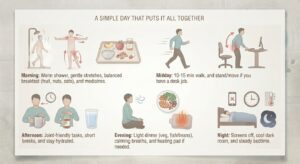
A Simple Day That Puts It All Together
Habits stick better when they fit into a routine. Here is one example you can adjust:
- Morning: warm shower, gentle stretches, a breakfast with fruit, nuts, or oats, and your prescribed medicines
- Midday: a 10 to 15 minute walk, and a few minutes of standing up and moving if you sit for work
- Afternoon: joint friendly tasks paced with short breaks, plus a glass of water
- Evening: a light dinner with vegetables and fish or beans, a few calming breaths, and a heating pad if needed
- Night: screens off, a cool dark room, and a steady bedtime
A routine like this can keep arthritis pain from running the show. Small and steady wins here. You do not need to do everything at once.
Myths That Deserve to Be Retired
Misinformation can stop people from getting help. Let us clear up a few common beliefs.
- “Arthritis only affects old people.” Not true. Children and young adults can have arthritis too.
- “Exercise will wear out my joints.” For most people, appropriate movement helps protect joints. Staying inactive often makes stiffness and weakness worse.
- “Cracking knuckles causes arthritis.” Studies have not shown a link between knuckle cracking and arthritis.
- “Weather causes arthritis.” Many people feel changes in weather, but weather does not cause the disease.
- “Nothing can be done.” Wrong. Treatments and daily habits can lower arthritis pain and protect your joints.
When to Call the Doctor Without Waiting
Most arthritis symptoms build gradually, yet some situations need prompt care. Get medical help quickly if you notice:
- A joint that suddenly becomes hot, red, very swollen, and painful, especially with fever
- Sudden inability to move or put weight on a joint
- Joint pain after an injury
- Symptoms that keep getting worse despite home care
A hot, swollen joint with fever can signal infection, and that should never be left to wait. Sudden severe arthritis pain that stops you from moving a joint deserves attention the same day.
Your Joints Are Not Done Yet
Living with arthritis can feel discouraging, especially on the hard days. But here is what we know: understanding your type, getting a proper diagnosis, using the treatment that fits you, and building small daily habits can make a real difference.
You may not control every flare, yet you have more influence over arthritis pain than you might think.
Start with just one habit from this guide. Maybe it is a five minute morning stretch, a short walk after lunch, or finally booking that doctor appointment you keep postponing. Then add another next week.
Your joints have carried you through years of life. With patience and the right support, they can keep carrying you for many more.
A friendly note: this article is for general education and is not a substitute for personal medical advice. Please talk with a doctor or rheumatologist about your own symptoms and treatment.



