
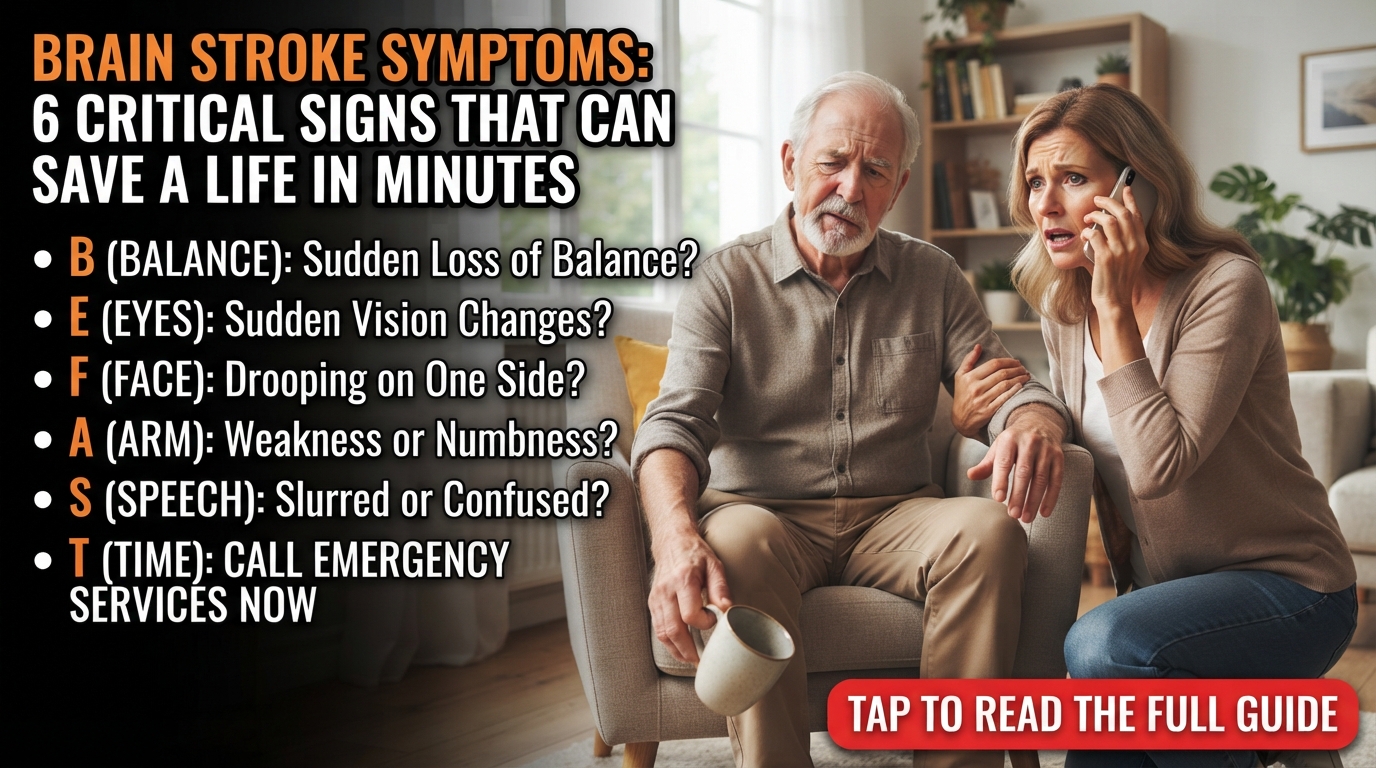
Imagine a quiet morning at home. A father is drinking tea and chatting with his daughter. Suddenly his words come out jumbled, one side of his smile droops, and the cup slips from his hand.
Most families freeze in a moment like that. Some say, “Let him rest, it will pass.” Others decide to see a doctor tomorrow. That delay is exactly what a brain stroke needs to cause lasting damage.
Every minute counts because brain cells begin dying the moment their blood supply stops. A brain stroke is a medical emergency. It is not something that gets better with sleep, tea, or a painkiller.
This blog walks you through the six warning signs, what to do in the first few minutes of brain stroke, and how to lower your risk. Read it slowly and share it with someone you love. A few minutes of reading today could help you act in time one day.
What Is Really Going On Inside the Head?
Your brain is a hungry organ. It makes up only about 2 percent of your body weight, yet it uses around 20 percent of your oxygen. It depends on a steady flow of blood to survive.
When that flow is interrupted, brain cells start to die within minutes. A brain stroke happens in two main ways:
- Ischemic stroke: A clot or a narrowed blood vessel blocks blood flow to part of the brain. This is the most common type and accounts for roughly 87 out of every 100 cases.
- Hemorrhagic stroke: A weak blood vessel in or around the brain bursts and bleeds. It is less common but often more severe.
The end result is similar in both cases. A part of the brain stops working properly, and the body functions controlled by that area are affected.
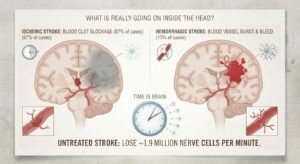
Doctors often say “time is brain.” Research has estimated that in a large untreated stroke, the brain can lose about 1.9 million nerve cells every minute. That is why a brain stroke demands faster action than almost any other health problem.
The Six Warning Signs You Must Never Ignore
Here are the six critical signs. The most important word in all of them is sudden. Brain Stroke symptoms usually appear without warning, often within seconds or minutes.
Sign 1: A Smile That Suddenly Looks Crooked
One of the earliest and most visible signs of a brain stroke is a change in the face.
Look for these clues:
- One side of the face droops or feels numb
- The smile looks uneven
- One eye or the corner of the mouth hangs lower than the other
- Drooling from one side of the mouth
A simple test is to ask the person to smile. If one side does not lift like the other, treat it seriously. Do not wait to see if it fades.

Sign 2: A Weak Arm or Leg That Will Not Obey
Many people with a brain stroke feel sudden weakness or numbness, usually on one side of the body. This happens because the damaged area of the brain controls movement on the opposite side.
An arm may feel heavy. A leg may give way while walking. A person might suddenly drop things or find they cannot lift a glass.
Try this quick check. Ask the person to raise both arms. If one arm slowly drifts downward, that is a red flag.

Weakness on only one side is what makes this sign so telling. Tiredness usually affects the whole body, while stroke weakness often does not.
Sign 3: Words That Refuse to Come Out Right
Trouble with speech is one of the most commonly reported symptoms of a brain stroke.
The person may:
- Slur their words as if they had been drinking
- Speak nonsense or use the wrong words
- Struggle to find simple words
- Fail to understand what others are saying
Ask them to repeat a simple sentence like “The sky is blue.” If they cannot say it clearly or seem confused by the request, call for emergency help.

Do not dismiss this as stress or exhaustion. Sudden confusion in speech is never normal.
Sign 4: Vision That Dims, Doubles, or Disappears
The brain processes what the eyes see, so a brain stroke can affect vision in surprising ways.
Watch for:
- Sudden blurry or blackened vision in one or both eyes
- Double vision
- Loss of vision on one side
- A feeling that a curtain has dropped over one eye

People sometimes rub their eyes and assume they need new glasses. But sudden vision changes, especially with any other sign on this list, should never be brushed aside.
Sign 5: The Worst Headache of Your Life
Not every brain stroke causes a headache, but a sudden, severe one with no known cause can point to bleeding in the brain.
People often describe it as an explosion or thunderclap in the head. It may come with vomiting, a stiff neck, or drowsiness.

This is very different from a normal tension headache that builds slowly. If a headache is sudden, extreme, and unlike anything you have felt before, get emergency care immediately.
Sign 6: Dizziness, Lost Balance, and Sudden Confusion
The sixth sign is trouble with balance and coordination. The person may feel the room spinning, stumble while walking, or be unable to stand steadily.
Sudden confusion is just as important. They may not know where they are, may struggle to follow a conversation, or may seem strangely foggy.

Occasional dizziness can come from many harmless causes, such as dehydration or standing up too fast. What makes a brain stroke different is that dizziness arrives suddenly and brings other signs with it, such as weakness, speech trouble, or vision problems.
Remember It Easily: The BE FAST Rule
Stroke experts teach a simple memory tool so that anyone can spot trouble quickly. It is called BE FAST:
- B (Balance): Sudden loss of balance or coordination
- E (Eyes): Sudden vision changes
- F (Face): Drooping on one side
- A (Arm): Weakness or numbness in an arm or leg
- S (Speech): Slurred or confused speech
- T (Time): Time to call emergency services right away
The older version, FAST, is still widely used. According to the NHS guidance on stroke symptoms, the main signs to look for are face, arms, and speech, and acting fast is the key. The BE FAST version simply adds balance and eyes so fewer cases are missed.
Teach this to your parents, your children, and your neighbours. It takes one minute to learn and may save a life.
The Warning Shot: Mini Strokes You Should Not Ignore
Some people experience stroke symptoms that vanish within minutes or hours. This is called a transient ischemic attack, or TIA, and many people call it a mini stroke.
It happens when a clot briefly blocks blood flow and then clears on its own. Because the symptoms disappear, people often feel relieved and carry on with their day.
That is a dangerous mistake. A TIA is a serious warning that a full brain stroke may be coming. Studies show that a notable share of people who have a TIA go on to have a major stroke, often within days or weeks.
So even if the symptoms vanish, see a doctor the same day. Doctors can run tests, find the cause, and start treatment that lowers the chance of a bigger event.
Who Is Most at Risk?
Anyone can have a brain stroke, but some factors raise the risk. Many of them are within your control.
Risk factors you can change:
- High blood pressure, which is the single biggest risk factor
- Diabetes
- High cholesterol
- Smoking and tobacco use
- Obesity and an inactive lifestyle
- Heavy alcohol use
- An irregular heartbeat called atrial fibrillation
Risk factors you cannot change:
- Age, as risk rises over time
- Family history
- A previous stroke or TIA
High blood pressure deserves special attention. It often causes no symptoms at all, so many people have it for years without knowing. Regular checks are one of the simplest ways to reduce your risk of a brain stroke.
It Is Not Only an Old Person’s Problem
Many people believe a Brain stroke only strikes the elderly. That belief costs lives.
Younger adults can and do have strokes. Causes in younger people include high blood pressure, smoking, drug use, heart conditions, blood clotting disorders, and injury to the neck arteries.
Women also face some special risks. Pregnancy, migraine with aura, and certain hormonal medicines combined with smoking can raise the chance of stroke. Women may also report less obvious symptoms such as sudden fatigue, nausea, or confusion, which can delay care.
Age is a risk factor, not a shield. A brain stroke is not only a disease of old age, and treating it that way means young people sometimes ignore their own symptoms.
Myths That Waste Precious Minutes
False beliefs can delay treatment. Here are some common ones.
Myth: “If the symptoms go away, I am fine.”
Fact: This may be a TIA, and it needs urgent medical review.
Myth: “A stroke always comes with pain.”
Fact: Many strokes are painless. A person can have a brain stroke without any headache or chest pain.
Myth: “Wait and see if it improves by morning.”
Fact: Treatment works best within the first hours. Waiting can reduce your options.
Myth: “Home remedies can help.”
Fact: Massaging, pricking fingers, or giving herbal drinks does not treat a brain stroke and wastes time.
Myth: “Strokes cannot be prevented.”
Fact: Studies suggest a large share of brain strokes are linked to risk factors that can be managed.
What To Do in the First Few Minutes
If you suspect a stroke, speed and calmness matter most. Follow these steps:
- Call your local emergency number immediately. Do not wait to see if it improves.
- Note the time symptoms began. Doctors use this to decide which treatments are safe.
- Keep the person calm and still. Help them lie down with the head slightly raised if they are comfortable.
- Loosen tight clothing. Make breathing easier.
- Stay with them until help arrives and watch their breathing.
What You Should Not Do
Good intentions can still cause harm. Avoid these mistakes:
- Do not give food, water, or tablets, because swallowing may be affected and choking is possible
- Do not give aspirin unless a medical professional tells you to, since some strokes are caused by bleeding and aspirin can make that worse
- Do not drive the person yourself if an ambulance is available, because paramedics can begin care on the way and alert the hospital
- Do not leave the person alone, even if they say they feel better
Why Hospital Treatment Is a Race Against the Clock
Modern medicine can do remarkable things for stroke, but only if the patient arrives in time.
For an ischemic stroke, doctors may use a clot dissolving medicine, which is generally given within a few hours of the first symptoms. In some patients with large blockages, a procedure called thrombectomy can physically remove the clot, and it may be possible in selected cases even many hours after symptoms begin.
For a hemorrhagic stroke, treatment focuses on controlling bleeding, lowering pressure in the brain, and sometimes surgery.
Brain scans, usually CT or MRI, tell doctors which type of Brain stroke it is. That decision shapes everything that follows, which is why the early minutes are so valuable. The faster someone reaches the hospital, the more options the medical team has.
Life After a Brain Stroke: Recovery Is Possible
Surviving a stroke is only the first step. Many people go on to rebuild their lives, though recovery looks different for everyone.
Rehabilitation can include:
- Physiotherapy to regain strength and movement
- Speech therapy to improve communication and swallowing
- Occupational therapy to relearn daily tasks like dressing or cooking
- Emotional support, because depression and anxiety are common after a stroke
The brain has some ability to adapt, forming new pathways to take over lost functions. This is known as neuroplasticity, and it is the reason steady rehabilitation matters so much.
Recovery takes patience. Progress may be fastest in the first few months, but many people continue improving for much longer. Family support makes a real difference, so be kind and be consistent.
Simple Habits That Protect Your Brain
You cannot control everything, but you can shift the odds. Small daily choices add up.
- Check your blood pressure regularly, and follow your doctor’s advice if it runs high
- Eat more vegetables, fruits, whole grains, and legumes, and cut back on salt and processed foods
- Move your body for about 30 minutes most days, even if it is just a brisk walk
- Quit smoking. Stroke risk drops significantly after quitting
- Limit alcohol
- Manage diabetes and cholesterol with regular checkups and medicines if prescribed
- Maintain a healthy weight
- Take prescribed medicines exactly as directed, especially blood thinners for heart rhythm problems
- Sleep well and manage stress, as chronic stress can affect blood pressure
None of these steps is dramatic. But together they build a strong defence, and the best way to deal with a brain stroke is to prevent it before it begins.
Talking to Your Family About Brain stroke
Many families never discuss stroke until it happens. A short, honest chat can change that.
Sit down with your parents, spouse, or grown children and cover these points:
- The six warning signs and the BE FAST rule
- The local emergency number and the nearest hospital with stroke care
- Each person’s health conditions and medicines
- Why nobody should wait or try home remedies
Save the hospital’s number in your phone. Keep a list of medicines in an easy place. When panic hits, preparation turns fear into action.
Final Thoughts: Be the Person Who Acts
A brain stroke does not announce itself with a warning bell. It arrives quietly, sometimes during dinner, sometimes in the middle of a conversation, and it leaves very little time.
But now you know what to look for. A drooping face. A weak arm. Slurred speech. Sudden vision loss. A thunderclap headache. A spinning world with confusion. Any of these, appearing suddenly, deserves an immediate call for help.
Do not wait. Do not guess. Do not let embarrassment or doubt hold you back, because a false alarm costs you a few hours while a missed brain stroke can cost a lifetime.
Share this blog with your family, your friends, and your community. The more people who recognise a brain stroke early, the more lives we can protect.
Disclaimer: This blog is for general awareness and does not replace professional medical advice. If you or someone near you shows stroke symptoms, call emergency services immediately.



