

Picture this. Around 50 million people across the world live with a condition that, for up to 70% of them, could be controlled with the right diagnosis and the right medicine. That sounds like a problem the world should have solved long ago.
Yet here we are. Epilepsy remains one of the most common neurological conditions on earth, and it is still surrounded by fear, silence and half-truths. In many low-income countries, nearly three quarters of people living with epilepsy do not receive the treatment they need.
That gap between what medicine can do and what actually reaches people is the heart of this blog.
In the next few minutes, we will look at what epilepsy really is, why it happens, how it is treated and what ordinary people like you and me can do to help. Whether you live with it, love someone who does, or simply want to understand it better, this guide is for you.
So, What Is Epilepsy, Really?
Let us start with the basics. Epilepsy is a long-term condition of the brain in which a person has repeated seizures. A seizure happens when a group of brain cells suddenly fires too much electrical activity at once, a bit like a short circuit in a very busy power grid.
The result can look very different from one person to another. Some people stare blankly for a few seconds. Others lose awareness, fall down or shake. Some feel a strange smell, a rush of fear or a tingling in one hand before anything else happens.
Doctors usually diagnose epilepsy when a person has had at least two unprovoked seizures more than 24 hours apart, or one seizure with a high chance of more to come. It is not a mental illness, it is not a curse, and it is certainly not contagious.
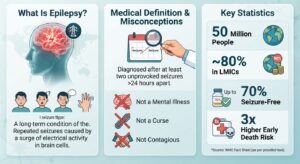
Here is a quick snapshot of what the numbers say:
- Around 50 million people worldwide live with epilepsy
- Nearly 80% of them live in low and middle-income countries
- Up to 70% could be seizure-free with proper treatment
- Their risk of early death can be up to three times higher than that of the general population
One Seizure Does Not Mean You Have Epilepsy
This is one of the biggest sources of panic, so let us clear it up. A single seizure does not automatically mean a person has epilepsy. In fact, up to 10% of people worldwide will have one seizure at some point in their lives.
Seizures can be provoked by things like:
- A very high fever in a small child
- A sudden drop in blood sugar
- A head injury
- Heavy alcohol use or sudden withdrawal from it
- Certain infections of the brain
These are called provoked seizures. Once the cause is treated, they may never return.
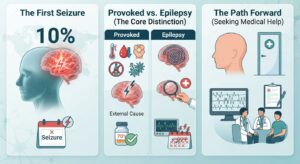
Epilepsy is different. It means the brain has a lasting tendency to produce seizures without an obvious trigger. That is why a proper medical evaluation after a first seizure matters so much. Guessing at home is never enough, and neither is waiting to see what happens.
Why Does the Brain Misfire? The Real Causes
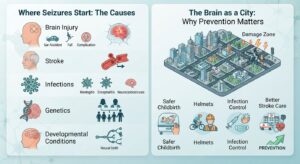
Here is something that surprises many people. In roughly half of all cases, doctors cannot find a clear cause. When they can, the reasons usually fall into a few groups:
- Brain injury: Head trauma from road accidents, falls or complications at birth can leave scarring that triggers seizures later.
- Stroke: A common cause of new seizures in older adults.
- Infections: Meningitis, encephalitis and parasitic infections such as neurocysticercosis can damage brain tissue.
- Genetics: Some forms run in families, and certain gene changes affect how brain cells talk to each other.
- Developmental conditions: Some differences in brain structure present from birth are linked to seizures.
Think of the brain as a city with millions of roads. Anything that damages the roads or the traffic signals can cause chaos. That is why prevention matters. Safer childbirth, helmets, infection control and better stroke care can all reduce new cases of epilepsy.
Not Every Seizure Looks Like the Movies
Many people picture someone collapsing and shaking on the floor. That does happen, but it is only one face of epilepsy. Seizures come in many forms, and some are so subtle that families miss them for years.
Doctors broadly group seizures into two families:
- Focal seizures: These start in one area of the brain. A person may stay aware or may seem confused, repeat movements like lip smacking, or feel sudden emotions.
- Generalized seizures: These involve both sides of the brain from the start. They include tonic-clonic seizures (stiffening followed by jerking), absence seizures (brief blank staring) and sudden muscle drops.
Absence seizures are especially easy to miss in children. A child who seems to be daydreaming in class may actually be having many tiny seizures a day. If a teacher or parent notices repeated blank spells, a doctor’s visit is worth it.
Some people also get a warning, often called an aura, just before a seizure. It might be an odd taste, a sense of déjà vu or a wave of nausea. After the seizure, many feel exhausted, foggy or sore for minutes or even hours. That is normal and does not mean something new has gone wrong.
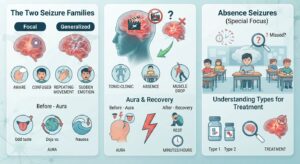
Understanding the type matters because treatment depends on it. A medicine that works well for one kind of seizure may not help another.
Triggers That Can Catch You Off Guard
People with epilepsy often notice that certain situations make seizures more likely. Triggers are not the cause of the condition, but they can tip the balance on a bad day. Common ones include:
- Missed or late medicines, a very common and avoidable trigger
- Poor sleep or long stretches without rest
- Heavy alcohol use or sudden withdrawal
- High stress and emotional strain
- Illness with fever
- Flashing lights or patterns, which affect only a small group known as photosensitive
Keeping a simple seizure diary can help you spot your own patterns. Write down the date, time, what you were doing, how much you slept and whether you took your medicine. Your doctor will love this information, and you may be surprised by what you discover.
The Hidden Crisis: Why So Many Go Untreated
Here is where the story gets painful. Low-cost medicines exist. Some seizure medicines can cost as little as five US dollars per year and can be delivered through basic primary healthcare. And still, about three quarters of people with epilepsy in low-income countries are not getting treated.
Experts call this the treatment gap. It simply means the distance between people who need care and people who actually receive it. Why does it happen? The reasons are rarely about the medicine itself:
- Few specialists: Many communities have no neurologist within easy reach.
- Weak supply: Antiseizure medicines are often out of stock or too costly in local pharmacies.
- Fear and misunderstanding: Families may delay care because of myths about the condition.
- Cost and distance: Travelling to a hospital again and again is too expensive for many households.
The World Health Organization states that proper medicine could free as many as 70% of people with epilepsy from seizures (reference: https://www.who.int/news-room/fact-sheets/detail/epilepsy).
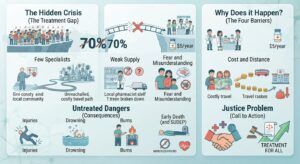
Untreated seizures also carry real danger. People with epilepsy face a higher chance of injuries, drowning, burns and early death, especially where care is missing. Rarely, uncontrolled seizures can even lead to sudden unexpected death, which is one more reason good control matters. This is not just a health problem. It is a justice problem.
Stigma: The Seizure Nobody Talks About
Ask anyone living with epilepsy what hurts most, and many will not say the seizures. They will say the looks, the whispers and the lost opportunities.
Old myths refuse to die. Some believe it is contagious. Some think it is a punishment or a sign of weak character. Others believe it can never be treated. All of these are false.
The damage is real. Children get pulled out of school. Adults lose jobs. Young people are told they will never marry. Families hide the diagnosis out of shame, and hiding often means the person goes without treatment for years.
Here are myths worth retiring today:
- Myth: You can catch it from someone. Fact: It is not contagious.
- Myth: You should put something in a person’s mouth during a seizure. Fact: Never do this. It can cause serious injury.
- Myth: People with it cannot study or work. Fact: With good control, many live full and productive lives.
Words matter too. Saying “a person with epilepsy” instead of using a label reminds everyone that the condition is only one part of who they are.
How Doctors Find the Answer
Getting a diagnosis can feel scary, but the process is usually simple and painless. A doctor will begin by listening carefully. What happened before, during and after the episode? Who saw it? How long did it last?
Eyewitness descriptions are gold. If you saw someone have a seizure, write down what you noticed, or record a short video on your phone if it is safe to do so. It can help the doctor a great deal.
Common tests include:
- EEG: Records the electrical activity of the brain through small sensors on the scalp.
- MRI or CT scans: Look for scars, tumours or structural changes in the brain.
- Blood tests: Check for infections, sugar levels or other causes that can mimic seizures.
Be honest with your doctor about missed doses, alcohol or sleep problems. They are there to help, not to judge.
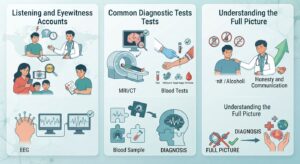
None of these tests hurts. Also, a normal EEG does not rule out epilepsy, so doctors look at the full picture, not one result alone.
From a Tiny Tablet to Brain Surgery: Treatment Options
Here is the hopeful part. Most people with epilepsy start with antiseizure medicines, and a large share of them stop having seizures altogether.
The right medicine depends on seizure type, age, other health conditions and, for women, plans for pregnancy. It can take some patience to find the best fit and dose, so never lose heart if the first try is not perfect. Side effects such as sleepiness or mood changes should always be reported, because there are usually other options to try.
When tablets are not enough, other routes exist:
- Surgery: For some people whose seizures begin in one clearly identified area, removing or disconnecting that area can stop or greatly reduce seizures.
- Vagus nerve stimulation: A small device placed under the skin sends gentle pulses to a nerve in the neck to help reduce seizures.
- Ketogenic diet: A strict high-fat, low-carbohydrate diet, supervised by specialists, helps some children whose seizures resist medicines.
There is more good news. After two or more years without seizures, doctors can sometimes slowly withdraw medicines, which is possible in roughly 70% of children and 60% of adults. This must only be done under a doctor’s guidance, never on your own.
Consistency beats perfection here. Taking the same medicine at the same time every day keeps the level steady in the body, and a steady level is what protects the brain.
One rule is non-negotiable. Do not stop or change your medicine suddenly. Abrupt stopping is a well-known way to bring on severe seizures.
Seizure First Aid: Be the Calm Person in the Room
Most seizures stop on their own within a few minutes. Your job is not to stop it. Your job is to keep the person safe.
Do this:
- Stay calm and note the time the seizure begins
- Move hard or sharp objects away
- Cushion the head with something soft
- Loosen tight clothing around the neck
- When the shaking stops, gently roll the person onto their side
- Stay until they are fully awake and speak to them calmly
Never do this:
- Do not put anything in the mouth
- Do not hold the person down
- Do not give food or water until they are fully alert
Call emergency services if the seizure lasts more than five minutes, if another one follows quickly, if the person is injured, pregnant or has trouble breathing afterwards, or if it is their first ever seizure.
Knowing this takes two minutes to learn and can save a life. Share it with your family, classmates and colleagues.
Everyday Habits That Make Life Easier
Living with epilepsy is not about living in fear. It is about building small routines that protect you and give you confidence.
- Take medicine at the same time every day. Set a phone alarm if needed.
- Protect your sleep. Regular bedtimes can reduce seizure risk.
- Limit alcohol and ask your doctor what is safe for you.
- Manage stress through walking, prayer, hobbies or talking to someone you trust.
- Stay active. Exercise is generally encouraged, but choose safer options and avoid swimming alone.
- Carry a medical ID card or bracelet so others know what to do.
- Take extra care around heights, open flames and bathing until seizures are well controlled.
Also look after your mind. Anxiety and low mood are more common in people living with this condition, and they deserve proper care too. Talking to a counsellor or joining a support group can make a big difference.
Home, School and Work: Where Support Really Counts
Medicine is only half the story. A supportive environment often decides whether a person thrives.
At home, families can learn first aid, help with medicine routines and talk openly about the diagnosis. At school, teachers who understand seizures can prevent bullying and make sure a child does not fall behind. At work, simple steps like flexible rest breaks and an informed manager can make a huge difference.
When people feel safe to speak up, they seek treatment sooner and stay on it longer. That alone can change outcomes.
Quick Answers to Questions People Whisper
Some questions are asked quietly because people fear being judged. Let us answer them openly.
- Can people with this condition drive? Rules differ from country to country. Many places allow driving after a set seizure-free period, so check your local law and ask your doctor.
- Is it hereditary? Some types have a genetic link, but having a parent with the condition does not mean a child will definitely develop it.
- Does stress cause it? Stress can trigger seizures in people who already have it, but stress alone is not the cause.
- Can it go away? In some people, especially children, seizures fade with age or treatment. Only a doctor can decide when it is safe to reduce medicine.
- Can someone still marry, study and work? Yes. With good care and understanding, many people do all three.
Women, Children and Older Adults: Special Care
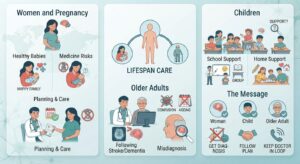
Epilepsy affects every age group, but each stage of life brings its own questions.
- Women and pregnancy: Many women with epilepsy have healthy babies, but some medicines carry risks for the baby. Plan pregnancy with your doctor in advance and never stop medicine on your own.
- Children: Learning and development difficulties affect around 30 to 40% of children with epilepsy, so early support at school and at home matters.
- Older adults: New seizures often follow strokes or dementia, and symptoms can be mistaken for confusion or ageing.
The message is the same for everyone. Get the right diagnosis, follow the plan and keep your doctor in the loop.
Final Thoughts: Hope Is Not Enough Without Action
So, back to our big question. If up to 70% of people with epilepsy can live seizure-free, why are millions still untreated?
The honest answer is that it is not a medical puzzle anymore. It is a gap in awareness, access and compassion. The science is ready. People are not always.
Here is how each of us can help:
- Learn the basics of seizure first aid and teach someone else
- Challenge myths when you hear them, even in casual conversation
- Support friends, classmates and colleagues living with epilepsy
- Encourage anyone with unexplained blackouts or seizures to see a doctor
- Back local and global efforts to bring affordable medicines to everyone
If you are living with epilepsy yourself, please remember this. A diagnosis is not the end of your story. With the right care, support and a little patience, many people finish school, build careers, raise families and chase big dreams.
Epilepsy in 2026 does not need to mean silence or shame. It can mean answers, treatment and a life lived fully. Let us make sure that message reaches every person who needs it.
This article is for awareness only and is not a substitute for advice from a qualified doctor.



