
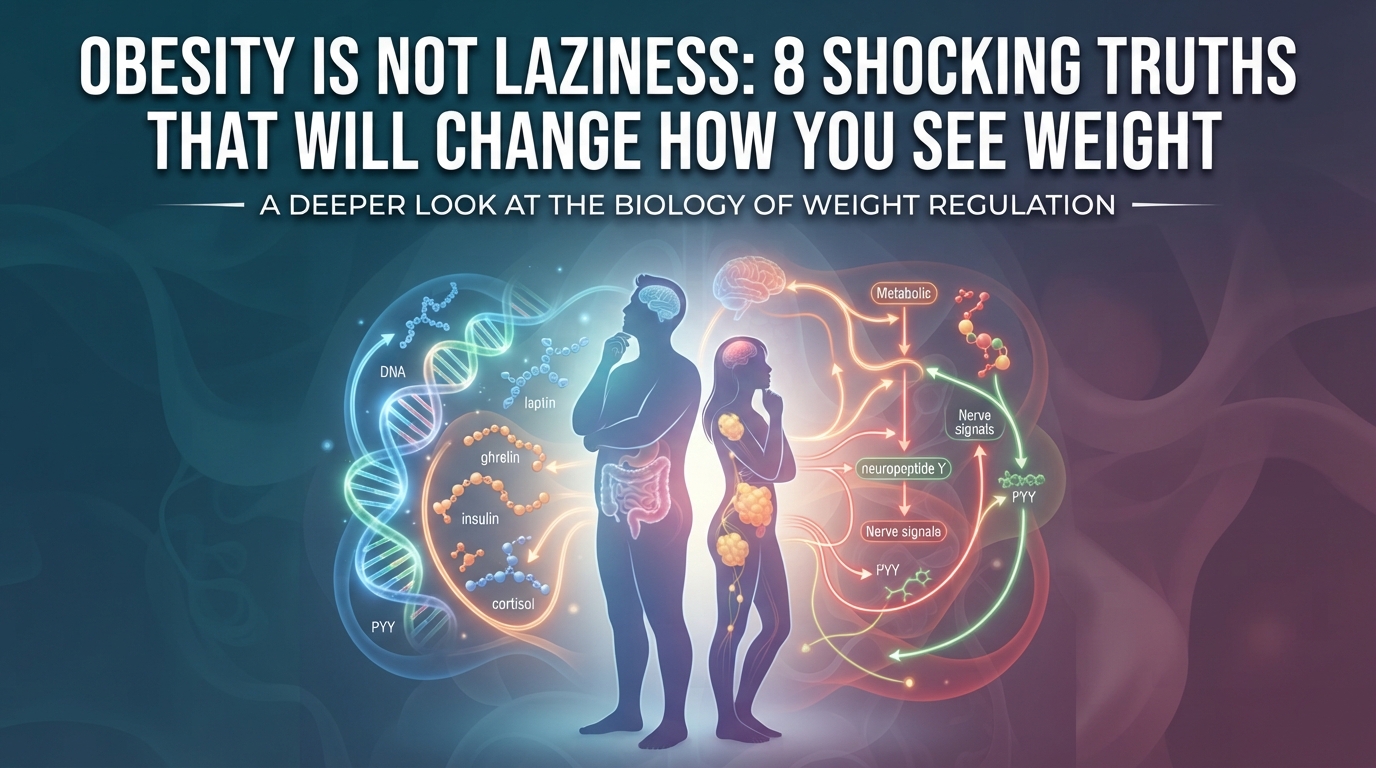
Have you ever looked at someone in a larger body and quietly decided what kind of person they must be? Lazy. Careless. Lacking discipline. Be honest with yourself. Most of us have done it at least once, and many of us picked up the habit so early that it feels like plain common sense.
Here is the problem. It is not common sense. It is a myth, and it has been hurting people for a very long time.
Obesity is one of the most misunderstood health conditions in the world. People talk about it at family dinners, in comment sections, and sometimes even in clinics, yet much of what gets said comes from opinion instead of evidence.
In this blog, we will walk through eight truths about obesity that researchers have been uncovering for years. Some may surprise you. A few may make you rethink things you have said out loud. All of them are worth knowing.
Why the Words We Use Matter More Than We Think
The way we talk about bodies shapes the way we treat people. If we believe body size is a moral failure, we judge, we joke, and we walk away. If we see it as a complex health issue, we respond with patience and better care.
Think about how differently we treat someone with asthma or diabetes. Nobody tells them to “just try harder.” Yet people living with obesity hear that advice almost every day.
Let me be clear about what this blog is not saying:
- It is not saying health does not matter.
- It is not saying nobody can change their habits.
- It is not saying personal choices play no role at all.
It is simply saying that the story is much bigger than willpower. So let’s get into it.
1. A Real Disease With Real Biology
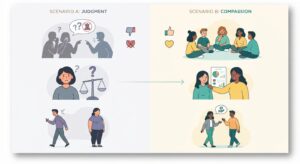
In 2013, the American Medical Association officially recognized obesity as a disease. The World Health Organization also describes it as a chronic and complex condition. That decision did not come out of nowhere. It followed years of research showing that body weight is shaped by hormones, brain signals, genetics, and surroundings.
In plain words, this means:
- Your body has built in systems that defend a certain weight range.
- These systems work in the background, without asking your permission.
- Many things can disrupt them, and none of those things are a flaw in your character.
Calling a chronic condition laziness is like calling high blood pressure a lack of calm. It stops making sense the moment you learn how the body actually works. Once you see obesity as a health condition, the whole conversation shifts from blame to care.
2. Your Genes Spoke Before You Did
Picture two friends who eat similar meals and follow a similar routine. One gains weight easily. The other barely changes. We usually assume the first person is doing something wrong. Very often, it is simply biology.
Twin and family studies suggest that genetics may explain roughly 40 to 70 percent of the differences in body mass index between people. That is a wide range, but it shows how strongly inherited traits can matter.
Scientists have also found specific gene variants, such as certain versions of the FTO gene, that are linked with a higher risk of obesity. These variants can influence appetite and how full a person feels after eating. In rare cases, a single gene change, such as one affecting the hormone leptin, can lead to severe obesity from early childhood.
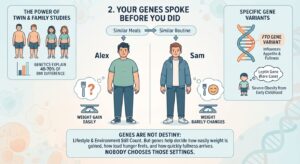
Genes are not destiny. Lifestyle and environment still count. But genes help decide how easily weight is gained, how loud hunger feels, and how quickly fullness arrives. Nobody chooses those settings.
3. Hunger Is Hormonal, Not Moral
Have you ever tried to ignore real hunger? It is nearly impossible, and that is by design. Hunger is controlled by hormones, not by good or bad character.
Two key players do most of the work:
- Leptin: made by fat cells, it tells the brain that the body has enough stored energy.
- Ghrelin: made mostly in the stomach, it tells the brain that it is time to eat.
Here is where it gets interesting. A well known study published in the New England Journal of Medicine in 2011 followed people who had lost weight through dieting. Even a full year later, their leptin levels were lower, their ghrelin levels were higher, and they reported feeling hungrier than before they started.
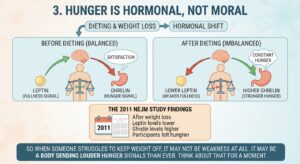
So when someone loses weight and then struggles to keep it off, it may not be weakness at all. For many people with obesity, it may be a body sending louder hunger signals than ever. Think about that for a moment.
4. The Body Fights Back After Weight Loss
If you have ever watched a dramatic weight loss show, you probably saw the happy ending. What you did not see was what happened years later.
Researchers at the National Institutes of Health followed contestants from the television show The Biggest Loser for six years. Their findings, published in the journal Obesity in 2016, showed that most contestants regained a large part of the weight they had lost. Even more striking, their resting metabolism had slowed down and stayed lower, burning hundreds fewer calories per day than expected for their size.
Their bodies were working against them long after the cameras left.
This does not mean weight loss is impossible. It means the process is harder than most people realize, especially for people with obesity, and it deserves compassion instead of blame.
5. Why Obesity Rates Keep Climbing Around the World
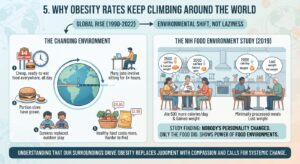
If laziness caused obesity, we would have to believe that billions of people suddenly became lazy in the last few decades. That is not a reasonable explanation. Something bigger is going on.
According to the World Health Organization, one in eight people worldwide was living with obesity in 2022, and adult rates have more than doubled since 1990 (WHO fact sheet on obesity and overweight).
So what changed? Our surroundings did.
- Cheap, ready to eat foods are available everywhere, all day.
- Many jobs now involve sitting for eight hours or more.
- Portion sizes have grown over the years.
- Screens have replaced outdoor play for many children.
- Healthy food can cost more and be harder to find in some neighborhoods.
A well known 2019 study led by researcher Kevin Hall at the NIH shows how powerful food environments can be. Twenty adults stayed in a research center for a month. When they were offered ultra processed meals, they ate about 500 more calories per day and gained weight within two weeks. When they were offered minimally processed meals, they lost weight. Nobody’s personality changed. Only the food did.
That one experiment helps explain why obesity has become so common in such a short time.
6. Sleep and Stress Quietly Run Your Appetite
Sleep is not a luxury. It is a basic biological need, and it affects hunger more than most people expect.
In a classic 2004 study, healthy young men who slept only four hours a night for two nights showed about 18 percent lower leptin and about 28 percent higher ghrelin. They also felt much hungrier, especially for sweet and starchy foods. Today, poor sleep is widely viewed as one risk factor for obesity.
Stress adds another layer. When pressure lasts for weeks or months, the body releases more cortisol, which can increase appetite and encourage fat storage around the belly. Long term stress has been linked with obesity in many studies.
Now picture a person who works two jobs, sleeps five hours, and worries about bills every night. Is “lack of discipline” really the right explanation? Often it is simply exhaustion in a human body.
7. Some Medicines and Health Conditions Add Weight
This one surprises a lot of people. Certain medicines and medical conditions can cause weight gain even when eating habits stay the same. Over time, that gain can contribute to obesity.
Medicines that may play a role include:
- Some antidepressants and antipsychotic drugs
- Corticosteroids such as prednisone
- Certain medicines for epilepsy and migraine
- Insulin and a few other diabetes drugs
Conditions that can affect weight include:
- Hypothyroidism, also called underactive thyroid
- Polycystic ovary syndrome, known as PCOS
- Cushing’s syndrome
One important note: never stop a prescribed medicine on your own. If you are worried about weight changes, talk to your doctor. There may be another option, or a way to adjust your treatment safely.
8. Obesity Stigma Hurts More Than It Helps
Many people believe shame will motivate change. Research points in the opposite direction.
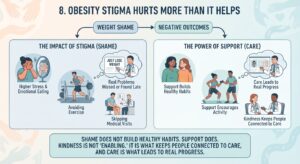
Studies on weight stigma link being shamed about body size with higher stress, emotional eating, avoiding exercise, and skipping medical visits. Many people with obesity report that doctors blame every symptom on their weight, so real problems get missed or found late.
Imagine walking into a clinic with knee pain and hearing only “lose weight.” Would you feel like going back?
Shame does not build healthy habits. Support does. Kindness is not “enabling.” It is what keeps people connected to care, and care is what leads to real progress.
A Quick Word About BMI
Many people judge weight using body mass index, or BMI. It is a simple formula based on height and weight, and it is useful for large population studies. But it has clear limits.
- It cannot tell muscle from fat.
- It does not show where fat is stored in the body.
- It ignores differences in age, sex, and ethnic background.
A muscular athlete can be labeled overweight. Meanwhile, someone with a normal BMI can still carry unhealthy fat around the organs. That is why a doctor will not diagnose obesity from a number alone. They also look at waist size, blood sugar, blood pressure, and cholesterol.
Does excess body fat affect health? Yes. It is linked with a higher risk of type 2 diabetes, heart disease, and some cancers. Both things are true at once: weight can affect health, and blaming people does not fix it.
What Actually Helps (Instead of Blame)
If we drop the shame, what is left? Quite a lot, actually.
- See a healthcare professional. A doctor can check hormones, medicines, sleep, and mental health.
- Ask about medical treatment. Newer medicines such as semaglutide helped adults with obesity lose around 15 percent of body weight on average in a major 2021 trial, alongside lifestyle support. This is another sign that biology matters.
- Choose small, repeatable habits. Short walks, more vegetables, more protein and fiber, fewer sugary drinks.
- Protect your sleep. Aim for seven to nine hours when you can.
- Build a support system. Family, friends, or a group can make the journey feel less lonely.
- Celebrate wins that are not on the scale. Better energy, better mood, better stamina, better blood sugar.
Treating obesity works best when it is handled like any other long term condition: with patience, medical guidance, and no humiliation.
Five Myths About Obesity We Should Retire Today
Let’s clear the air with a few common beliefs that science does not support.
- Myth: Obesity only happens to people who eat too much junk food. Fact: Food matters, but genes, sleep, stress, medicines, hormones, and environment all play a part.
- Myth: Thin people are always healthy and larger people are always unhealthy. Fact: Health depends on many markers, not body size alone.
- Myth: Obesity can be fixed with a two week crash diet. Fact: Extreme plans often end in regain, because the body pushes back. Slow and steady changes tend to last longer.
- Myth: Shame is a good motivator. Fact: Stigma raises stress and often leads people away from care.
- Myth: It is only about looks. Fact: The real concern is health risk, not appearance.
How to Talk to Someone Living With Weight Struggles
Maybe you have a friend, a sibling, or a parent who is struggling with their weight. Maybe that person is you. Words can either open a door or slam it shut.
Here are a few simple ideas:
- Do not comment on someone’s body or plate unless they invite it.
- Ask how you can support them instead of giving advice.
- Avoid jokes about weight, even “harmless” ones.
- Invite them to walk, cook, or play with you, without turning it into a lesson.
- Remember that someone with obesity has likely heard every piece of advice already.
Respect goes a long way. People change more easily when they feel safe, not judged.
Final Thoughts: Let’s Replace Judgment With Understanding
Let’s quickly recap what we learned:
- It is a recognized chronic disease.
- Genes play a major role.
- Hunger is controlled by hormones.
- The body resists weight loss.
- Our food environment has changed dramatically.
- Sleep and stress shape appetite.
- Some medicines and conditions add weight.
- Stigma makes everything harder.
Obesity is not a moral failure, and it is not proof that someone does not care about themselves. It is a complex condition shaped by biology, environment, and life circumstances, many of which people never chose.
The next time a thought about obesity pops into your head, pause and ask yourself a better question. Not “Why don’t they try harder?” but “What might I not know about their story?”
Understanding costs nothing. Yet it can change how a person feels walking into a doctor’s office, a classroom, or a family gathering. And honestly, a kinder world is healthier for everyone.



