It starts with a strange gurgle. Then a wave of nausea hits, and even your favourite food smells wrong. By midnight you are sitting on the bathroom floor, sweaty and shaky, wondering what you did to deserve this.
If that sounds familiar, you have probably met gastroenteritis. It is the medical name for inflammation of the stomach and intestines, and most people simply call it a stomach bug.
Here is something nobody tells you in the middle of the misery. Your body usually knows exactly what it is doing. The vomiting and the diarrhoea are not random punishment. They are your way of throwing out an unwelcome guest.
So your job is not to fight it. Your job is to support your body for the next two days, and this plan shows you how. Keep this page open, grab a glass of water, and let us begin.
Wait, What Exactly Is Gastroenteritis?
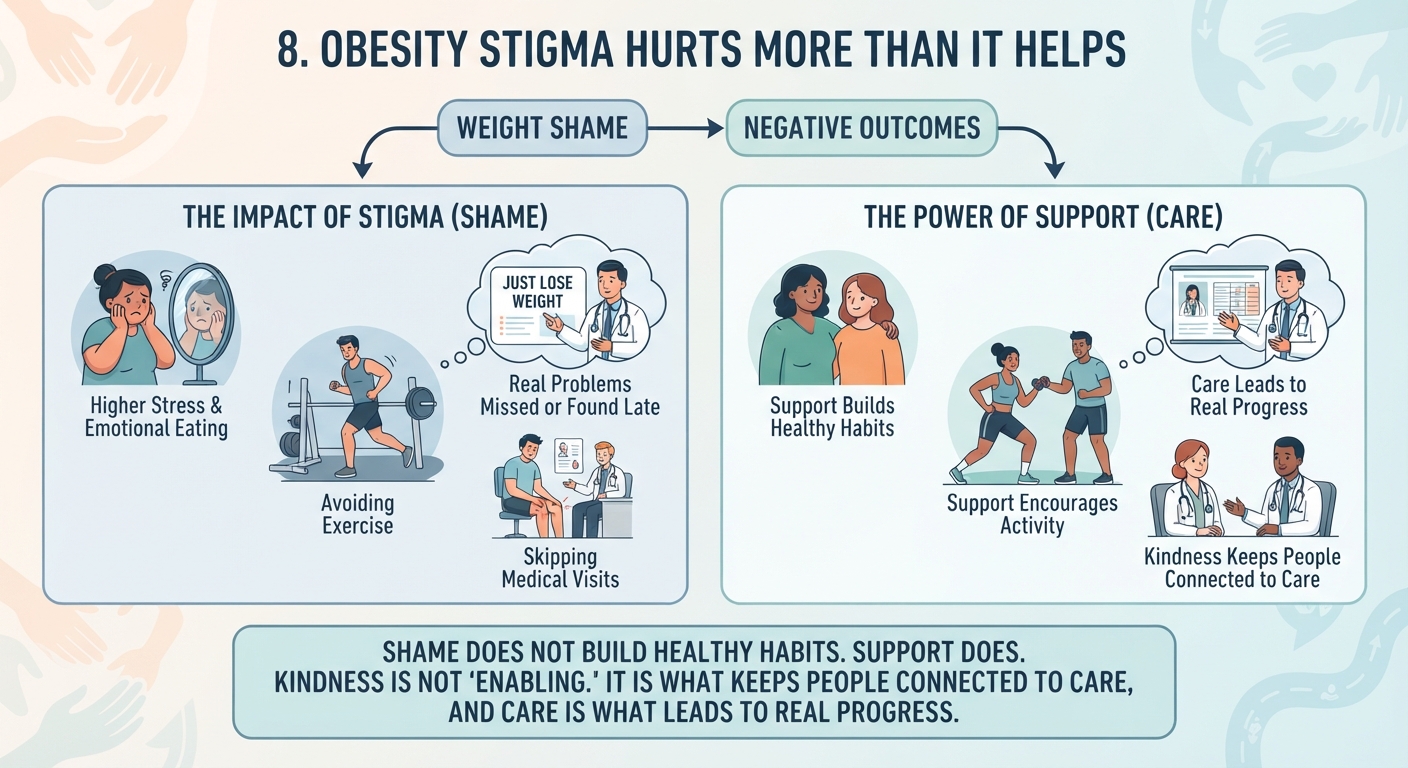
Gastroenteritis happens when germs irritate the lining of your digestive tract. The lining swells, absorbs less water, and pushes food and fluid out faster than normal. That is why you get cramps, loose stools and, for many people, vomiting.
It is also very common. Most people catch it every few years, and children catch it far more often than adults because they touch everything and wash their hands less.
A few quick facts worth remembering:
- Most cases are caused by viruses, not bacteria.
- Common viral types usually settle within one to three days.
- Rotavirus in young children can last closer to a week.
- The real danger is rarely the germ itself. It is losing too much fluid.
Hold on to that last point, because we will keep coming back to it.
Six Signs Your Stomach Is Waving the White Flag
Not every upset tummy is a full attack. Look for this pattern:
- Sudden watery diarrhoea
- Nausea, with or without vomiting
- Cramping or aching in the belly
- A low fever or chills
- Muscle aches and a heavy, tired feeling
- Loss of appetite, often with a headache
If you tick three or four of these, gastroenteritis is a very likely suspect. Symptoms usually begin within hours to a couple of days after you pick up the germ, depending on which one it is.
Meet the Culprits Behind the Chaos
Several different germs can cause gastroenteritis, and knowing them explains why it spreads so easily.
Viruses. Norovirus and rotavirus are the big names. Norovirus passes through contaminated food, surfaces and close contact, and a very tiny amount of virus is enough to make someone sick.
Bacteria. Salmonella, Campylobacter and some strains of E. coli often come from undercooked chicken, raw eggs, unwashed produce or unsafe water.
Parasites. Giardia is the usual one, and it is often linked with contaminated water.
Why does this matter? Because viruses do not respond to antibiotics. Swallowing leftover antibiotics from some old prescription will not help you, and it can make your gut worse.
Give Your Stomach a Short Break First
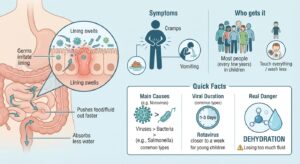
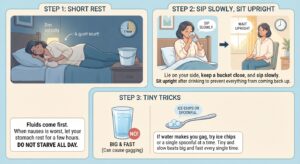
When nausea is at its worst, forcing food down only makes things worse. Let your stomach rest for a few hours. Do not starve for a whole day though, because fluids always come first.
Lie on your side, keep a bucket close, and sip slowly. Sit upright for a while after drinking instead of lying flat, since lying flat can send everything back up.
Here is a small trick. If even water makes you gag, try ice chips or a single spoonful at a time. Tiny and slow beats big and fast every single time.
Why Your Belly Cramps So Badly
With gastroenteritis, the muscles of your intestines squeeze harder than usual to push the germ out. The inflamed lining also makes the nerves there extra sensitive. The result is those waves of cramping that come and go.
A warm (not hot) water bottle on your belly can help. So can a loose cotton shirt and a quiet, dim room. Ginger tea may ease nausea for some people, though the research on it is small, so think of it as comfort rather than cure.
Fluids Are Your Real Medicine
This is the heart of the whole plan. During gastroenteritis, you lose water and salts such as sodium and potassium through vomit and stool. Plain water alone does not put those salts back.
Oral rehydration solution, usually called ORS, is made for exactly this job. The sachets sold at pharmacies contain a balanced mix of salts and sugar that helps your gut absorb water properly. Mix one sachet exactly as the packet says, using clean water that has been boiled and cooled.
The World Health Organization says most diarrhoea related dehydration can be treated with oral rehydration salts, without a drip: https://www.who.int/news-room/fact-sheets/detail/diarrhoeal-disease
No sachet at home? The WHO home mix is six level teaspoons of sugar and half a level teaspoon of salt stirred into one litre of clean water. Measure carefully, because too much salt or sugar can do harm.
Some simple rules:
- Sip small amounts every few minutes instead of big gulps.
- If you vomit, wait about ten minutes and start again slowly.
- Keep drinking through the day, even if you do not feel thirsty.
- Clear soups and ginger tea add comfort, but they do not replace ORS.
Are You Drinking Enough? Check These Quiet Clues
Dehydration creeps up quietly during gastroenteritis, and many people miss it until they feel faint. Watch for these:
- Dark yellow urine, or hardly any
- A dry mouth and cracked lips
- Dizziness when you stand up
- A fast heartbeat
- In children: few or no tears, sunken eyes, or a sunken soft spot on a baby’s head
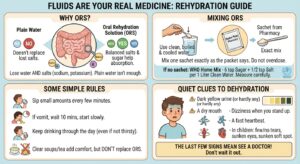
The last few signs mean it is time to see a doctor rather than wait it out.
Bringing Food Back Without Starting a War
You may have heard of the BRAT diet, which is bananas, rice, applesauce and toast. Many doctors now say it is too limited to stay on for long. The better approach is to return to normal eating early, as soon as the vomiting calms down.
Your appetite after gastroenteritis will probably be shy at first, and that is fine. Start with gentle, plain foods:
- Plain boiled rice or soft khichdi
- Ripe bananas
- Toast or a plain roti
- Boiled potatoes
- Clear chicken soup
- Plain yoghurt, if it sits well with you
Eat small portions, around half a cup, every couple of hours. As the cramps fade, widen your menu a little each meal. Listen to your stomach. If something makes the cramps return, step back for a few hours.
The Banned List: Foods That Make Things Worse
For a few days, steer clear of these:
- Greasy, fried or very spicy food, which irritates a sensitive gut
- Sugary drinks, soda and packaged juices, which can pull water into the bowel and worsen diarrhoea
- Caffeine and alcohol, which can dehydrate you
- Raw salads and unpeeled fruit while your gut is still fragile
- Large amounts of milk and cream, if they upset you
Be patient with yourself. Your gut lining needs time to heal, and it can stay touchy for several days even after you start feeling human again.
Kitchen Remedies: Sorting Fact from Fiction
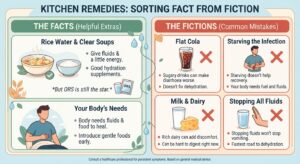
Every family has a cure for gastroenteritis, and some are better than others. Here is a quick reality check.
- Fact: Rice water and clear soups give you fluids and a little energy. They are helpful extras, but ORS is still the star.
- Fiction: Flat cola will fix everything. Sugary drinks can actually make diarrhoea worse.
- Fiction: Starving the infection out is smart. Your body needs fluids and, soon after, food to recover.
- Fiction: Milk coats and soothes the stomach. For many people, rich dairy just adds more discomfort right now.
- Fiction: Stopping all fluids will stop the vomiting. It is actually the fastest road to dehydration.
Medicines: Helpful Friends and Sneaky Enemies
Treating gastroenteritis with medicine needs some care. Check with a doctor or pharmacist first, especially for children, older adults and pregnant women.
- Paracetamol can ease fever and body aches. Follow the dose printed on the label.
- Loperamide, an anti-diarrhoea tablet, may help adults with mild watery diarrhoea. It should not be used when there is blood in the stool or a high fever, and it is not for young children.
- Antibiotics are only for specific bacterial or parasitic infections that a doctor has identified.
- Ibuprofen and aspirin can irritate the stomach and strain the kidneys when you are dehydrated, so many doctors suggest avoiding them.
- Zinc is recommended by the WHO for children with diarrhoea, usually for 10 to 14 days. Only give it in the dose a doctor or health worker advises.
- Probiotics may slightly shorten diarrhoea for some people, but study results are mixed, so do not expect a miracle.
Little Ones, Elders and Expecting Mothers Need Extra Care
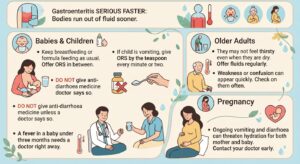
Gastroenteritis can turn serious faster in some people because their bodies run out of fluid sooner.
Babies and children
- Keep breastfeeding or formula feeding as usual, and offer ORS in between.
- If a child is vomiting, give ORS by the teaspoon every minute or two.
- Do not give anti-diarrhoea medicine unless a doctor says so.
- A fever in a baby under three months old needs a doctor right away.
Older adults
- They may not feel thirsty even when they are dry, so offer fluids regularly.
- Weakness or confusion can appear quickly. Check on them often.
Pregnancy
- Ongoing vomiting and diarrhoea can threaten hydration for both mother and baby. Contact your doctor early instead of waiting.
Rest Is Not Laziness
Your body is working overtime right now. Fighting an infection takes real energy, which is why you feel so drained. Cancel plans, switch off the work emails, and sleep when sleep comes.
Even after the worst has passed, tiredness for a few extra days is normal. Do not judge yourself for moving slowly. Gentle walking around the house is fine, but save the gym and the long errands for later.
Mistakes That Quietly Slow Recovery
These small slips often make gastroenteritis last longer than it needs to:
- Rushing back to spicy biryani on the second day
- Gulping ice cold drinks on an angry stomach
- Ignoring early signs of dehydration
- Taking old antibiotics without advice
- Skipping handwashing after using the toilet
- Heading back to work the moment the diarrhoea eases
Red Flags: When Home Care Is Not Enough
Most gastroenteritis cases are mild, but some need a doctor. Seek medical help if you notice:
- Blood in your stool, or black, tar like stools
- A fever above 39°C (102°F)
- Vomiting so constant that you cannot keep down even sips of fluid for a day
- Diarrhoea lasting longer than two to three days
- Signs of severe dehydration, such as no urine for eight hours or more, extreme weakness, confusion or fainting
- Severe belly pain that does not ease
- Symptoms that begin after travelling to another country
When in doubt, call. It is always better to be checked and told you are fine.
How to Stop Gastroenteritis from Spreading Through Your Home
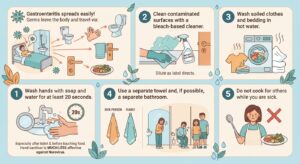
Gastroenteritis spreads easily, especially the viral kind. Germs leave your body in stool and vomit, then travel on hands, towels, door handles and food.
If someone at home has gastroenteritis, take these steps:
- Wash hands with soap and water for at least 20 seconds, especially after the toilet and before touching food. Hand sanitiser is much less effective against norovirus.
- Clean contaminated surfaces with a bleach based cleaner, diluted as the label directs.
- Wash soiled clothes and bedding in hot water.
- Use a separate towel and, if possible, a separate bathroom.
- Do not cook for others while you are sick.
Heading Back to Work or School
After gastroenteritis, the usual advice from health agencies is to stay home until at least 48 hours after your last episode of vomiting or diarrhoea. You may feel fine earlier, but you can still pass the germ on.
If you handle food, care for patients or work with children, you may need to wait longer, so follow the rules of your workplace or local health office. For kids, the same two day wait is a good guide, and it protects classmates too.
Street Food and Travel Smarts
Many cases of gastroenteritis in travellers come from food and water that were handled unsafely. You do not have to give up the joy of street food, but choose wisely:
- Pick stalls that are busy, since fast turnover means fresher food.
- Eat food that is served piping hot.
- Be careful with cut fruit, salads and chutneys left sitting in the open.
- Drink bottled, boiled or properly filtered water.
- Be cautious with ice cubes if you are unsure of the water source.
Preventing the Next Round
Preventing gastroenteritis is much easier than suffering through it. A few habits go a long way:
- Wash hands before eating and after using the toilet.
- Cook chicken, meat and eggs thoroughly.
- Wash fruits and vegetables well.
- Keep raw and cooked food apart, including knives and chopping boards.
- Put leftovers in the fridge within two hours.
- Use safe, clean drinking water.
Vaccination also helps. Rotavirus is a leading cause of severe gastroenteritis in young children, and a vaccine is available to protect infants. Ask your child’s doctor or vaccinator about it.
Life After Gastroenteritis: Helping Your Gut Heal
Even after gastroenteritis has passed, your gut may need a little time. Some people notice loose stools, bloating or mild discomfort for a week or two. Others find they cannot tolerate milk for a short while.
Bring back your normal diet gradually, adding fibre and dairy slowly. Plain yoghurt can be a gentle start. Keep drinking enough fluids, and keep your meals simple while your gut finds its rhythm.
One mild after effect of gastroenteritis is that some people stay more sensitive afterwards. If symptoms last more than a few weeks, or if you lose weight without trying, see your doctor to rule out other causes.
Final Thoughts: Be Kind to Your Stomach
Gastroenteritis is unpleasant, humbling and, for most people, temporary. The plan is simple. Rest, drink the right fluids little by little, bring back gentle food early, and watch for danger signs.
Treat gastroenteritis like a visitor who overstayed. You cannot always stop the arrival, but you can control how comfortably you get through it.
Share this with a friend, a parent or a flatmate who might need it one day. Next time gastroenteritis knocks on your door, you will know exactly what your stomach is begging you to do.