

Picture two small workers who never sleep, never ask for a raise and never take a holiday. They clean your blood every minute of every day, and most of us never give them a second thought.
Then one day, they begin to slow down. They do it so quietly that you barely notice.
That quiet slowdown is how kidney failure often begins. There is no dramatic pain and no loud alarm. Just a bit more tiredness, a little puffiness around the eyes and a few bathroom trips that feel different from before.
By the time many people ask a doctor what is going on, the damage has been building for years. This is why kidney failure has earned its reputation as a silent thief.
The good news is that knowledge is a strong shield. In this blog, you will learn what your kidneys really do, what goes wrong, which warning signs to watch for and what steps can protect you and the people you love.
So grab a glass of water and let us begin.
Meet the Two Tiny Heroes Hiding Behind Your Ribs
Your kidneys are two bean shaped organs, each about the size of a fist. They sit just under your rib cage, one on each side of your spine.
Small size, huge responsibility. Every day, they filter around 200 quarts of blood and turn waste and extra water into roughly 2 quarts of urine. That is a lot of cleaning for two little organs.
Here is what they quietly do for you:
- They remove waste and extra fluid from your blood
- They balance salt, potassium and other minerals
- They help control your blood pressure
- They send signals that tell your body to make red blood cells
- They help turn vitamin D into a form your bones can use
When even a few of these jobs go wrong, your whole body feels it. Energy drops, fluid builds up and blood pressure can climb.
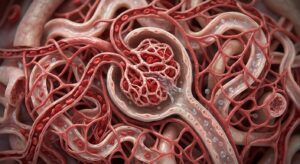
Think of the kidneys as the quiet managers of your internal balance. That is why protecting them matters long before kidney failure enters the picture.
Kidney Failure Explained in Plain Words
Kidney failure does not usually happen overnight. It means the kidneys have lost so much of their working power that they can no longer keep the body clean and balanced on their own.
Doctors estimate kidney function with a number called eGFR, which shows roughly how much blood the kidneys filter each minute. When that number drops very low and a person needs dialysis or a transplant to stay alive, it is called kidney failure, also known as end stage kidney disease.
There are two main ways kidneys can fail:
- Sudden injury (acute): Kidney function drops over hours or days because of severe dehydration, serious infection, certain medicines or a blockage in the urinary tract. With quick treatment, some people recover.
- Slow damage (chronic): Kidney disease that builds quietly over months or years and may eventually lead to kidney failure.
Sudden problems can sometimes be reversed when caught in time. Slow damage usually cannot be undone, but it can often be slowed down.
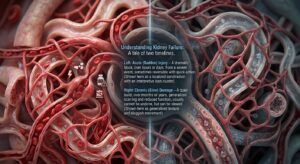
That difference is exactly why early action matters so much.
A Hidden Problem Affecting Millions of People
Chronic kidney disease affects roughly 1 in 10 people around the world, according to widely cited global estimates. In the United States, the CDC estimates that about 14 percent of adults live with it.
Now here is the part that should make us pause. Roughly 9 in 10 adults with chronic kidney disease do not know they have it.
Why? Because the kidneys are tough and have a lot of spare capacity. They can lose a large share of their function before the body sends any clear message.
This silence is what makes kidney failure so dangerous. You cannot fix a problem you cannot see, and that is why awareness is the first medicine.
A Story That Plays Out Far Too Often
Imagine a 52 year old shopkeeper we will call Imran. He has had high blood pressure for years, but he feels fine, so he skips his medicine now and then.
He feels tired most evenings and puts it down to long working hours. His ankles swell a little, so he blames his shoes.
One day a routine blood test shows his kidney function has dropped far lower than anyone expected.
Imran is not a real patient. He is an example of how kidney failure can grow in silence while life carries on as usual. The sad part is that an early check and an honest talk with a doctor could have changed the story.
What Pushes the Kidneys Over the Edge?
Kidneys rarely give up for no reason. Two health conditions top the list: diabetes and high blood pressure.
Here is how it happens. High blood sugar slowly injures the tiny blood vessels inside the kidneys. High blood pressure puts constant strain on those same delicate vessels. Over time, the filters scar and weaken, and they cannot clean the blood the way they used to.
In fact, diabetes and high blood pressure are the two most common causes of kidney failure in adults.
Other causes and risk factors include:
- Glomerulonephritis, which is inflammation of the kidney’s tiny filters
- Polycystic kidney disease, an inherited condition that creates fluid filled cysts
- Repeated kidney infections
- Long term blockage from kidney stones or an enlarged prostate
- Heart disease and obesity
- Smoking
- A family history of kidney problems
- Increasing age
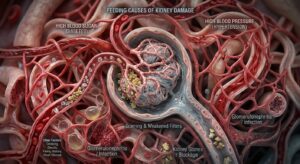
Some of these risks you can change. Others you cannot. Knowing which is which helps you put your energy where it counts.
The Everyday Painkiller Habit Nobody Talks About
Many of us reach for a pill when a headache or a sore back shows up. That is human and usually harmless.
The trouble starts when painkillers such as ibuprofen and naproxen, known as NSAIDs, turn into a daily routine. Regular heavy use can reduce blood flow to the kidneys and may harm them over time. The risk is higher in people who are dehydrated, older or already living with kidney problems.
A few smart habits:
- Use the lowest dose for the shortest time needed
- Do not mix several painkillers without medical advice
- Drink fluids when you take them, unless your doctor has told you to limit fluids
- Ask your doctor or pharmacist for safer options if you have diabetes, high blood pressure or kidney trouble
Looking after your kidneys today can lower your risk of kidney failure tomorrow.
6 Quiet Signs Your Body May Be Begging for Help
Early kidney damage often causes no symptoms at all. When signs do appear, they are easy to blame on stress, age or a busy schedule.
One sign does not prove that you have kidney failure. But several of them together deserve a doctor’s visit. Here are six messages worth knowing.
Sign 1: Tiredness That Sleep Cannot Fix
When the kidneys struggle, waste builds up in the blood. They also make less of the hormone that helps produce red blood cells, which can lead to anemia.
The result is deep tiredness, weak muscles and trouble focusing. If you feel drained for weeks without a clear reason, take it seriously.
Sign 2: Urine That Tells a Different Story
Your urine is like a daily progress report from your kidneys. Watch for:
- Foamy or bubbly urine that keeps coming back
- Dark, tea colored or bloody urine
- Needing to go more often, especially at night
- Passing much less urine than usual
Changes like these are among the earliest messages the kidneys send. Do not brush them aside.
Sign 3: Puffy Eyes and Swollen Ankles
Damaged kidneys cannot remove extra fluid and salt well. The fluid collects in the body, often around the eyes in the morning and in the feet, ankles and legs by evening.
If you press a finger on a swollen ankle and a dent stays for a few seconds, mention it to your doctor.
Sign 4: Itching You Cannot Scratch Away
Waste products left in the blood can cause stubborn itching and very dry skin. Many people try creams and lotions with little relief.
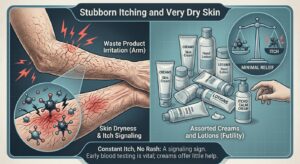
If the itch is constant and there is no rash or obvious reason, it may be worth a blood test.
Sign 5: Nausea, Poor Appetite and a Metallic Taste
A buildup of waste can make food taste strange, cause nausea and take away your appetite. Some people say even water tastes odd.
Over time, eating less can lead to weight loss and weakness, which makes everything feel harder.
Sign 6: Muscle Cramps and Shortness of Breath
Out of balance minerals can trigger painful muscle cramps, especially at night. Extra fluid can also settle in the lungs and make breathing harder.
Shortness of breath together with swelling is a signal to see a doctor soon, not later.
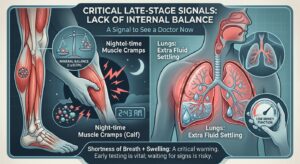
Please remember that these signs often show up late. In advanced kidney failure, several of them appear together. Waiting for symptoms is a risky plan, which is why testing matters so much.
The Five Stages of Kidney Damage and Where Kidney Failure Fits
Chronic kidney disease is grouped into five stages based on eGFR, the filtering number we talked about earlier:
- Stage 1: eGFR of 90 or higher, with some sign of kidney damage
- Stage 2: eGFR of 60 to 89, a mild decrease
- Stage 3: eGFR of 30 to 59, a moderate decrease
- Stage 4: eGFR of 15 to 29, a severe decrease
- Stage 5: eGFR below 15, which is kidney failure
According to the National Institute of Diabetes and Digestive and Kidney Diseases, kidney failure means your kidneys are working at less than 15 percent of normal.
Stage 5 is serious. But the earlier stages leave plenty of room for action. People who catch the problem early and control their blood pressure and blood sugar can often slow the damage down, sometimes for many years.
The Simple Tests That Can Save Your Kidneys
Here is some relief. Checking kidney health is quick and painless. The basics include:
- A blood test for creatinine, used to calculate your eGFR
- A urine test for albumin, a protein that leaks out when the filters are damaged
- A blood pressure check
Sometimes doctors also order an ultrasound to look at the size and shape of the kidneys.
Who should ask about testing? Anyone with:
- Diabetes
- High blood pressure
- Heart disease
- A family history of kidney failure
- Age above 60
If any of these describe you, ask your doctor about yearly screening. It could be the most valuable ten minutes of your year.
Life With Kidney Failure: What Treatment Really Looks Like
Hearing the words kidney failure can feel like the floor has disappeared. Take a breath. Today there are real treatment options, and many people go on to live meaningful lives.
The main options are:
- Hemodialysis: A machine filters the blood outside the body. It is usually done at a dialysis center, often three times a week for several hours at a time.
- Peritoneal dialysis: The lining of the belly and a special cleansing fluid are used to clean the blood. Many people can do this at home.
- Kidney transplant: A healthy kidney from a living or deceased donor is placed in the body. For many eligible people it offers the best long term results, but lifelong anti rejection medicines are needed.
- Conservative care: For some older or very ill people, the focus is on comfort, symptom relief and quality of life without dialysis.
The right choice depends on age, overall health, lifestyle and personal wishes. A kidney specialist, called a nephrologist, can walk you through the pros and cons.
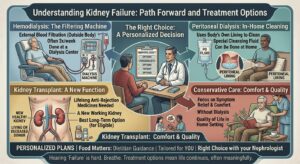
Food matters too. A kidney dietitian may guide you on salt, potassium, phosphorus and fluids. Rules differ from person to person, so avoid copying someone else’s plan.
The Emotional Side Nobody Prepares You For
Doctors talk about numbers and machines. Patients also live with feelings.
Life with kidney failure can bring fear, anger, sadness and plain exhaustion from endless appointments. If you or someone you love feels this way, it is completely normal.
Some things that help:
- Talk openly with family and friends
- Join a support group, in person or online
- Tell your care team if your mood stays low
- Give yourself permission to rest
If you are the family member, you matter more than you think. Go to appointments, learn about the diet, cook together and simply listen. Sometimes listening is the best treatment of all.
Everyday Habits That Protect Your Kidneys
You cannot control everything, but you can control a surprising amount. Try these steps:
- Check your blood pressure regularly and follow your doctor’s target
- Keep blood sugar steady if you have diabetes
- Move your body for about 30 minutes on most days
- Aim for a healthy weight
- Quit smoking
- Drink water regularly through the day, unless your doctor limits your fluids
- Use painkillers carefully
- Get yearly kidney checks if you are at higher risk
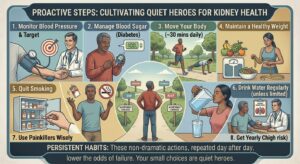
None of these steps look dramatic. But repeated day after day, each one lowers the odds of kidney failure. Small habits are quiet heroes too.
Foods and Drinks Worth Thinking About
Food cannot cure kidney failure, but your plate can lighten the load on your kidneys. Some friendly guidelines:
- Cut back on salt, since too much sodium raises blood pressure
- Go easy on packaged snacks, instant noodles and fast food, which often hide a lot of salt
- Choose water over sugary drinks
- Enjoy plenty of vegetables, fruits and whole grains, unless a doctor has asked you to limit certain ones
- Do not start high protein diets or supplements without medical advice
If you already live with kidney failure or earlier stage disease, the rules may change. Some people need to limit potassium or phosphorus, which is why a personal plan from a dietitian beats generic advice from the internet.
When to See a Doctor Without Delay
Some situations should not wait for a routine appointment. Seek medical help promptly if you notice:
- Very little or no urine for a day
- Sudden, severe swelling of the face, legs or belly
- Shortness of breath or chest pain
- Confusion, extreme drowsiness or fainting
- Ongoing vomiting that stops you from keeping fluids down
These can point to sudden kidney injury or a serious worsening of kidney failure. Quick treatment can protect your kidneys and sometimes save a life.
Even without these red flags, trust your instincts. If something feels off, get checked. Catching a problem early may stop it from turning into kidney failure later.
Quick Answers to Questions People Often Ask
Can damaged kidneys heal?
Sudden injury can sometimes recover with prompt treatment. Chronic damage usually cannot be reversed, but it can often be slowed.
Can a person live with one kidney?
Yes. Many people live healthy lives with one working kidney, including people who donate a kidney to a loved one.
Does drinking huge amounts of water prevent kidney failure?
Staying hydrated is good for you. But forcing extreme amounts is not a cure. Controlling blood pressure and blood sugar, and getting tested, protect your kidneys far more.
Is kidney failure a death sentence?
No. With dialysis or a transplant, many people live for years, and some live for decades. Early care makes a big difference.
Are herbal remedies safe if I am at risk of kidney failure?
Not always. Some herbal products and supplements can harm the kidneys, so always tell your doctor what you take.
Can young people be affected?
Yes. It is more common with age, but inherited conditions, infections and diabetes can affect younger people too.
Final Thoughts: Listen Before Your Body Has to Shout
Your kidneys ask for very little. A bit of water, steady blood pressure, controlled sugar and an occasional check up. In return, they work for you every single second.
Kidney failure may be silent, but you do not have to be. Learn the signs, know your risks and take the simple tests.
If you are over 60, or you live with diabetes, high blood pressure or a family history of kidney problems, book a kidney check this month. Not next year. This month.
Share this blog with someone you love. It may be the nudge that protects two tiny organs and a whole lifetime.
This blog is for education only and does not replace advice from a doctor.



