
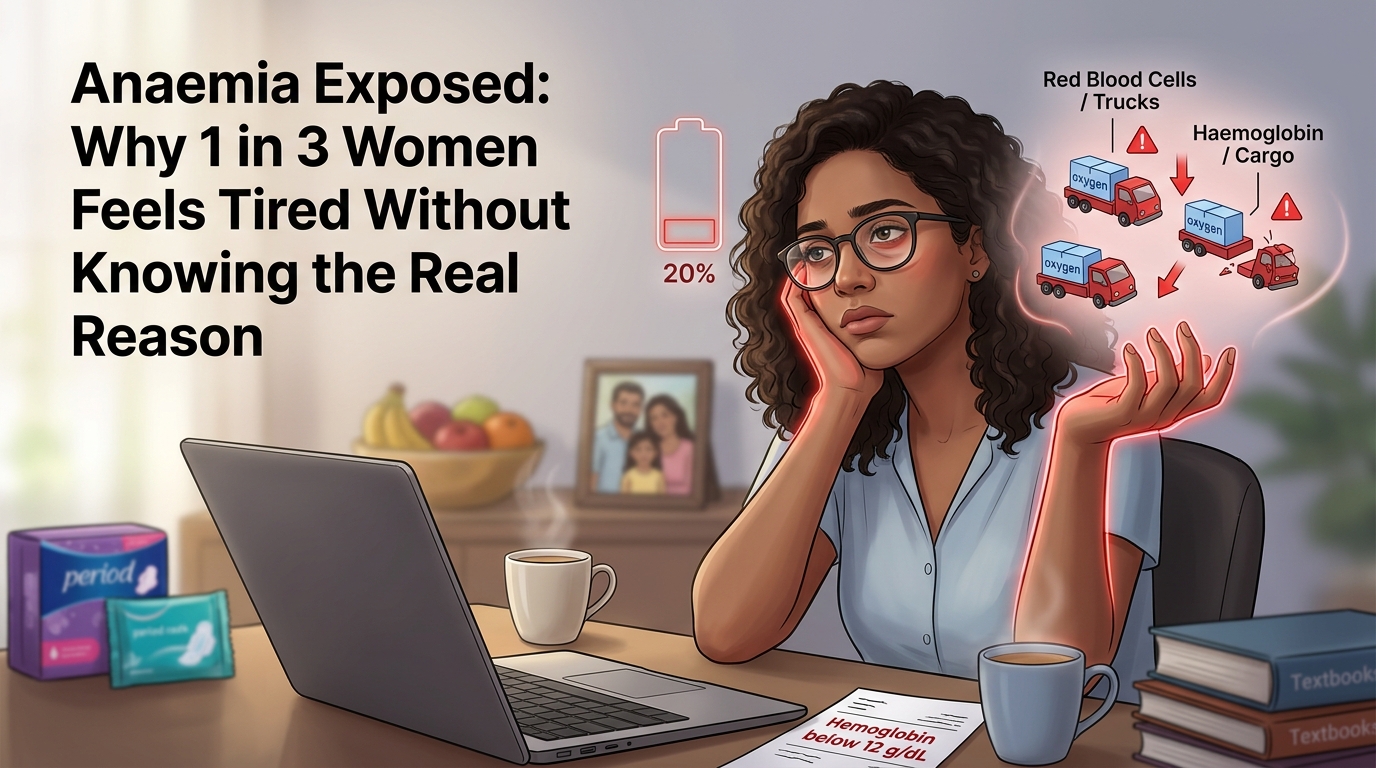
You slept eight hours. You had your morning tea. And you still feel like your phone battery is stuck at 20 percent.
Sound familiar?
Many women call this feeling normal. They blame work, family, exams, the weather or simply getting older. They keep pushing through and tell themselves that everybody is tired these days.
But sometimes tiredness is not a personality trait or the price of a busy life. Sometimes it is your blood quietly asking for help, and anaemia is one of the most common reasons behind it.
The tricky part is that it rarely makes a dramatic entrance. It builds slowly, so your body adjusts and you forget what feeling energetic was like.
In this blog, you will find the warning signs, the real causes, the simple tests and the daily habits that can help. No scary jargon, just clear and honest information.
Let us start with the signs, because your body has probably been dropping hints already.
6 Signs Your Body Is Waving a Red Flag
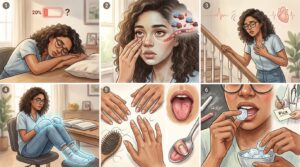
Anaemia often creeps in so gently that you stop noticing the change. These six signs deserve a second look. One sign alone proves nothing, but a group of them is a good reason to get tested.
Sign 1: Tiredness That Feels Heavier Than Sleep
Your red blood cells carry oxygen to every muscle and organ. When there are too few of them, or too little haemoglobin inside them, your body runs on less fuel.
The result is weakness, low stamina and a foggy head, even after a full night of rest.
Sign 2: Pale Skin and Pale Inner Eyelids
Blood gives the skin a healthy glow. With less haemoglobin, the face, lips and the inside of the lower eyelids can look paler than usual.
Try this: gently pull down your lower eyelid in good light. A very pale or whitish inner lining can be a clue. It is only a clue, never a diagnosis, but it can be easier to judge than facial colour, especially on darker skin.
Sign 3: Dizziness and a Racing Heart
When oxygen is low, your heart works harder to move blood around. You may feel your heartbeat in your chest or ears, get dizzy when you stand up quickly, or feel breathless after climbing a single flight of stairs.
Sign 4: Cold Hands and Feet
Your fingers and toes may feel icy even in warm weather. Less oxygen rich blood reaching the edges of the body can be one reason. Some people also feel unusually sensitive to cold in general.
Sign 5: Brittle Nails, Hair Fall and a Sore Tongue
These signs are more common in anaemia linked to iron or vitamin shortages. Look out for:
- Nails that crack easily, or in severe iron deficiency become thin and spoon shaped
- Hair that sheds more than usual
- A smooth, sore or swollen tongue
- Painful cracks at the corners of the mouth
Sign 6: Strange Cravings for Ice, Chalk or Clay
This one surprises people. Some people with iron deficiency crave ice, and some even crave non food items like soil or chalk. Doctors call the second one pica.
If you are crunching through ice cubes all day, mention it to your doctor. It is a surprisingly well known clue.
Headaches, trouble concentrating and restless legs can also show up. If several of these signs sound like you, anaemia could be the missing piece, and a simple blood test can tell you.
Anaemia Explained Without the Medical Jargon
Think of your blood as a delivery fleet. Red blood cells are the trucks and haemoglobin is the cargo space that carries oxygen around the body.
Anaemia means you do not have enough healthy trucks, or the trucks are carrying too little.
Doctors usually spot it with a haemoglobin test. The World Health Organization uses these general cut offs for adults:
- Non pregnant women: below 12 g/dL
- Men: below 13 g/dL
- Pregnant women: below 11 g/dL
Ranges can differ for children, older adults and people living at high altitude, so always let your doctor interpret your report.
In most cases, anaemia is not a disease on its own. It is a sign that something else is going on, such as low iron, a vitamin shortage or hidden blood loss. That is why finding the cause matters as much as fixing the number.
A Global Problem Hiding in Plain Sight
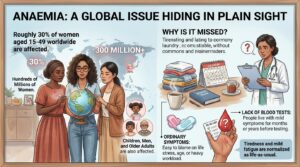
Here is a number that deserves your attention. The World Health Organization estimates that roughly 30 percent of women aged 15 to 49 around the world are affected by anaemia.
That is hundreds of millions of women. Children, men and older adults are affected too.
So why do so many people miss it? Because the symptoms look ordinary. Tiredness is easy to blame on life. Many people live with mild anaemia for months or even years before anyone checks their blood.
Why Women Are Hit Hardest by Anaemia
Women face a few extra challenges that raise the risk:
- Monthly periods: Heavy bleeding means regular loss of blood and iron
- Pregnancy: The body needs much more iron to support the baby and extra blood volume
- Breastfeeding and close pregnancies: Iron stores get little time to recover
- Low iron diets: Skipped meals, strict dieting or limited access to iron rich foods all add up
Many women do not realise their periods are heavy. Warning signs include soaking through a pad or tampon every hour for several hours, passing large clots, or bleeding for more than seven days.
Please mention this to a doctor. Heavy periods are common, and they are treatable.
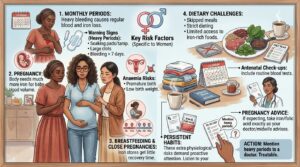
During pregnancy, anaemia has been linked with a higher risk of problems such as premature birth and low birth weight. That is why antenatal check ups usually include blood tests. If you are expecting, take iron or folic acid exactly as your doctor or midwife advises.
The Silent Habit of Putting Everyone Else First
Ask a woman how she is, and the answer is often “fine, just tired.” Many women look after children, parents, jobs and homes before they look after themselves. Their own fatigue slides to the bottom of the list.
That habit has a cost. When tiredness is treated as a normal part of life, anaemia can sit unnoticed for years. A treatable problem stays hidden simply because nobody stopped to check.
You deserve the same care that you give everyone else. Booking one blood test is not selfish. It is smart.
Not All Blood Problems Look Alike: Know Your Type
Not all anaemia is the same, and the cause decides the treatment. The main types include:
- Iron deficiency: The most common type, caused by low iron intake, poor absorption or blood loss
- Vitamin B12 deficiency: B12 is needed to make healthy red blood cells. Low intake, such as in strict vegan diets, or poor absorption can cause trouble
- Folate deficiency: Folate comes from foods like leafy greens and legumes, and needs rise in pregnancy
- Chronic disease type: Long term conditions such as kidney disease or ongoing inflammation can reduce red blood cell production
- Inherited types: Sickle cell disease and thalassaemia are passed down in families
- Aplastic type: Rare but serious, when the bone marrow does not make enough blood cells
This is why guessing is risky. Taking iron when your anaemia is caused by low B12, for example, will not fix the real problem.
Hidden Causes Nobody Thinks About
Sometimes the problem is not what you eat but where you are losing blood, or how well your body absorbs nutrients. Possible hidden causes include:
- Slow bleeding in the stomach or gut from ulcers, piles or long term use of some painkillers
- Parasite infections such as hookworm, which are common in some parts of the world
- Coeliac disease and other conditions that reduce nutrient absorption
- Some stomach acid medicines used for a long time, which may reduce iron absorption
- Frequent blood donation without enough time to rebuild iron
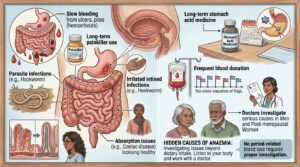
This is why doctors take it seriously when men, or women after menopause, are found to have iron deficiency anaemia. They do not lose blood through periods, so the cause needs proper investigation.
What Happens If You Ignore the Warning Signs?
Mild anaemia may only make you tired. But left untreated, it can slowly touch every part of life:
- Constant weakness that hurts work, study and daily routines
- Poor concentration and low mood
- Extra strain on the heart, which in severe long term cases can lead to heart problems
- Complications during pregnancy
- Slower growth and learning difficulties in children
The encouraging news is that most common types respond very well to treatment once the cause is found.
The Emotional Cost of Running on Empty
Low energy does not only affect the body. When you are always tired, small tasks feel huge, patience runs short and focus slips.
Iron deficiency has been linked with poor concentration and low mood in some people. Many people with anaemia describe feeling guilty or lazy, when in reality their body is short of oxygen carrying capacity.
If this sounds familiar, be kind to yourself. Low mood has many causes, so if it lasts, talk to a doctor.
How Doctors Find the Real Reason
Diagnosing anaemia usually starts with one simple blood test called a complete blood count, or CBC. It shows:
- Your haemoglobin level
- The number and size of your red blood cells
Depending on the results, your doctor may also check:
- Ferritin, which reflects your iron stores
- Vitamin B12 and folate levels
- Other tests to look for hidden bleeding or long term illness
Here is a useful tip. Iron stores can run low before haemoglobin falls, so ask your doctor whether a ferritin test makes sense for you.
Also remember that tiredness has many causes, including poor sleep, stress, thyroid problems and diabetes. A test beats a guess every time.
Food Fixes: Let Your Plate Do Some of the Work
Food alone cannot always cure anaemia, especially when there is heavy bleeding or an absorption problem. But a smart plate supports every treatment.
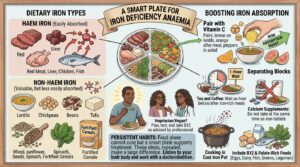
There are two kinds of dietary iron:
- Haem iron: Found in red meat, liver, chicken and fish. The body absorbs it more easily
- Non haem iron: Found in lentils, chickpeas, beans, tofu, seeds, spinach and iron fortified cereals. It is absorbed less easily but is still valuable
Here is how to help your body absorb more iron:
- Pair iron foods with vitamin C, such as lemon on lentils, guava or orange after a meal, or peppers in a salad
- Keep tea and coffee away from iron rich meals, because they can block absorption. Waiting an hour or so helps
- Do not take calcium supplements at the same time as iron tablets
- Cooking in cast iron pots can add a small amount of iron to food
- Include B12 and folate rich foods like eggs, dairy, fish, leafy greens and legumes
If you follow a vegetarian or vegan diet, you can still protect yourself against anaemia with good planning, regular testing and, when needed, B12 supplements advised by a professional.
Easy Iron Rich Meal Ideas
Healthy eating does not have to be complicated. Here are a few simple ideas:
- Breakfast: Eggs with tomato and whole wheat toast, plus a fruit rich in vitamin C
- Lunch: Lentil dal with a squeeze of lemon, or a chickpea salad with peppers and parsley
- Snack: A handful of roasted chickpeas, pumpkin seeds or dates
- Dinner: Chicken, fish or lean red meat with vegetables, or beans with rice and a tomato salad
Liver is very rich in iron, but it is also very high in vitamin A, so people who are pregnant should avoid it. When in doubt, ask your doctor.
Anaemia Treatment: What Actually Works
Treatment depends on the cause, which is why self treating can backfire. Common options include:
- Iron tablets or liquid: The usual choice for iron deficiency. Doctors often advise continuing for a few months to rebuild stores. Side effects can include constipation, nausea and dark stools
- Iron through a drip: Used when tablets are not tolerated or not absorbed well
- Vitamin B12 injections or tablets: For B12 deficiency
- Folic acid supplements: For folate deficiency
- Treating the root cause: Managing heavy periods, healing ulcers or treating infections
- Specialist care: Blood transfusions or other treatments in severe or complex cases
A few safety notes:
- Do not start high dose iron on your own. Too much iron can cause harm and may hide the real problem
- Keep iron tablets safely out of children’s reach, because an overdose is dangerous for them
- Do not stop early just because you feel better. Your iron stores need time to refill
Some people notice they feel better within a few weeks, though full recovery of iron stores can take longer.
Not Just a Women’s Problem
Women get most of the attention, but anaemia can affect almost anyone.
- Children and teenagers: Fast growth uses a lot of iron, so diets that are low in it can leave them short
- Men: Anaemia in men is less common, and it often points to an underlying cause such as blood loss or chronic illness
- Older adults: Poor appetite, long term conditions and certain medicines can all play a part
- Athletes: Heavy training can increase iron needs, especially for endurance runners
If you notice a child who is pale, easily tired, irritable or not eating well, it is worth asking a doctor about a blood test.
Myths That Keep People Tired
Myth: Only thin or weak people get it.
Truth: Anyone can, including people with a healthy or higher body weight.
Myth: Spinach alone will fix it.
Truth: Spinach contains iron, but the body absorbs it poorly. A balanced mix of iron rich foods works better.
Myth: Feeling tired always means anaemia.
Truth: Many things cause tiredness. Get tested instead of guessing.
Myth: Iron tablets are harmless, so everyone can take them.
Truth: The wrong dose, or the wrong reason, can cause trouble.
Myth: One glass of beetroot juice cures it.
Truth: Beetroot can be part of a healthy diet, but it is not a stand alone cure.
When to See a Doctor Right Away
Some situations should not wait. Get urgent medical help if you notice:
- Chest pain
- Severe shortness of breath
- Fainting or near fainting
- A fast heartbeat that does not settle
- Black, tarry stools or blood in stools or vomit
- Very heavy bleeding that soaks through pads quickly
These can be signs of severe anaemia or a serious bleed. Do not wait for your next appointment.
Your Simple Action Plan for This Week
Feeling overwhelmed? Start small:
- Book a blood test and ask about haemoglobin and ferritin
- Note how heavy your periods are and how long they last
- Add a vitamin C source to your iron rich meals
- Move your tea and coffee away from main meals
- Talk to your doctor before starting any supplement
- Write down your energy levels for a week so you can share a clear picture
Small steps like these add up. Finding anaemia early makes treatment simpler, faster and far more effective.
Quick Answers to Common Questions
Can anaemia be cured?
Many types, especially the iron deficiency type, can be treated successfully once the cause is found and managed. Some inherited and long term types need ongoing care.
How long does recovery take?
Some people feel better within weeks, but rebuilding iron stores often takes a few months. Your doctor will guide you.
Can I take iron without a blood test?
It is better not to. Testing shows whether iron is the real problem and how much you need.
Is it dangerous?
Mild cases are manageable, but severe or untreated cases can strain the heart and affect pregnancy, so do not ignore it.
Final Thoughts: Your Energy Is Not a Luxury
Feeling tired every day is not something you have to accept. Your body is not lazy and you are not weak. Sometimes your blood simply needs attention.
Anaemia is common, and it is also very treatable when it is found early. Listen to the small signs, ask for the right tests and give your body the nutrients it needs.
If you recognised yourself in this blog, book a blood test this week. Not someday. This week.
Share this with a mother, sister, wife or friend who always says she is just tired. It might be the nudge she needs.
This blog is for education only and does not replace advice from a doctor.



