Every election season comes with big promises. Lower prices. More jobs. Cheaper loans. If you have sat through enough campaign speeches, you already know the pattern.
But most of us do not feel the economy through speeches. We feel it at the gas pump, in the checkout line, and on the day the rent or the mortgage payment leaves the bank account.
The midterm elections arrive on November 3, 2026, and a lot of people are asking the same thing. Once the votes are counted, will anything really change? Will inflation finally cool, will hiring pick up, and will borrowing get a little cheaper?
The honest answer is more complicated than any campaign ad will admit. An election can change the direction of policy, but it does not flip an economic switch overnight. Inflation, jobs and interest rates move on their own slow schedules.
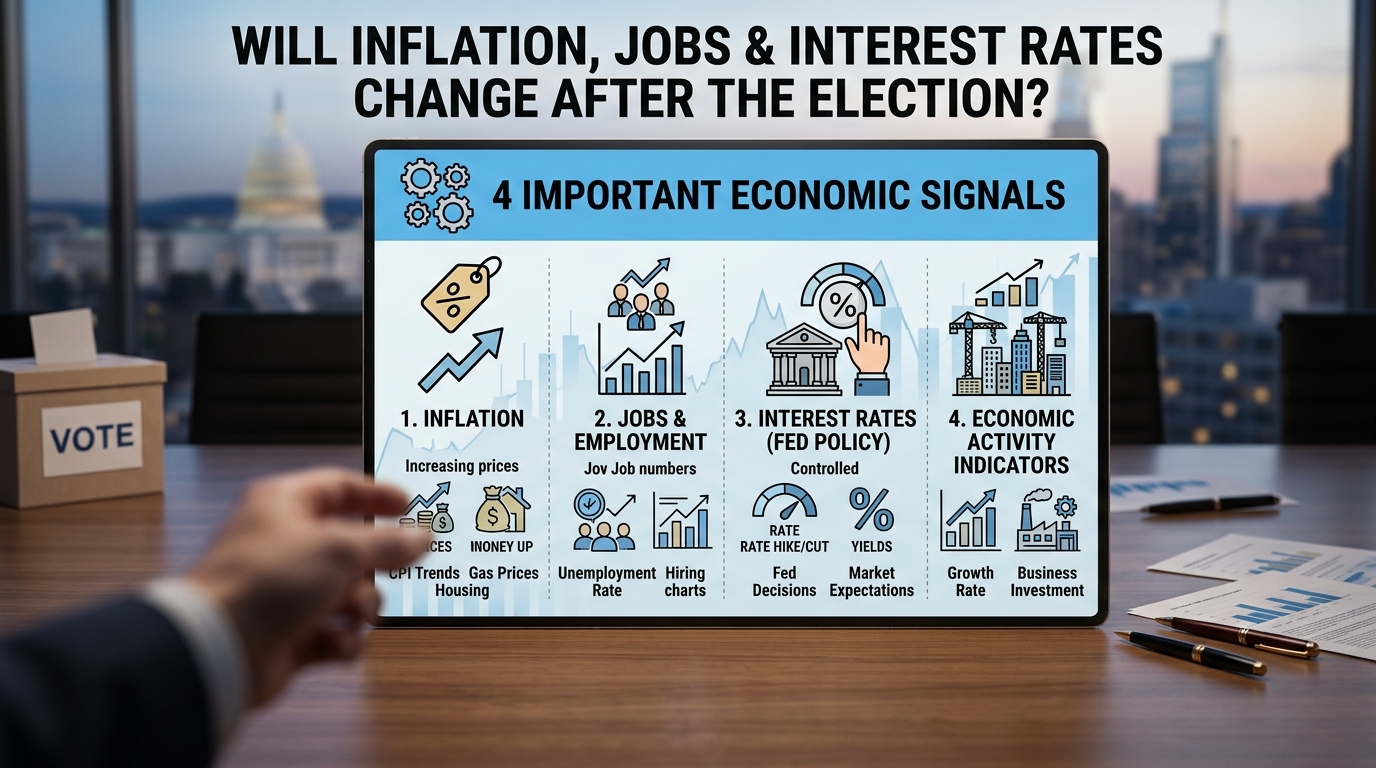
So instead of guessing, this guide walks you through four signals that are actually worth your attention. Learn to read them, and the news will make a lot more sense, no matter who ends up winning.
Where Things Stand Right Now
Let’s begin with a quick snapshot, because it helps to know where the starting line is.
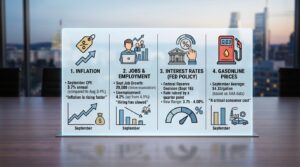
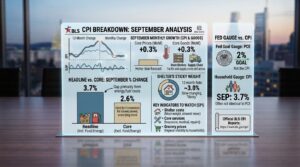
- Reports on the September consumer price index put annual inflation at 3.7 percent, up from 3.4 percent in August.
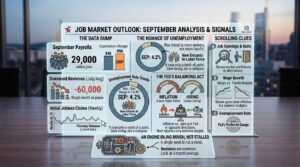
- Employers added only 29,000 jobs in September, far below what economists were expecting, and the unemployment rate edged up to 4.2 percent from 4.1 percent.
- The Federal Reserve raised its key interest rate by a quarter point on September 16, to a range of 3.75 to 4.00 percent.
- Gasoline averaged about $4.33 a gallon in September, based on AAA data cited by market analysts.
That is a tricky mix. Inflation is rising faster again, hiring has slowed, and the central bank has been leaning toward higher rates instead of lower ones.
Nobody can promise that one election will tame inflation or untangle all of this. What we can do is figure out which pieces a new Congress might influence, and which pieces will keep moving no matter what happens on November 3.
Why Your Wallet Feels It Before the Data Does
Official reports arrive weeks after the shopping is done. The September figures, for example, were published on October 14, long after families had already paid those September fuel and grocery bills.
That delay explains a common frustration. You may feel squeezed months before an economist announces that prices have moved. It also explains why public mood and official numbers sometimes disagree.
A simple habit helps:
- Write down what you pay for a few regular items, such as milk, bread and fuel.
- Check the same items every month.
- Compare your own notes with the official reports.
Your personal list will not replace government data, but it gives you an early, honest signal.
What an Election Can Change, and What It Cannot
This part surprises many people, so let’s slow down.
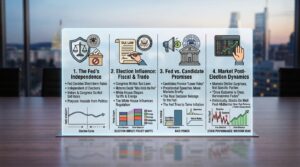
The Federal Reserve decides short-term interest rates, and it is designed to work independently of election cycles. Voters do not choose the people who sit on its rate-setting committee, and Congress does not vote on each rate decision. That separation is on purpose, so that rate choices are not bent by short-term politics.
What elections do shape is fiscal and trade policy. Here is a simple way to think about it:
- Congress writes tax laws and spending bills, so the midterms decide who holds the pen.
- The White House has a big say on tariffs, energy policy and regulation.
- The Federal Reserve handles interest rates and tries to keep inflation in check.
So when a candidate promises to “lower interest rates,” treat that with some care. A president can speak about rates, and speeches can move markets for a day or two, but the real decision belongs to the Fed.
There is one more thing worth knowing. Financial markets tend to dislike surprises more than they dislike any particular party. Once the outcome is clear, a lot of the nervous energy usually fades. Historically, stocks have often done fine in the year after midterm elections, although past patterns never guarantee future results.
In short, the election matters, but it works through slower channels than most headlines suggest. Now let’s look at the four signals.
Signal One: The Gas Pump Tells the Truth About Inflation
If you want a fast read on how prices are behaving, start with energy. Almost everything we buy has fuel in its cost somewhere, from the delivery truck that brings vegetables to the store to the plane that carries your cousin home for the holidays.
According to AAA data summarized by market analysts, gas prices averaged $4.33 a gallon in September, which beat the previous September record of $3.83 set in 2023. By early October, the national average was still sitting around $4.37.
That matters because energy is a big reason the headline number jumped. When pump prices climb, the monthly inflation report tends to climb with them.
Here is the tricky part. Oil prices respond to events overseas, supply decisions by producing countries and shipping disruptions. A new Congress cannot switch those forces off. Policy can help at the edges, through things like emergency reserves, permitting rules or sanctions, but the effects usually take months and are rarely dramatic.
What to watch:
- The weekly national gas average, which AAA publishes every day
- Crude oil prices, especially after any major geopolitical news
- Airline fares and shipping costs, which often follow fuel with a small delay
If pump prices drift lower for several weeks in a row, the headline number usually follows. If they keep climbing, expect the next report to stay uncomfortable.
Signal Two: Rent, Food and the Stubborn Side of Inflation
Here is something that confuses a lot of people. You will hear two numbers in the news, headline and core. They can tell very different stories.
Headline inflation includes everything, food and energy too. Core inflation strips out food and energy because those two categories jump around a lot from month to month. Economists lean on core inflation to see the slower, steadier trend underneath.
In the September report, core inflation was reported at 2.6 percent from a year earlier, and core prices rose 0.3 percent over the month, which was a bit hotter than forecasters expected. Core goods prices also rose 0.3 percent over the month, which suggests that tariffs and supply costs are still working their way through store shelves.
Notice the gap. Headline inflation sits at 3.7 percent while core sits at 2.6 percent. Most of that difference comes from energy. That is actually a useful clue, because it tells us the recent jump leans on fuel costs more than on a broad surge across the whole economy.
Then there is housing. Shelter is the biggest single piece of the consumer price index, and in the August report it was running at roughly 3 percent a year. Rent and housing costs change slowly, which is exactly why housing inflation is called sticky.
Keep an eye on:
- Shelter costs, since they carry the most weight in the index
- Core services, which include things like insurance, medical visits and repairs
- Grocery prices, because food is the category households notice first
One more small but important detail. The Fed’s official 2 percent goal is measured with a different gauge called the PCE price index, not the CPI. The two usually move in the same direction, but they are not identical, so do not be shocked when the numbers do not match perfectly.
If you want to check the monthly numbers for yourself, the Bureau of Labor Statistics publishes every consumer price report for free at https://www.bls.gov/cpi/.
Signal Three: The Job Market Is Whispering, So Listen Closely
Now let’s talk about work, because jobs are where economic news turns personal very fast.
The September jobs report was soft. Employers added 29,000 jobs, while forecasts had ranged from roughly 84,000 to 95,000. On top of that, the government revised July and August down by a combined 60,000 jobs. That is a rough month on paper.
But here is a detail that deserves some context. The unemployment rate rose only a tenth of a point, to 4.2 percent, and it has stayed between 4.1 percent and 4.3 percent since March. Part of the recent rise was linked to more people entering the labor force, which can nudge the rate up even when companies are not laying people off in large numbers.
So the picture is slow hiring, not a collapse. Think of it as an engine that is idling a bit rough, not one that has stalled.
Why does this matter for the election? Because jobs and inflation pull the Fed in opposite directions. When inflation runs too hot, the Fed leans toward higher rates. When hiring weakens, it leans toward easing. Right now both forces are in play, and that is exactly why the next few reports will carry so much weight.
Useful job market clues:
- The unemployment rate, which Fed officials watch more closely than the payroll count
- Weekly jobless claims, released by the Labor Department every Thursday
- Job openings and quits, which show how confident workers feel about leaving for something better
- Wage growth, because slower pay gains can ease inflation pressure but also squeeze family budgets
A single weak month does not prove a recession. Early job numbers get revised often, sometimes by a lot, so it is smarter to look at the three month trend than to react to one headline.
Signal Four: The Fed’s Next Move and What It Does to Your Loans
This is the signal that touches your monthly payments most directly.
After the September 16 hike, the next Fed decision is scheduled for October 28. Before the weak jobs report, with inflation heating up, traders had seen a decent chance of another increase. Afterward, market tools such as the CME FedWatch gauge showed roughly a three in four chance that the Fed would simply hold rates steady.
Some Fed officials have also sounded patient. New York Fed President John Williams said that one more upward adjustment may be needed this year, but that there was no need for urgency, based on news coverage of his remarks. That is careful language, and it tells you the committee wants to see more data first.
So what does a rate decision mean for ordinary households?
- Credit cards. Most card rates are variable, so they tend to move when the Fed moves.
- Savings accounts. Higher rates usually mean better yields on high-yield savings, although banks adjust at their own pace.
- Mortgages. These follow longer term Treasury yields more closely than the Fed’s rate, so they can move even when the Fed stays put.
- Car loans and personal loans. These usually respond to rate expectations too, with a delay.
Another handy number to watch is the two-year Treasury yield. It tends to move with what traders expect the Fed to do next. When it rises, rate hike bets are growing. When it falls, markets are leaning toward patience or cuts.

Here is the important point for election watchers. The Fed will make its choices based on inflation and jobs, not on who wins in November. A new Congress could affect the picture indirectly, for example through tax and spending decisions that change how much money moves through the economy, but the rate decision stays with the central bank.
Five Dates Worth Circling on Your Calendar
Markets love a calendar, and so should you. Here are the dates that will likely shape the next few months:
- October 28. The Federal Reserve announces its rate decision.
- November 3. Election Day.
- Mid November. The October consumer price report arrives, and it will show whether pump prices cooled or kept climbing.
- December 4. The next major jobs report lands.
- December 9. The Fed makes its final rate decision of the year.
Notice that only one of these dates is the election itself. The other four are the data points that will tell you what is truly happening to your cost of living.
It is also worth remembering that the first weeks after any election are often noisy. New leaders talk, markets react, and commentators make bold predictions. Try to wait for actual numbers before drawing big conclusions.
How to Protect Your Budget From Inflation Without Panicking
Alright, let’s turn all of this into something practical. Nobody can control the Fed, the oil market or Congress, but you can control how your household responds. Here are some calm, sensible steps. This is general information, not personal financial advice, so consider speaking with a qualified advisor about your own situation.
Start with your spending.
- Track your top three categories for a month. For most families these are housing, food and transportation.
- Look for subscriptions you forgot about. Small leaks add up faster than you would expect.
- Compare grocery prices between stores, and consider store brands for basics.
Be smart about debt.
- If you carry a credit card balance, paying it down is one of the surest ways to protect your money, because card rates are high and often variable.
- Before taking a new variable rate loan, ask what happens to your payment if rates rise another half point.
- If you have a fixed rate mortgage at a low rate, you are in a good position, so avoid refinancing just because the headlines feel scary.
Give your savings a job.
- Keep an emergency fund, ideally three to six months of essential expenses, in an account that pays a competitive rate.
- Compare high-yield savings accounts, since rates vary quite a bit from bank to bank.
- Some savers also look at Treasury Inflation-Protected Securities, known as TIPS, which adjust with the consumer price index. They are not right for everyone, so read how they work before buying.

Keep long term investing boring.
- Avoid making big portfolio changes just because an election is near.
- Keep contributing to your retirement accounts on a steady schedule.
- Diversify, because no single party win has ever made one asset class a sure bet.
The goal is not to predict the future perfectly. The goal is to build a budget that can handle a few surprises.
Three Election Myths That Deserve to Retire
While we are here, let’s clear up a few ideas that keep floating around every time voting season arrives.
Myth one: The president sets interest rates.
Not true. The Federal Reserve sets them, and the president cannot simply order a cut or a hike.
Myth two: Inflation disappears as soon as the winner is announced.
Not true. Inflation responds to energy markets, supply chains, wages and demand. Even good policy needs time, and falling prices are rare. More often, the realistic goal is slower inflation, not lower prices across the board.
Myth three: One weak jobs report means a recession has started.
Not true. Monthly numbers are noisy and get revised. Economists look at trends across several months before using that word.
If you remember only these three corrections, you will already be ahead of most of the commentary you will hear in the coming weeks.
So, Will Everything Change After Election Day? Here Is the Calm Answer
Let’s pull it all together.
The election may change who writes the budget, who sets the tone on trade, and how much certainty businesses feel about the next two years. Those things are real, and they can matter a great deal over time.
But the four signals we covered will do most of the talking in the short run. Energy prices will keep shaping the headline number. Core inflation and rent will show whether inflation is truly cooling. The job market will reveal whether slow hiring is a pause or a warning. And the Fed will respond to all of it in its own careful way.
Right now, annual inflation sits around 3.7 percent, hiring is soft, and rates have just been nudged higher. That is not a comfortable combination, but it is not a hopeless one either. Many households have lived through worse, and the tools for protecting a budget are simple: spend with intention, pay down costly debt, keep an emergency cushion and stay patient with long term investments.
So when Election Day passes and the noise starts, take a breath and watch the data. The fuel price, core inflation, the unemployment rate and the Fed’s next move will tell you far more about your financial future than any victory speech.
Stay informed, stay calm and keep your budget flexible. The next few months will be interesting, and you will be ready for them.