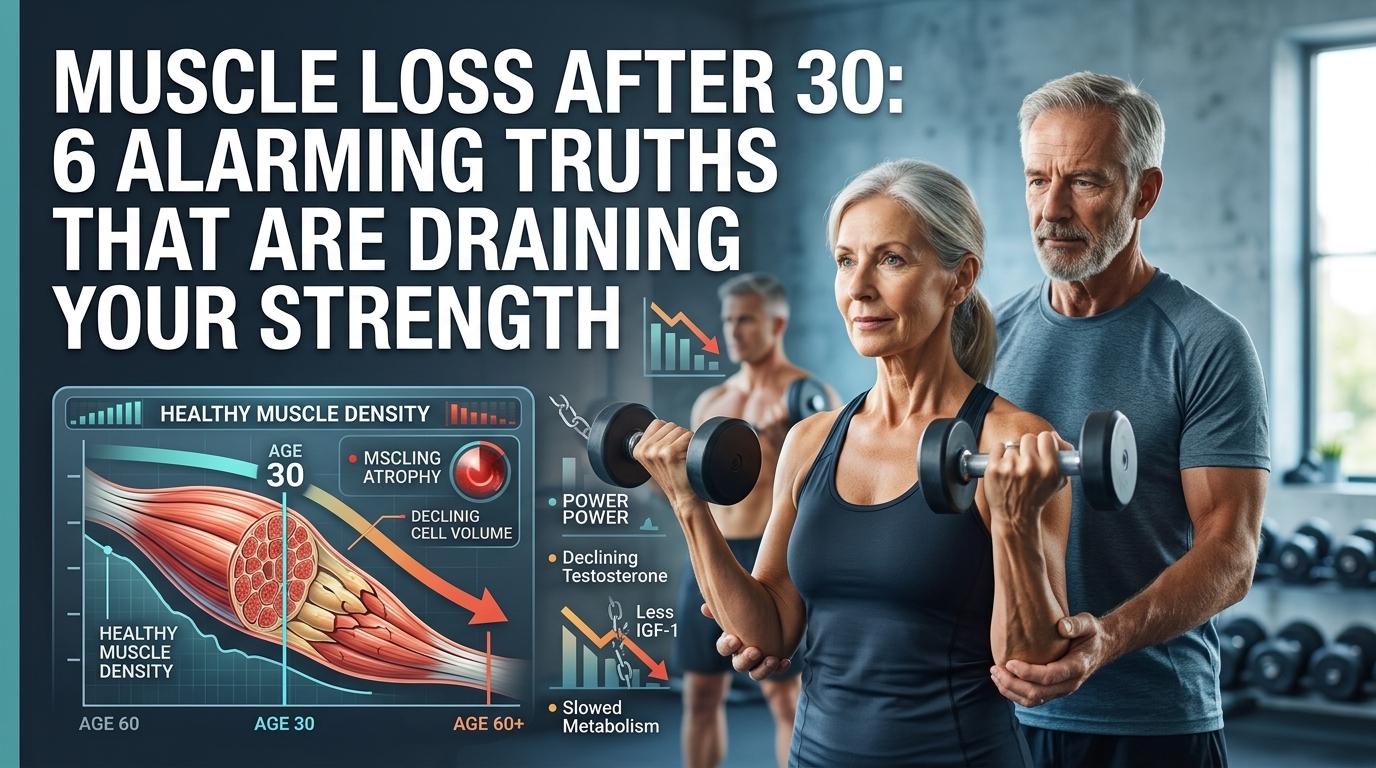
Somewhere around your 30th birthday, you probably noticed it. That third cup of coffee stopped working. Weekends started feeling like recovery missions instead of adventures. And somehow, doing less left you more exhausted than doing more used to. Even your body feels different, like your muscles just aren’t showing up the way they used to.
Everyone blames the same thing: “my metabolism died.” It’s the easiest excuse in the book. Except it’s mostly wrong.
The real story is messier, more interesting, and honestly more useful. Because once you understand what’s actually happening in your body after 30, you can do something about it. Let’s get into the truths nobody puts on a motivational poster.
Truth #1: Your Metabolism Isn’t Dying, Something Else Is Doing the Damage
Here’s a fact that surprises almost everyone. A massive study tracked energy expenditure in over 6,400 people across 29 countries, ranging from 8-day-old infants to 95-year-olds, and the finding shocked even the scientists involved.
Metabolism stays remarkably stable from age 20 all the way to 60. It doesn’t fall off a cliff the moment you turn 30. It doesn’t even wobble much through your 40s or 50s. The real decline doesn’t start until after 60, and even then it only drops by about 0.7% a year, as NBC News reported on the research.
So if your metabolism isn’t the villain, what is?
It’s a combination of quieter, sneakier culprits:
- Less muscle mass, which burns fewer calories at rest
- Lower daily movement (you sit more, fidget less, walk shorter distances)
- Poor sleep quality
- Rising stress levels
- Slowly shifting hormones

None of these show up on a bathroom scale overnight. They accumulate. And that’s exactly why 30 feels like a turning point, even though your metabolic engine hasn’t actually broken down.
Truth #2: Your Muscles Are Quietly Packing Their Bags
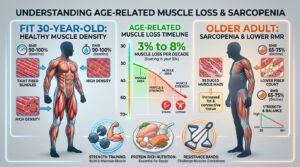
This one is uncomfortable but important. Starting in your 30s, your body begins losing muscle mass at a rate of roughly 3 to 8 percent per decade if you’re not actively working against it. That process has a name: sarcopenia.
Muscle isn’t just for looking toned. It’s metabolically expensive tissue, meaning it burns calories even while you’re sitting still. Less muscle means a lower resting metabolic rate, which means less energy available for everything else your body needs to do.
Research has also found that people in their 70s carry around 20 pounds less muscle mass than people in their 40s, along with a measurably slower resting metabolism.
The good news is that this particular truth is one you have real control over. Muscle loss isn’t inevitable, it’s just what happens by default when you stop challenging your body.
A few ways to fight back:
- Strength train at least twice a week, even with just bodyweight or resistance bands
- Prioritize protein at each meal, not just after workouts
- Don’t fear lifting heavier, most people undertrain, not overtrain
Truth #3: Your Hormones Start Whispering Changes Behind Your Back
Hormones are the body’s messaging system, and after 30, some of those messages start getting quieter or scrambled.
For men, testosterone begins a slow, steady decline of about 1 to 2 percent per year starting around age 30. It’s gradual, which is exactly why it sneaks up on people. By the time symptoms like fatigue, lower motivation, and stubborn belly fat show up, the decline has often been happening for years.
For women, the hormonal shifts of the 30s are subtler but real, especially as estrogen and progesterone begin fluctuating in the lead-up to perimenopause, which for some starts earlier than expected.

Both sexes also experience changes in cortisol regulation with age, and cortisol has a direct relationship with energy, sleep, and even how your body stores fat.
This doesn’t mean you’re doomed to feel drained. It means your body’s chemistry is shifting, and the habits that worked at 22 might need an update at 32.
Truth #4: Your Sleep Debt Is Compounding Like Interest
Nobody warns you how brutal sleep debt becomes once you’re juggling a career, relationships, and adult responsibilities all at once.
Here’s something researchers have actually measured. One study found that just four hours of sleep reduced metabolic rate by 2.6 percent compared to a full ten hours. The encouraging part is that a proper night of rest can reverse that dip almost immediately.
Poor sleep doesn’t just leave you groggy. It also accelerates muscle loss, disrupts hunger hormones, and makes your body hang onto stress chemicals longer than it should. In other words, bad sleep quietly sabotages nearly every other truth on this list.

Small sleep upgrades that actually move the needle:
- Keep a consistent wake time, even on weekends
- Get natural light within 30 minutes of waking
- Cut screens at least 30 to 60 minutes before bed
- Treat your bedroom as a cave: dark, cool, and quiet
Truth #5: You’re Moving Far Less Than You Think You Are
This one stings a little. Most people assume their activity level hasn’t changed much since their 20s. In reality, life after 30 tends to be built around sitting. Desk jobs, longer commutes, evenings on the couch after a long day.
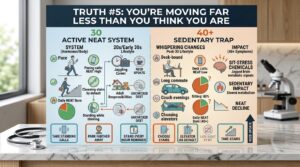
There’s a concept called NEAT, short for Non-Exercise Activity Thermogenesis. It covers all the small movements throughout your day that aren’t formal exercise: pacing while on a call, taking the stairs, walking to grab lunch, standing while you think.
NEAT can account for a surprisingly large chunk of your daily calorie burn, and it drops fast when your lifestyle becomes more sedentary. You don’t need to become a gym rat to fix this. You need to reclaim the small movements your day used to naturally include.
Easy ways to sneak more movement back in:
- Take calls standing up or walking
- Park farther away or get off transit one stop early
- Set a reminder to stand every hour
- Choose stairs by default, elevators by exception
Truth #6: Stress Has Become Your Silent Roommate
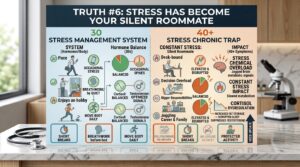
Somewhere along the way, chronic stress stopped feeling unusual and started feeling normal. That’s a problem, because stress isn’t just a mental state. It’s a full-body chemical event.
When stress becomes constant instead of occasional, cortisol stays elevated for longer stretches. Elevated cortisol has been linked to increased fat storage, disrupted sleep, and even suppressed testosterone production. It essentially works against nearly every other system covered in this article.
The tricky part is that stress in your 30s often comes from good things too: promotions, growing families, bigger responsibilities. It doesn’t always look like a crisis. Sometimes it just looks like a full calendar.
Ways to actually lower the chemical load of stress, not just the feeling of it:
- Build in short, non-negotiable breaks during the day
- Try breathwork or even five minutes of quiet before bed
- Move your body daily, even a short walk counts
- Protect at least one activity that has nothing to do with productivity
So What Do You Actually Do With All This?
Here’s the honest takeaway. You’re not broken, and you’re not doomed by your birthday. What changes after 30 isn’t your metabolism collapsing overnight. It’s a slow accumulation of smaller shifts: a bit less muscle, a bit less sleep, a bit more stress, a bit less movement.
The frustrating part is also the encouraging part. Because these are all things you can influence.
You don’t need a dramatic life overhaul. You need a handful of consistent habits stacked on top of each other:
- Lift something heavy a couple times a week
- Protect your sleep like it’s a meeting you can’t cancel
- Move more throughout the day, not just during workouts
- Manage stress on purpose instead of hoping it resolves itself
- Eat enough protein to actually support the muscle you’re trying to keep
None of this is flashy. It’s not a 24-hour metabolism reset or a miracle supplement. It’s just biology, and biology tends to respond well to consistency.
Thirty isn’t the finish line for your energy. It’s just the point where your body starts asking you to pay a little more attention.