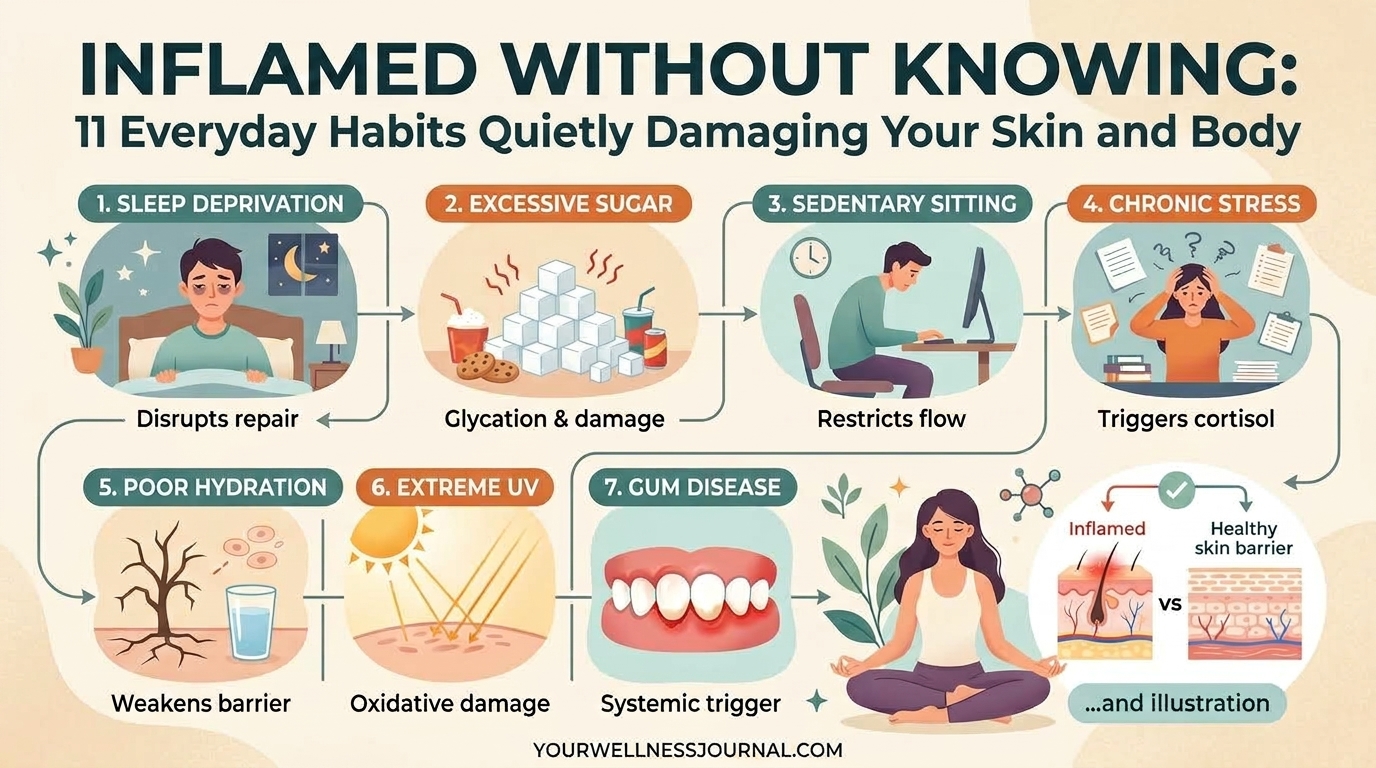
Your body could be inflamed right now, and you might not even realize it.
No redness. No swelling you can point to. No obvious pain. Just a quiet, low-grade fire running under the surface, aging your skin faster, wearing down your joints, and slowly chipping away at your energy.
This is the tricky part about being inflamed in the modern world. It rarely announces itself. It builds up in small, sneaky ways, through habits so ordinary that most people never think twice about them.
The good news is that once you know what keeps your body inflamed, you can actually do something about it.
Why Nobody Talks About This Kind of Inflammation
When people hear the word inflammation, they usually picture a sprained ankle or a red, swollen cut. That kind of inflammation is loud. It shows up fast and heals just as fast.
But there’s a quieter version that never gets talked about enough. This kind doesn’t swell or ache in any obvious way. It sits in the background, triggered by ordinary daily choices, and slowly wears down your body over months and years instead of days. Doctors often call it low grade or chronic inflammation, and it’s the kind linked to fatigue, dull skin, weight gain, and long term disease risk. Most people walking around inflamed like this have absolutely no idea, simply because nothing hurts yet.
That’s exactly why these habits deserve a closer look. The damage is real, even when the warning signs are silent.
Let’s break down the everyday habits that quietly keeping you inflamed, and what you can do instead.
1. Your Sugar Habit Is Feeding the Fire
Sugar tastes harmless. It feels like a small treat, a little pick me up, nothing serious.
But inside your body, sugar behaves very differently. Every time you eat something loaded with refined sugar, your blood sugar spikes. Your body releases insulin to bring it back down. Do this often enough, and your system stays in a constant state of being inflamed, reacting again and again to sugar spikes it never gets a break from.
Here’s what makes it worse. Sugar hides in places you would never expect:
- Flavored yogurts
- Sauces and salad dressings
- “Healthy” granola bars
- Bottled juices marketed as fresh

Over time, this hidden sugar keeps your body inflamed on a level you cannot see or feel day to day. It shows up later, in dull skin, stubborn weight, and joints that feel stiffer than they should for your age.
The fix isn’t about cutting sugar out completely and living a joyless life. It’s about noticing where it sneaks in and trimming it down gradually, so your body has a chance to calm down instead of staying inflamed meal after meal.
2. Poor Sleep Keeps Your Body on High Alert
Sleep is the time your body repairs itself. Skip it, cut it short, or scroll through your phone until 1 a.m., and you are robbing your body of its main recovery window.
When you consistently sleep less than six hours, your body reacts like it is under stress. Stress hormones rise. Your immune system gets confused. Poor sleep has repeatedly been linked with markers of an inflamed system, the kind that shows up in blood tests long before you feel sick.
A few small signs your sleep might be keeping you inflamed:
- Waking up puffy, especially around the eyes
- Feeling stiff or achy in the morning
- Getting sick more often than people around you
- Craving sugar and carbs the day after a bad night
Sleep isn’t a luxury. It’s basic maintenance. Without it, your body stays inflamed in ways that quietly pile up week after week.
3. Sitting All Day Is Doing More Damage Than You Think
Most of us sit far more than our bodies were ever designed for. Desk jobs, long commutes, evenings on the couch. It adds up to hours and hours of very little movement.
Here’s the problem. Movement helps regulate inflammation in the body. It improves blood flow, supports your lymphatic system, and helps flush out waste products. When you sit for long stretches without breaks, that natural process slows down, and your tissues can stay inflamed simply from lack of circulation.
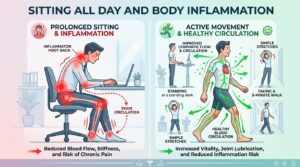
You don’t need to become a gym fanatic to fix this. Small breaks make a real difference:
- Stand up and stretch every 45 to 60 minutes
- Take a five minute walk after meals
- Swap one sitting meeting for a walking one, if possible
Your joints and muscles were built to move. Keep them still too long, and they start to feel inflamed and stiff, even without an injury in sight.
4. Ultra-Processed Foods Are Quietly Working Against You
Packaged snacks, fast food, instant noodles, frozen meals. They’re convenient, they’re everywhere, and they are one of the biggest hidden causes of a body that stays inflamed.
Highly processed foods are usually loaded with refined oils, preservatives, and additives that your body doesn’t quite know what to do with. A well known analysis by researchers at Harvard found that diets high in processed and red meats, sugary drinks, and refined grains were linked to a noticeably higher risk of health problems tied to chronic inflammation, compared with diets built around whole foods. A Harvard study found that people who ate the most foods that promoted inflammation, such as red and processed meats, sugary drinks, and refined grains, had a higher rate of colorectal cancer compared with people who ate the least of these foods. (source)
That single finding says a lot. What you eat regularly, not occasionally, shapes how inflamed your body stays over time.
Small swaps that genuinely help:
- Trade chips for a handful of nuts
- Choose grilled over fried when you can
- Cook at home even two or three extra times a week
None of this requires perfection. It just requires noticing that some meals are quietly keeping you inflamed while others are helping you cool down.
5. Chronic Stress Is an Invisible Trigger
Stress isn’t just a feeling in your head. It’s a full body response.
When you’re stressed for a short burst, like before a deadline or a tough conversation, your body handles it fine. But when stress becomes constant, background noise, always there, your body stays in a state that keeps it inflamed almost permanently.
This happens because stress hormones like cortisol, when elevated for too long, disrupt your immune system’s normal balance. Instead of calming down after a threat passes, your body forgets how to switch off, and it stays inflamed as if the threat never ended.

Signs your stress might be keeping you inflamed:
- Frequent headaches or tight shoulders
- Digestive issues that flare up during busy periods
- Skin breakouts that seem tied to stressful weeks
- Feeling wired but exhausted at the same time
You don’t need to eliminate stress completely, that’s not realistic. But even ten minutes of deep breathing, a short walk outside, or stepping away from your phone can help your body come down from being constantly inflamed.
6. Not Drinking Enough Water Slows Everything Down
Hydration feels like the most basic health advice there is, which is exactly why people ignore it.
But water plays a bigger role than most people realize. It helps flush toxins, supports joint lubrication, and keeps your circulation moving smoothly. When you’re dehydrated, even mildly, your body has a harder time managing inflammation, and tissues that are already inflamed take longer to calm down.
Simple signs you might not be drinking enough:
- Dry skin that looks dull by afternoon
- Headaches that show up in the late afternoon
- Feeling tired despite getting enough sleep
You don’t need eight rigid glasses a day tracked on an app. You just need to notice if you’re actually drinking water regularly, or running on coffee and forgetting water exists until you’re already inflamed and sluggish.
7. Harsh Skincare Habits Are Damaging Your Skin Barrier
This one surprises people. Many skin issues that look like acne, redness, or sensitivity aren’t really about dirt or bacteria at all. They’re about a skin barrier that has become inflamed from being over treated.
Over cleansing, using too many active ingredients at once, or scrubbing your face aggressively strips away the natural oils that protect your skin. Once that barrier is damaged, your skin becomes more reactive, more inflamed, and more prone to irritation, even from products that used to work fine.

Habits that quietly keep skin inflamed:
- Washing your face more than twice a day
- Layering multiple exfoliating acids at once
- Skipping moisturizer because your skin feels “oily enough”
- Switching skincare products too frequently
Your skin needs consistency, not intensity. Giving it fewer, gentler products often calms an inflamed complexion faster than adding more “solutions” ever will.
8. Skipping Sunlight Is Hurting You More Than You Realize
Most people think of sunlight as something to avoid, thanks to years of sunscreen messaging. But too little sunlight has its own downside.
Vitamin D, which your skin produces when exposed to sunlight, plays a real role in regulating your immune system. When levels drop too low, which is extremely common among people who work indoors all day, the immune system can lose some of its ability to keep inflammation in check. Your body ends up staying inflamed longer after even small triggers, because one of its natural regulators is running low.
Easy ways to fix this without overdoing it:
- Get ten to fifteen minutes of morning sunlight when you can
- Take work calls outside occasionally instead of always indoors
- Consider having your vitamin D levels checked if you rarely go outside
A little daily sunlight, used sensibly, is one of the simplest ways to stop your body from staying inflamed for no clear reason.
9. Ignoring Your Gut Is Ignoring a Major Trigger
Your gut isn’t just about digestion. It’s closely tied to your immune system and, by extension, to how inflamed your body stays overall.
A diet low in fiber, heavy in processed foods, or lacking variety can throw off the balance of bacteria living in your gut. When that balance shifts the wrong way, it can trigger low-grade inflammation that spreads well beyond your digestive system, affecting your skin, your joints, and even your mood.

Signs your gut might be behind an inflamed feeling elsewhere in your body:
- Bloating that happens most days, not just occasionally
- Skin flare-ups that seem to follow certain meals
- Feeling foggy or low energy after eating
- Irregular digestion that never quite settles
Feeding your gut a wider variety of plants, fiber, and fermented foods like yogurt or kimchi can go a long way toward calming a system that has been quietly inflamed from the inside out.
10. Too Much Alcohol Keeps the Fire Going
An occasional drink isn’t the enemy here. The problem is regular, heavier drinking that your body never fully gets a break from.
Alcohol places a real burden on your liver, which plays a central role in filtering toxins and managing inflammation throughout the body. When your liver is constantly busy processing alcohol, its ability to manage other inflammatory triggers takes a hit, leaving you more inflamed than you would otherwise be.
Ways to lighten the load on your body:
- Add two or three alcohol free days into your week
- Notice how your skin and energy feel the morning after drinking
- Swap the last drink of the night for water or herbal tea
Cutting back even slightly gives your liver room to do its actual job, instead of constantly cleaning up after a habit that keeps your body inflamed.
11. Neglecting Your Teeth and Gums Affects More Than Your Smile
Oral health rarely makes it onto wellness lists, but it deserves a spot here.
Gum disease is, at its core, a form of chronic inflammation. Left untreated, that inflamed tissue in your mouth doesn’t stay contained. Research has connected ongoing gum inflammation with wider issues in the body, including heart health, because inflammation in one area rarely stays isolated for long.

Small habits that protect you here:
- Flossing most days, not just before dentist visits
- Treating bleeding gums as a signal, not something to ignore
- Getting a dental checkup at least once a year
Healthy gums are an easy, often overlooked way to keep one more part of your body from staying quietly inflamed.
The Bigger Picture
None of these habits are dramatic on their own. That’s exactly what makes them dangerous. A little too much sugar here, a few hours less sleep there, a stressful week, a day without enough water, a few too many drinks on a weekend. Individually, they seem harmless.
But stacked together, day after day, they keep your body quietly inflamed in ways that show up later as fatigue, skin problems, stiffness, or a general feeling of just not being your best.
The reassuring part is that your body is remarkably good at healing once you remove what’s been keeping it inflamed in the first place. You don’t need to fix everything overnight. Pick one habit from this list, work on it for a few weeks, and notice how your body responds. Small, consistent changes are what actually calm a body that has been running inflamed for far too long.