
You step out of the shower and glance down. There it is: a dark tangle of hair circling the drain. Then you notice more on your brush, a few strands on your pillow and a thin layer on your shoulders.
Your heart sinks a little. Is this normal? Or is something wrong?
If you have asked yourself that question, you are in very good company. Hair fall is one of the most common health worries out there, and it affects men and women of all ages. It is also one of the most emotional, because our hair is tied up with how we see ourselves.
Here is the reassuring part. Some shedding is completely normal, and many causes of hair fall are temporary and treatable. The trick is figuring out what is behind it.
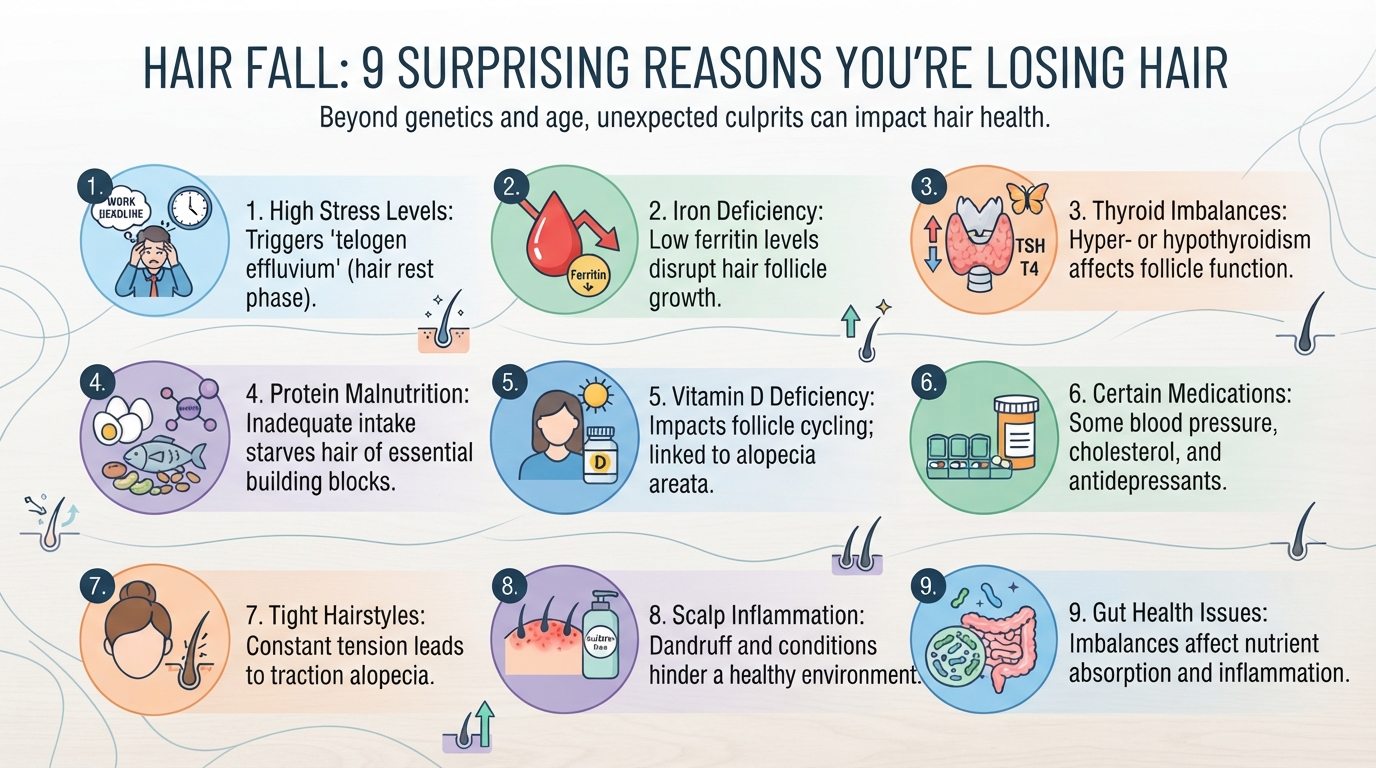
In this guide, we will look at how to tell normal shedding from real trouble, six signs worth watching and nine surprising reasons you might be losing hair. By the end, you will know what to change and when to see a doctor.
Normal Shedding or Real Hair Fall? How to Tell
Let’s start with a fact that surprises most people. Losing hair every day is part of how your scalp works.
- The average scalp holds roughly 100,000 hairs.
- Losing up to about 100 hairs a day is considered normal.
- Long hair makes shedding look worse, because the strands are easier to see.
- You may lose more on wash days, since shampooing loosens hairs that were already ready to fall out.
Those hairs are not a sign that something is wrong. They are simply being replaced by new ones growing underneath.
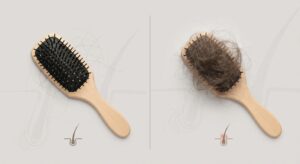
Hair fall becomes a concern when the shedding goes beyond that normal range for weeks on end, or when your hair starts looking visibly thinner. If you used to see a few strands in the brush and now see handfuls, that change is worth your attention.
A helpful rule is to look at the trend, not a single day. One bad brushing session means little. Three months of heavier shedding means something.
6 Signs Your Hair Fall Needs Attention
Not sure where you stand? These six signs are the most common ones.
1. Clumps in the drain or brush. You are seeing far more hair than you used to, and it keeps happening.
2. A thinner ponytail. Your hair tie wraps around an extra time or two.
3. A widening part or thinning crown. More scalp shows than before.
4. Hair that comes out too easily. When you gently run your fingers through your hair, several strands come away every time.
5. Patchy bald spots. Round or oval areas of missing hair deserve a doctor’s visit soon.
6. A scalp that itches, burns or flakes. Redness, scaling or pain can point to a scalp condition that needs treatment.
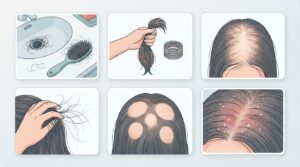
None of these signs is a diagnosis on its own. But if you notice one or more for longer than a couple of months, getting checked is a smart move. The earlier the cause is found, the easier hair fall is to manage.
Who Is More Likely to Struggle With Hair Fall?
Anyone can be affected, but some people carry a higher risk. You may notice more hair fall if you:
- Have close relatives with thinning hair.
- Are a woman with heavy periods, or you recently gave birth.
- Eat a restricted or low protein diet.
- Live with a thyroid condition or another long term health problem.
- Take medicines that list hair loss as a side effect.
- Often wear tight hairstyles or use heat and chemical treatments.
- Have been through a stressful period or a recent illness.
Having one of these factors does not guarantee thinning. It simply tells you where to look first when you are hunting for a cause.
How Your Hair Actually Grows (And Why the Delay Matters)
Every hair follicle moves through a cycle. First comes a long growing phase that lasts for years. Then there is a short transition phase. Finally, there is a resting phase of about three months, after which the old hair drops out and a new one starts to grow.
At any moment, roughly 90 percent of your scalp hairs are growing and about 10 percent are resting. Hair grows at around 1 centimeter a month.
Here is why this matters. When your body goes through a shock, it can push many more hairs into the resting phase at the same time. But those hairs do not drop out right away. Shedding usually begins about two to three months after the trigger.
So the cause of today’s hair fall may be something that happened back in the summer. That delay is exactly why so many people cannot work out what went wrong.
Reason 1: Your Plate Is Missing Something
Hair is made mostly of protein, and growing it takes energy and several nutrients. When your diet falls short, your body protects vital organs first and hair comes second.
The most common culprit is low iron, especially in women with heavy periods and in people who eat little meat. Low protein and low zinc can play a part too.
Foods that help:
- Iron: lentils, beans, spinach, eggs, red meat and fish.
- Protein: eggs, dairy, chicken, fish, lentils and nuts.
- Zinc: pumpkin seeds, chickpeas, nuts and whole grains.
- Vitamin C foods: oranges and peppers, which help your body absorb iron from plant foods.
Please do not simply guess, though. If you suspect a deficiency, ask your doctor for a blood test. Taking supplements you do not need will not help, and high dose biotin can even interfere with some lab test results, so tell your doctor if you take it. Hair fall linked to nutrient gaps often improves once the gap is corrected.
Reason 2: The Crash Diet Backlash
Here is an irony nobody warns you about. Many people start a strict diet to look and feel better, then find their hair thinning a few months later.
Rapid weight loss, skipped meals and very low calorie plans are all treated by your body as a stressful event. That can push hairs into the resting phase and trigger heavy hair fall about three months later.
If you are trying to lose weight, a gentler approach protects your hair:
- Aim for slow, steady weight loss instead of dramatic drops.
- Keep eating enough protein, iron and healthy fats.
- Avoid cutting out whole food groups unless a doctor advises it.
The good news is that this kind of hair fall is usually temporary. Once your eating returns to a steady, balanced pattern, hair growth generally recovers.
Reason 3: Stress That Shows Up on Your Pillow
It sounds like a myth, but it is real. Severe emotional or physical stress can push a large number of hairs into the resting phase together. Doctors call this telogen effluvium.
Common triggers include a loss in the family, a job crisis, exam pressure, a major move or a long period of worry. You do not have to be going through something dramatic, either. A long stretch of constant pressure can have the same effect.
Doctors at Children’s Health explain that shedding after a stressful event is usually noticed about two months later and gradually settles back to normal over roughly 6 to 9 months (source). childrens

That timeline is encouraging. It means stress related hair fall is typically temporary, and your hair can recover once your body does.
A few small habits help:
- Protect your sleep and keep a steady bedtime.
- Take a daily walk, ideally outdoors.
- Talk to someone you trust instead of carrying everything alone.
And try not to let the hair fall itself become a new stress. Worrying about shedding does not help your scalp.
Reason 4: A Sluggish (or Overactive) Thyroid
Your thyroid gland is a small organ in your neck that helps control your metabolism. When it makes too little or too much hormone, hair is one of the places it shows up.
Both an underactive and an overactive thyroid can cause diffuse hair thinning. The hair loss usually improves once thyroid levels are brought back to normal with treatment.
Thyroid problems rarely cause only hair changes. Look out for other clues:
- Unusual tiredness or feeling cold all the time.
- Unexplained weight gain or weight loss.
- A racing heartbeat, anxiety or feeling too warm.
- Dry skin and brittle nails.
A simple blood test can check your thyroid function. If hair fall comes with any of these symptoms, ask your doctor about it.
Reason 5: Hormonal Rollercoasters
Hormones and hair are closely connected, which is why hair fall often follows big hormonal shifts.
- After pregnancy: Many women notice heavy shedding about three months after giving birth. It looks alarming, but it is common and usually temporary.
- PCOS: Polycystic ovary syndrome can raise levels of male type hormones, which may thin scalp hair. It often comes with irregular periods and acne.
- Menopause: Hormone changes during this stage can lead to thinner hair for many women.
If your hair changes come with irregular periods, acne or other new symptoms, a hormone check is worth discussing with a doctor. Treating the underlying cause is the best way to calm this type of hair fall.
Reason 6: The Medicine Cabinet Culprit
Sometimes the cause is something that is helping you in another way. Several medicines can trigger hair shedding as a side effect.
Examples include some drugs for thyroid conditions, blood thinners, beta blockers, certain blood pressure medicines, some anticonvulsants, hormonal medicines and lithium. Cancer treatments such as chemotherapy are also well known for causing hair loss.
One important rule: never stop a prescribed medicine on your own because of hair concerns. Skipping doses can be far more harmful than the hair loss itself.
Instead, speak with your doctor. They may be able to adjust the dose or suggest an alternative. Often the shedding settles after the medicine is changed or stopped under medical guidance.
It also helps to bring a full list of everything you take, including vitamins and herbal products. Sometimes the connection is easy to spot once everything is written down in one place, and that makes the conversation with your doctor much more productive.
Reason 7: Illness, Fever and Surgery Leave Their Mark
Your hair has a long memory. A high fever, a severe infection or an operation can shock your system enough to trigger hair fall a couple of months later.
That is why people sometimes notice sudden hair fall long after they have fully recovered. They have already forgotten the illness, but their scalp has not.
Some people also reported temporary heavy shedding in the months after COVID-19. As with other illnesses, it is usually short lived.
What helps:
- Give your body time. Recovery takes longer than the illness itself.
- Eat well while you heal, with enough protein and iron.
- Be patient. New hair is usually already growing by the time you notice shedding.
Reason 8: Tight Ponytails, Hot Tools and Harsh Chemicals
Your daily styling habits can quietly damage your hair.
Constant pulling from tight ponytails, braids, buns or hair extensions can cause a condition called traction alopecia. At first, it shows as thinning along the hairline or at the temples. If the pulling continues for years, the damage can become permanent.
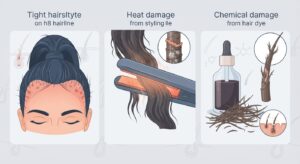
Heat styling and chemical treatments are another issue. Straightening irons, blow dryers on high heat, bleach and strong dyes weaken the hair shaft, so strands break. That is hair breakage rather than shedding from the root, but it can make your hair look much thinner.
Kinder habits:
- Loosen your hairstyles and give your scalp regular breaks.
- Use heat tools on a lower setting and less often.
- Space out chemical treatments.
- Choose a wide tooth comb and detangle gently, especially when hair is wet.
Reason 9: It Runs in the Family
This is the most common cause of hair loss overall, and it is called pattern hair loss, or androgenetic alopecia. It is strongly influenced by genes and hormones.
It looks different in men and women:
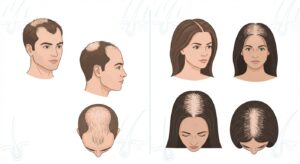
- In men: a receding hairline, thinning at the temples and a bald spot on the crown.
- In women: a widening part and overall thinning on top, usually without a receded hairline.
Unlike temporary hair fall, this type tends to progress slowly over the years. The good news is that treatments exist, and they work best when started early. A dermatologist can recommend options such as minoxidil, which is available in many countries, or prescription medicines.
Results take patience. Most treatments need several months before improvement shows, and they only work for as long as you keep using them.
Hair Fall in Men and Women: Is It Different?
The causes overlap, but the pattern often differs. Men tend to notice a receding hairline or a thinning crown, while women usually see a wider part and a loss of overall volume. Women are also more likely to deal with shedding linked to iron levels, pregnancy and hormone changes.
Either way, the principle is the same. Find the trigger, treat what can be treated and protect the hair you have. Neither gender should feel embarrassed about seeking help, because hair fall is a medical symptom, not a vanity issue.
3 Hair Fall Myths You Can Stop Believing
Myth 1: Washing your hair every day causes hair fall. Shampooing does not cause the loss. It only loosens hairs that were already ready to drop out.
Myth 2: Trimming your hair makes it grow faster. Hair grows from the root, so a trim does not change the speed. It does remove split ends, which keeps hair looking fuller.
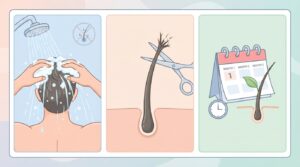
Myth 3: Stress related hair loss is permanent. In most cases, it is temporary, and hair grows back once the trigger is gone.
What Actually Helps: A Simple Hair Care Plan
You cannot fix every cause overnight, but you can create the best conditions for regrowth.
- Eat a balanced diet with enough protein, iron and healthy fats.
- Wash your hair gently with a mild shampoo and avoid scrubbing hard.
- Use a soft brush or wide tooth comb.
- Keep hairstyles loose and limit heat and chemicals.
- Manage stress and protect your sleep.
- Find the cause. Persistent hair fall deserves a proper check up instead of endless trial and error.
A gentle scalp massage for a few minutes each day can feel relaxing and may help you unwind, which is useful when stress is part of the picture. Just keep your touch light and avoid pulling.
Be wary of miracle oils, expensive gadgets and quick fix promises. Very few of them have good evidence behind them. When hair grows back, it is usually because the cause was addressed, not because of a magic product.
When It Is Time to See a Doctor
Book an appointment with a doctor or dermatologist if:
- Heavy shedding lasts longer than about three months.
- You notice patchy bald spots or sudden large amounts of hair loss.
- Your scalp is painful, red, scaly or burning.
- Hair fall comes with tiredness, weight changes, irregular periods or other new symptoms.
A doctor may check your scalp and order simple blood tests, such as iron stores and thyroid function. Finding the cause is the most important step.

To get the most from your visit, note when the shedding started, what has changed in your life in the past six months, and every medicine or supplement you use. Photos of your hair taken once a month can also show your doctor how things are progressing.
This article is for general information and does not replace personal medical advice.
Quick Answers to Common Questions
How long does stress related hair fall last? It varies, but many people see shedding settle within a few months after the trigger passes, with full recovery taking longer.
Will my hair grow back? In temporary types of shedding, it usually does. In pattern hair loss, treatment can slow the process, and starting early gives the best results.
Should I take hair vitamins? Only if a doctor finds a deficiency. Extra vitamins will not help if your levels are already normal.
Final Thoughts: Your Hair Has a Comeback Story
Hair fall can feel deeply personal, but it is also one of the most common and most treatable concerns there is. Many of its causes are temporary, and even the long term ones have options.
Start with the basics. Eat well, be gentle with your hair, protect your sleep and give your body time. Any plan for hair fall works best when you stay consistent for a few months, because hair responds slowly. If something feels off, speak to a professional rather than suffering in silence.
Your hair did not stop growing overnight, and it will not recover overnight either. But with patience and the right care, there is every reason to be hopeful.



