
Think about everything your liver does before you even finish breakfast. It filters your blood, helps digest your food, stores energy, makes important proteins and breaks down substances your body does not need. It does all of this quietly, around the clock, without asking for a thank you.
The trouble is, a quiet organ also tends to suffer in silence.
That is exactly why fatty liver is often called a silent condition. Many people live with it for years without a single obvious symptom. They only find out by accident, during a routine scan or a blood test ordered for something else.
If that sounds worrying, take a deep breath. Here is the encouraging part. Fatty liver, especially in its early stages, is often manageable and, in many cases, reversible. The tools are surprisingly ordinary: better food, more movement and a little patience.
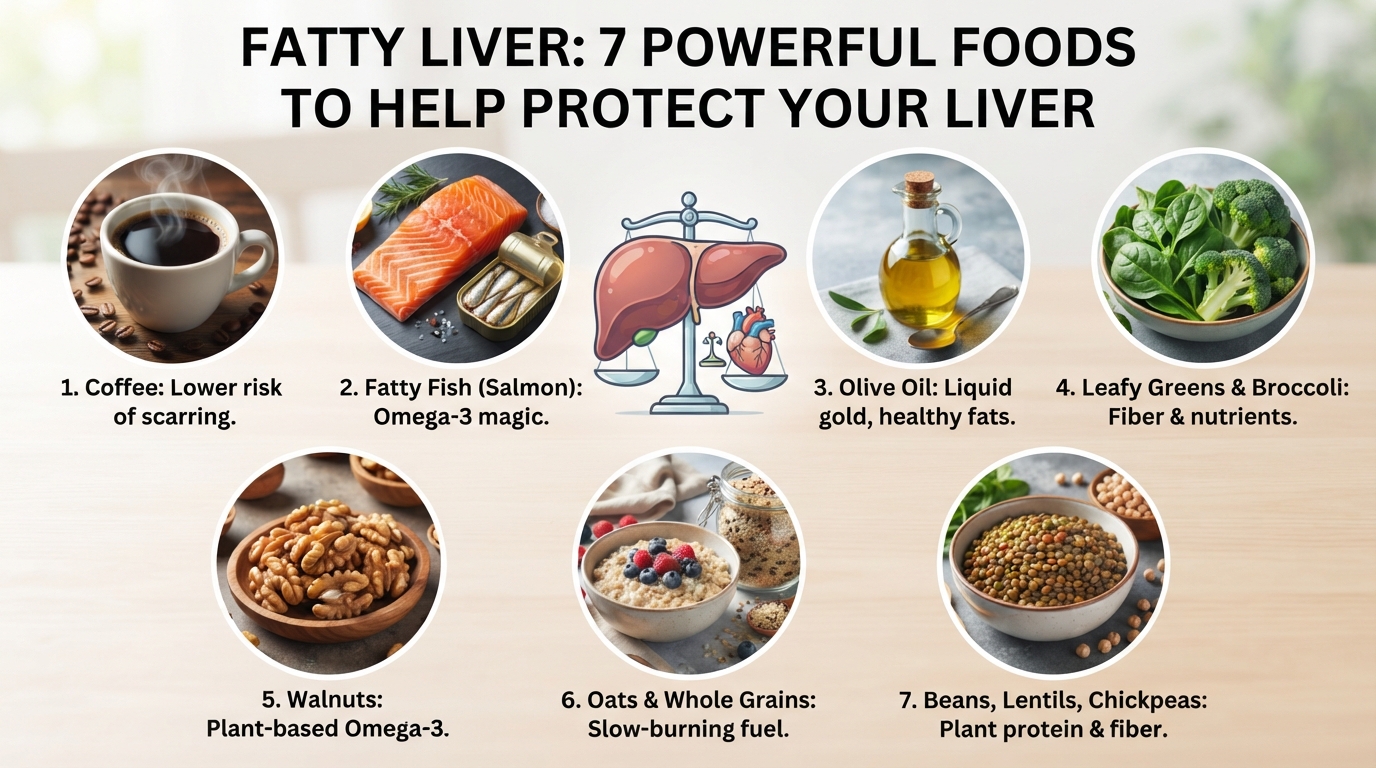
In this guide, we will cover what fatty liver actually is, six signs worth noticing, and seven powerful foods that can support a healthier liver. We will also look at what to limit and which myths to ignore. Let’s get started.
So, What Is Fatty Liver Really?
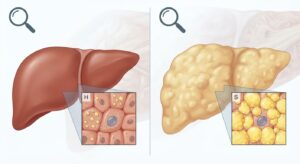
Fatty liver means that too much fat has built up inside liver cells. Doctors usually talk about it when fat makes up more than about 5 percent of the liver’s weight.
There are two main types. One is linked to heavy alcohol use. The other, which is far more common today, has nothing to do with heavy drinking and is connected to weight, blood sugar and cholesterol. You may have heard it called NAFLD. Doctors now often use the newer name MASLD, which stands for metabolic dysfunction associated steatotic liver disease. It is a mouthful, so in this article we will stick with the simple, familiar term.
A few facts worth knowing:
- Recent estimates suggest that roughly 3 in 10 adults worldwide have it.
- It is now considered the leading cause of chronic liver disease across the globe.
- It often travels with type 2 diabetes, high blood pressure, high cholesterol and extra weight around the waist.
- It can also affect people who are not overweight.
In some people, the fat triggers inflammation and scarring over time. In a smaller number, that can progress to cirrhosis and liver failure. The good news is that catching fatty liver early gives you the best chance to turn things around.
6 Signs Your Liver May Be Asking for Help
Here is the tricky part. Most people with early fatty liver feel perfectly fine. So think of these signs as clues rather than proof.
1. Tiredness that sleep does not fix. You wake up exhausted and drag through the day, even after a full night in bed.
2. A dull ache in the upper right abdomen. Some people feel vague discomfort or fullness under the right ribs, where the liver sits.
3. A growing waistline. Extra fat around the belly is one of the strongest risk markers for fatty liver.
4. Surprising blood test results. Raised liver enzymes on a routine test are a common reason fatty liver gets discovered.
5. Other metabolic warning lights. High blood sugar, high triglycerides and high blood pressure often show up alongside it.
6. Late warning signs. Yellowing of the skin or eyes, swelling in the belly or legs, and itchy skin can point to advanced liver trouble. Please see a doctor promptly if you notice any of these.
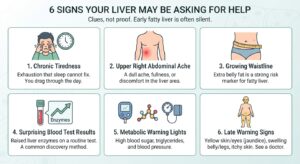
None of these signs is a diagnosis on its own. Doctors usually confirm fatty liver with blood tests and imaging, such as an ultrasound. If several of these clues sound like you, a check up is a smart next step.
Who Is More Likely to Develop It?
Some people carry a higher risk. Fatty liver is more likely if you:
- Carry extra weight, especially around the belly.
- Have type 2 diabetes or prediabetes.
- Have high cholesterol or high triglycerides.
- Live with high blood pressure.
- Spend most of the day sitting and rarely exercise.
- Eat a lot of sugary drinks, processed snacks and fried food.
Genetics also play a part, which is why the condition sometimes runs in families. But the habits on this list are the ones you can actually change.
Why Does the Liver Store Fat in the First Place?
Your liver normally holds only a small amount of fat. Trouble starts when more fat arrives than the liver can burn or send out. That can happen when you regularly take in more calories than you use, when fat tissue releases fat into the blood, and when the liver itself turns excess sugar into fat.
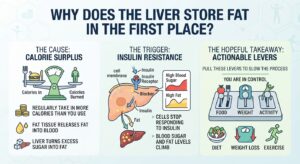
Insulin resistance plays a big role too. When your cells stop responding well to insulin, blood sugar and fat levels climb, and the liver ends up storing more than it should. This is why fatty liver so often appears alongside prediabetes and type 2 diabetes.
The takeaway is hopeful. Because food, weight and activity drive this process, they are also the levers you can pull to slow it down.
3 Fatty Liver Myths That Need to Retire
Myth 1: Only people who drink alcohol get it. Not true. The most common type today is not caused by heavy drinking at all.
Myth 2: No symptoms means no problem. Because early fatty liver is usually silent, waiting for symptoms means waiting too long.
Myth 3: A detox tea or juice cleanse will flush it out. Your liver already detoxifies your body. There is no good evidence that detox teas fix fatty liver, and some herbal remedies can actually damage the liver.
The Foundation Before the Food
Before we get to the foods, one honest point. Food choices matter, but the best studied way to improve fatty liver is gradual weight loss for people who carry extra weight.
The National Institute of Diabetes and Digestive and Kidney Diseases states that losing at least 3 to 5 percent of your body weight can reduce fat in the liver (source). nih
That is far more doable than it sounds. For someone who weighs 80 kilograms, it means losing roughly 2.4 to 4 kilograms. Larger losses, around 7 to 10 percent, may be needed to ease liver inflammation and scarring.
Two important cautions:
- Go slowly. Crash diets and rapid weight loss can actually make liver disease worse.
- Keep moving. Physical activity benefits the liver even when the number on the scale does not change.
Now, on to the foods.
Food 1: Coffee, the Morning Habit With a Liver Bonus
Good news for tea and coffee lovers. Several large studies have linked regular coffee drinking with a lower risk of liver scarring in people with fatty liver. Studies often look at about 2 to 3 cups a day.
To be fair, these are observational findings. They show an association, not a guarantee. Still, it is a rare case where a daily pleasure may work in your favor. A plain cup of black coffee also has almost no calories, which makes it an easy choice.
Keep it liver friendly:
- Drink it black or with a splash of milk.
- Skip the sugary syrups, flavored creamers and whipped toppings.
- Avoid it late in the day if it disrupts your sleep.
Coffee is not for everyone. If you are pregnant, sensitive to caffeine or have a heart rhythm problem, check with your doctor first.
Food 2: Fatty Fish and Its Omega 3 Magic
Salmon, sardines, mackerel and trout are rich in omega 3 fats. These healthy fats are one reason fish has such a good reputation. Health experts note that omega 3 fatty acids may help improve liver fat in people with fatty liver.
Heart health guidelines suggest eating fish about twice a week, and that advice suits your liver as well.
How to enjoy it:
- Bake, grill or steam it instead of deep frying.
- Try canned sardines for an affordable option.
- Pair it with vegetables and a whole grain for a balanced plate.
- Use leftover cooked fish in a salad or sandwich the next day.
If you are thinking about fish oil capsules, speak to your doctor first. Real food is the better starting point.
Food 3: Olive Oil, Liquid Gold From the Mediterranean Kitchen
Olive oil sits at the heart of the Mediterranean diet. That eating pattern has been described by Mayo Clinic experts as a powerful tool against liver disease, and it can help liver fat even without weight loss.
Switching from butter or heavily processed oils to olive oil also means swapping saturated fat for healthier unsaturated fat, which is a change doctors often recommend for people with fatty liver.
Simple ways to use it:
- Drizzle it over salads and cooked vegetables.
- Use it for light sauteing at medium heat.
- Mix it with lemon juice and herbs for a quick dressing.
One small warning. Olive oil is healthy but calorie dense, with about 120 calories in a single tablespoon. Measure it instead of pouring freely.
Food 4: Leafy Greens and Broccoli, the Green Team
Spinach, kale, lettuce, mustard greens, fenugreek leaves, broccoli, cauliflower and cabbage deserve a permanent spot on your plate. They are low in calories, high in fiber and gentle on your blood sugar.
Medical guidance for fatty liver encourages eating more low glycemic foods, and most vegetables fit that description perfectly. Fiber also keeps you full for longer, which makes healthy weight loss easier.
Early research, mostly in animals, hints that compounds in vegetables like broccoli may protect the liver. Human evidence is still limited, so think of that as a bonus rather than a promise.
Easy ideas:
- Add a handful of spinach to eggs, soups or lentils.
- Roast broccoli with a little olive oil and garlic.
- Fill half your plate with vegetables at lunch and dinner.
Food 5: Walnuts, a Handful of Healthy Fat
Walnuts are one of the few nuts that provide plant based omega 3 fat. Some small studies suggest that eating them regularly may help improve liver fat, though larger trials are still needed.
They also make a far better snack than chips or biscuits. Nuts are filling, and swapping them for processed snacks lowers your intake of refined carbs.
A few rules apply:
- Stick to a small handful, about 30 grams, per day.
- Choose raw or lightly roasted nuts without added salt or sugar.
- Sprinkle them over oatmeal or salads instead of eating them straight from the bag.
Like olive oil, nuts pack plenty of calories. A small portion is plenty.
Food 6: Oats and Whole Grains, Slow Burning Fuel
White bread, white rice and sugary cereals cause quick spikes in blood sugar. Whole grains do the opposite. They release energy slowly and keep you satisfied. That is why health authorities recommend choosing whole grains over refined ones for people with fatty liver.
Oats are an easy place to begin. They contain a type of fiber called beta glucan, which supports digestion and steady blood sugar.
Smart swaps:
- Choose oatmeal instead of sugary breakfast cereal.
- Pick brown rice, barley or quinoa instead of white rice.
- Make flatbreads from whole wheat flour instead of refined flour.
Top your oats with berries and a few walnuts, and you have a liver friendly breakfast in five minutes.
Food 7: Beans, Lentils and Chickpeas, the Humble Heroes
Lentils, kidney beans, chickpeas and other legumes are affordable, filling and packed with fiber and plant protein. They are also a cornerstone of the Mediterranean diet, the eating pattern most often recommended for fatty liver.
Because they digest slowly, they help keep blood sugar steady and cravings under control.
Ways to eat more of them:
- Add lentils to soups and stews.
- Toss chickpeas into salads or roast them for a crunchy snack.
- Replace some of the meat in a curry with beans.
A friendly tip: be careful how you cook them. A lentil dish swimming in oil, ghee or cream cancels out much of the benefit. Keep the fat modest and let the spices do the talking.
What to Cut Back On
Adding good foods works best when you also trim the ones that work against you. Try to limit:
- Sugary drinks. Soda, packaged juices and sweetened tea add large amounts of sugar that the liver turns into fat.
- Refined carbs and sweets. White bread, pastries and sugary desserts.
- Fried and heavily processed foods. Fast food, packaged snacks and fatty cuts of meat.
- Alcohol. Doctors advise people with fatty liver to keep alcohol to a minimum, and many are told to avoid it completely.
- Unproven supplements. Check with your doctor before using herbal products or detox pills.
You do not have to be perfect. Think of it as a balance, with most meals built around the foods above and the occasional treat enjoyed without guilt.
A Simple Liver Friendly Day on a Plate
Not sure how this looks in real life? Here is one easy example:
- Breakfast: Oatmeal with berries and a few walnuts, plus a cup of coffee.
- Lunch: Lentil soup with a large green salad dressed with olive oil and lemon.
- Snack: A small handful of nuts or a piece of fruit.
- Dinner: Baked salmon with roasted broccoli and brown rice.
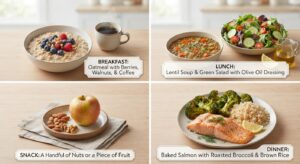
No special products, no complicated recipes. Just ordinary food, arranged thoughtfully.
Your Liver Friendly Grocery List
Making healthy meals is much easier when the right ingredients are already in your kitchen. Next time you shop for a fatty liver friendly week, try to bring home:
- Produce: spinach, broccoli, cabbage, tomatoes, berries, apples and citrus fruit.
- Proteins: salmon, sardines, eggs, chicken, lentils, chickpeas and kidney beans.
- Grains: rolled oats, brown rice, barley and whole wheat flour.
- Healthy fats: extra virgin olive oil, walnuts, almonds and seeds.
- Drinks: water, plain coffee and unsweetened tea.
A short list written before you leave home also protects you from impulse buys in the snack aisle. That alone can change a week of eating.
Move More, Sleep Better: The Other Half of the Plan
Food does not work alone. Regular physical activity helps the liver even when your weight stays the same, and general health guidelines suggest about 150 minutes of moderate activity each week. That could be a brisk 30 minute walk on five days.
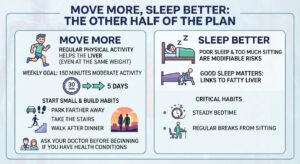
Good sleep matters as well. Medical reviews list poor sleep and too much sitting among the modifiable habits linked with fatty liver, so a steady bedtime and regular breaks from your chair are worth the effort.
Start small. Park a little farther away, take the stairs, or walk after dinner. Small habits repeated daily beat heroic plans that fade by Friday. If you have joint pain or another health condition, ask your doctor which activities are safe for you before you begin.
Quick Answers to Common Questions
Can fatty liver be reversed? In its early stages, it often can improve with gradual weight loss, healthier eating and more activity. Even when some scarring has already developed, these steps can still help protect the liver. Your doctor can tell you where you stand.
Do I have to avoid all fat? No. The goal is to swap saturated and trans fats for healthier unsaturated fats, like those in fish, nuts and olive oil, while keeping portions sensible.
Is fatty liver only a problem for older adults? No. It is seen in younger adults and even in children, which is another reason healthy habits are worth building early.
When It Is Time to See a Doctor
Food and lifestyle changes are powerful, but they work best alongside medical guidance. Book an appointment if you have risk factors such as diabetes or obesity, if routine tests show raised liver enzymes, or if you have symptoms that worry you.
A doctor may order blood tests, an ultrasound or a scan that measures liver stiffness. Seek urgent care if you notice yellow skin or eyes, severe swelling in the belly, vomiting blood or black stools.
This article is for general information and does not replace personal medical advice.
Final Thoughts: Small Bites, Big Protection
Fatty liver can sound scary, but it is also one of the most responsive conditions to lifestyle change. You now have seven powerful foods to build on: coffee, fatty fish, olive oil, leafy greens, walnuts, whole grains and legumes.
You do not need to overhaul everything overnight. Pick two or three swaps this week and stay with them. Progress with fatty liver is usually slow and quiet, and that is perfectly normal.
If you slip up, as everyone does, simply return to your plan at the next meal. One bad day does not undo weeks of good choices.
Remember that every body is different. Your doctor can help you set realistic goals, track your blood tests over time and adjust your plan as you improve. Teamwork between you and your healthcare provider usually brings the best results.
Your liver is remarkably hardworking, and it can recover when you give it the chance. Start with your next meal. Your future self will thank you.



