
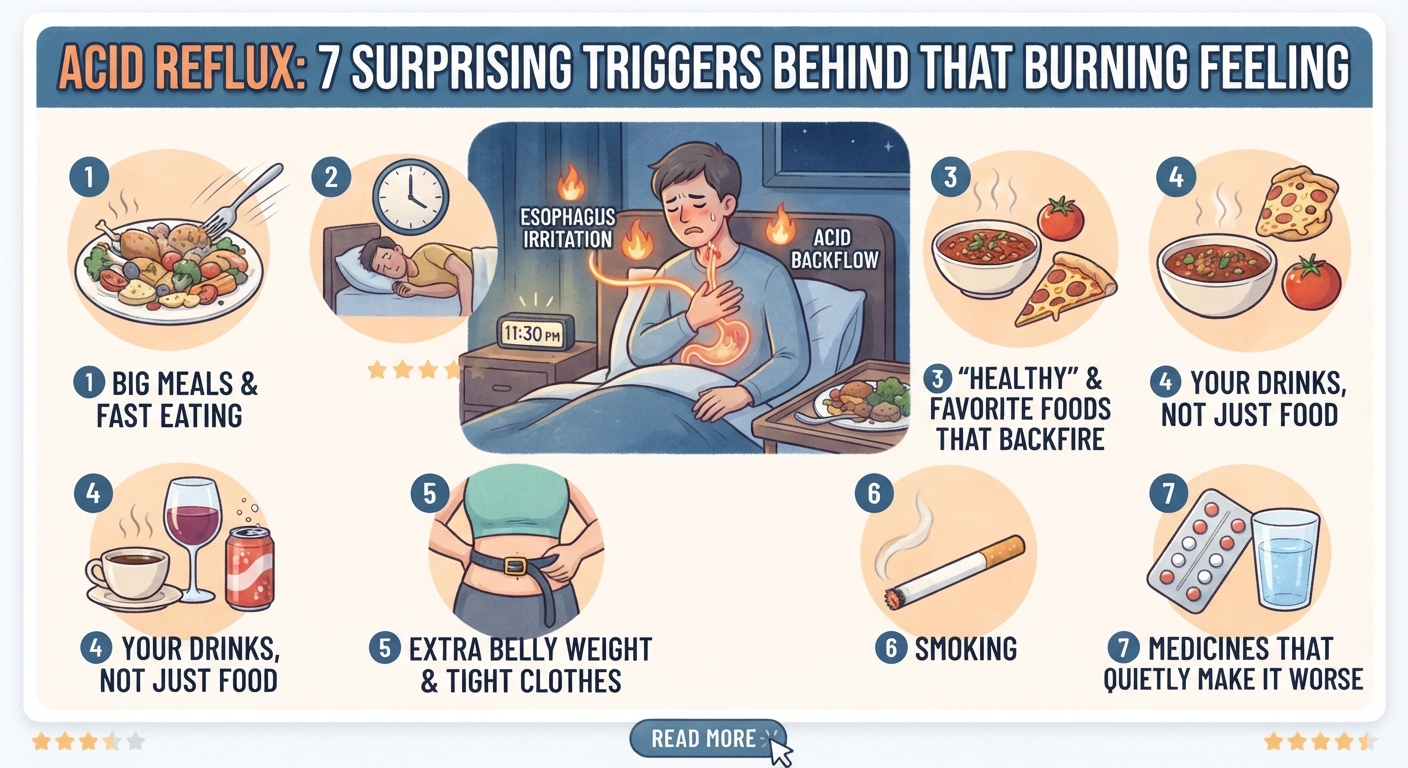
It is late at night. You finished a heavy dinner an hour ago, and now you are lying in bed with a burning feeling climbing up behind your breastbone. There may be a sour taste at the back of your throat too. You sit up, sip some water and wonder what you did wrong.
If this sounds familiar, you are in very large company. Acid reflux is one of the most common digestive complaints in the world, and almost everyone has felt it at least once.
For some people, it is a rare annoyance after a spicy meal. For others, it becomes a daily nuisance that affects sleep, mood and even the way they eat.
Here is the encouraging part. Acid reflux often has clear triggers, and many of them are things you can change. Some of those triggers are not what you would expect.
In this guide, we will explain what is really going on in your body, six signs to watch for, seven surprising triggers and the simple habits that calm things down. Let’s get into it.
So, What Exactly Is Acid Reflux?
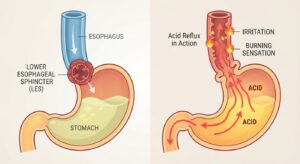
Acid reflux happens when stomach contents flow back up into the esophagus, the tube that carries food from your mouth to your stomach. The medical name is gastroesophageal reflux, or GER.
Between the esophagus and the stomach sits a small ring of muscle called the lower esophageal sphincter. Think of it as a one way door. It opens to let food in, then closes tightly to keep everything down.
When that door weakens or relaxes at the wrong time, acid slips upward and irritates the lining of the esophagus. That irritation is what you feel as burning.
It helps to know the difference between two terms:
- Occasional acid reflux: common, usually mild and often linked to a specific meal or habit.
- GERD (gastroesophageal reflux disease): a more serious, long lasting form in which reflux happens repeatedly or causes complications.
Estimates suggest that roughly 1 in 5 adults in the United States lives with GERD, so you are far from alone.
6 Signs Your Acid Reflux Is Trying to Tell You Something
Not everyone feels the classic burning sensation. Watch for these six signs.
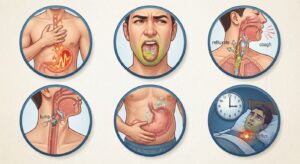
1. Heartburn. A burning feeling in the middle of the chest, often after eating or when lying down.
2. A sour or bitter taste. Stomach contents may rise high enough to reach your throat or mouth. Doctors call this regurgitation.
3. A chronic cough or hoarse voice. Acid reaching the throat can irritate the voice box, especially in the morning.
4. A lump in the throat. You may feel like something is stuck, or you clear your throat again and again.
5. Burping, bloating and nausea. Many people feel full and uncomfortable after meals.
6. Disturbed sleep. You wake up at night with burning, coughing or a sour taste.
Interestingly, some people have reflux with little or no heartburn. So do not ignore a stubborn cough or throat irritation just because your chest feels fine.
Who Is More Likely to Struggle With Acid Reflux?
Anyone can get it, but some people deal with it more often. You may be more prone to acid reflux if you:
- Carry extra weight around your middle.
- Are pregnant, especially in the later months.
- Smoke or spend a lot of time around smoke.
- Often eat large, late or fatty meals.
- Take medicines that relax the valve or irritate the esophagus.
- Have a hiatal hernia or slow stomach emptying.
Having one or more of these does not mean you will definitely have problems. It simply shows where to start looking when you are trying to understand your symptoms.
Heartburn or Heart Attack? Know the Difference
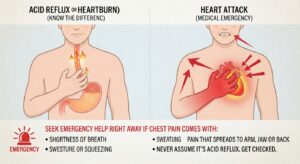
Here is an important safety note. Chest pain can come from your heart, not just your stomach, and the two can feel alike.
Seek emergency help right away if chest pain comes with:
- Shortness of breath.
- Sweating or nausea.
- Pressure or squeezing in the chest.
- Pain that spreads to the arm, jaw or back.
Never assume it is acid reflux when symptoms are severe or new. It is always better to be checked and told it was nothing than to wait.
Why Does the Valve Fail? The Real Causes
Before we look at triggers, it helps to understand what weakens the valve in the first place. Common factors include:
- A hiatal hernia, where part of the stomach pushes up through the diaphragm.
- Pregnancy, when hormones and pressure from the growing baby affect the valve.
- Extra weight, especially around the belly.
- Smoking.
- Certain medicines.
- Slow stomach emptying, which keeps food in the stomach for longer.
You may not be able to change all of these. But triggers, the everyday things that set off symptoms, are often within your control. Let’s meet them.
Trigger 1: Big Meals and Fast Eating
It sounds obvious, but it is easy to overlook. A very full stomach puts extra pressure on the valve, making it easier for contents to escape upward.
Eating quickly makes it worse. You swallow air and overfill before your brain notices you are full.
Try this instead:
- Eat smaller portions, and have a light snack if you get hungry later.
- Chew slowly and put your fork down between bites.
- Stop when you feel comfortably satisfied, not stuffed.
Many people find that simply shrinking their dinner plate by a quarter makes a visible difference.

It also helps to notice how you eat. Meals eaten in front of a screen or in a rush tend to be bigger and faster. A calm, seated meal gives your stomach a fair chance, and that alone can reduce acid reflux for many people.
Trigger 2: Late Dinners and Lying Down Too Soon
Gravity is your friend when it comes to acid reflux. When you are upright, it helps keep stomach contents where they belong. When you lie flat, that help disappears.
That is why a late, heavy dinner followed by bed is such a classic recipe for night time heartburn.
The National Institute of Diabetes and Digestive and Kidney Diseases says doctors may recommend weight loss for people who are overweight, avoiding trigger foods and drinks, and finishing meals 2 to 3 hours before lying down (source). nih
A few practical ways to use that advice:
- Eat dinner earlier, and take a gentle walk afterwards.
- Avoid late night snacks and midnight tea or coffee.
- Raise the head of your bed by about 6 to 8 inches using blocks under the bedposts or a wedge. Extra pillows often bend you at the waist and can make things worse.
Some studies also suggest that sleeping on your left side may reduce night time reflux compared with the right side. It is worth trying if you wake up with burning, since it costs nothing.
Trigger 3: “Healthy” and Favorite Foods That Backfire
Here is where it gets surprising. Foods that look perfectly healthy can set off acid reflux in some people.
Common culprits include:
- Citrus fruits and juices.
- Tomatoes, tomato sauces and ketchup.
- Onions and garlic.
- Chocolate and peppermint.
- Spicy dishes.
- Fried and fatty foods, which slow stomach emptying.
The key phrase is “in some people.” Triggers differ from person to person. You might be fine with tomatoes but struggle with fried snacks.
A simple tool helps: keep a food diary for two weeks. Write down what you eat, when you eat and any symptoms. Patterns often appear quickly, and you can then cut out only the foods that truly bother you instead of giving up everything you love.

Portion and timing matter as much as the food itself. A small portion of a spicy dish at lunch may be fine, while a large one at 10 PM is a recipe for trouble. Think in terms of testing, not banning.
Trigger 4: Your Drinks, Not Just Your Food
Sometimes the problem is in the glass.
- Coffee and strong tea. Research is mixed, but many people clearly notice a link between these drinks and their symptoms.
- Fizzy drinks. The bubbles cause burping, which can push acid upward.
- Alcohol. It can relax the valve and irritate the stomach lining.
- Citrus and tomato juices. Their acidity can sting an already irritated esophagus.
You do not have to give up your morning cup forever. Try a smaller size, drink it with food instead of on an empty stomach, and see how you feel. Water, plain milk and non mint herbal teas are usually gentler choices.
Trigger 5: Extra Belly Weight and Tight Clothes
Your stomach sits just under your diaphragm, and extra weight around the middle puts pressure on it. That pressure can push contents upward.
The good news is that even modest weight loss often helps people with acid reflux feel better. Slow and steady is the way to go, because crash diets stress the body and rarely last.
Clothing matters too. Tight belts, high waisted jeans and shapewear squeeze the stomach, especially after a meal. If you notice more burning after wearing something snug, that is your answer. Choose looser waistbands, particularly at dinner time.

Trigger 6: Smoking
Smoking harms your heart and lungs, but it also affects your digestion. It can weaken the valve between the esophagus and stomach, and it reduces saliva, which normally helps wash acid away and neutralize it.
Many people find their symptoms ease within weeks of quitting, and the benefits for the rest of the body are far bigger. For some, quitting is the single change that takes the edge off acid reflux more than any food swap. If you smoke and struggle with acid reflux, quitting is one of the most useful steps you can take.
Support helps. Speak with your doctor about options, from counseling to nicotine replacement.
Trigger 7: Medicines That Quietly Make It Worse
This is the trigger most people never suspect. Some medicines can cause acid reflux or make it worse.
Depending on the person, these may include certain pain relievers, some blood pressure medicines, some asthma medicines, sedatives and antihistamines. Others can irritate the esophagus directly if they get stuck on the way down.
Two safety rules:
- Never stop a prescribed medicine on your own. Talk to your doctor, who may adjust the dose or suggest an alternative.
- Take pills with a full glass of water and stay upright for at least 30 minutes afterwards.
If your symptoms began around the time you started a new medicine, mention that to your doctor.
It also helps to bring a complete list of everything you take, including over the counter pain relievers and herbal products. Sometimes the link becomes obvious once everything is written in one place, and your doctor can then look for a gentler option.
8 Daily Habits That Calm the Burn
Now that you know the triggers, here is a simple routine to follow:
- Eat smaller meals and chew slowly.
- Finish dinner at least 2 to 3 hours before bed.
- Raise the head of your bed if night time symptoms bother you.
- Keep a food diary and avoid your personal triggers.
- Aim for a healthy weight, with slow and steady changes.
- Skip smoking and limit alcohol.
- Wear looser clothing around your waist.
- Avoid intense exercise right after eating, and take a gentle walk instead.
Stress deserves a mention too. It does not directly create more stomach acid, but it can make you more sensitive to symptoms and push you toward habits such as skipping meals, late night snacking and smoking. Short walks, slow breathing and good sleep help on both fronts.

The real secret is consistency. Acid reflux rarely disappears after one good day. Most people see steady improvement after two to four weeks of small, repeated changes, so give your routine a fair trial before deciding whether it works.
A Reflux Friendly Day on a Plate
Not sure what this looks like in real life? Here is one simple example:
- Breakfast: Oatmeal with banana, or whole grain toast with an egg.
- Lunch: Grilled chicken or lentils with rice and steamed vegetables.
- Snack: A small bowl of yogurt or a piece of non citrus fruit, such as a pear.
- Dinner (finished early): Baked fish with potatoes and green beans.
Foods like oatmeal, bananas, melons, lean proteins, cooked vegetables and whole grains are generally well tolerated. They are not magic cures, though, and every person is a little different. Use this as a starting point and adjust it to your own triggers.
What About Antacids and Other Medicines?
There are several over the counter options, and they work in different ways:
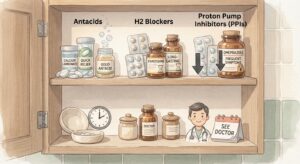
- Antacids neutralize acid quickly and give short term relief.
- H2 blockers reduce acid production and last longer.
- Proton pump inhibitors reduce acid production more strongly and are used for frequent symptoms.
Most of these are meant for short term use. If you need them more than twice a week, or for more than a couple of weeks, please see a doctor. Long term use should be supervised, and your doctor may also want to find out why symptoms keep returning.
Why Ignoring Acid Reflux Is Not a Good Idea
Most people with occasional acid reflux never develop serious problems. But when GERD continues for years without treatment, the esophagus can suffer.
Possible complications include:
- Inflammation of the esophagus, called esophagitis.
- Narrowing of the esophagus, which can make swallowing difficult.
- Barrett’s esophagus, a change in the lining that needs regular monitoring.
These outcomes are not common, and they are not meant to scare you. They are simply good reasons to get persistent symptoms checked instead of living with them.
The earlier acid reflux is managed, the easier it usually is to control. That is true whether the plan is a few lifestyle changes or a course of treatment from your doctor.
4 Acid Reflux Myths You Can Stop Believing
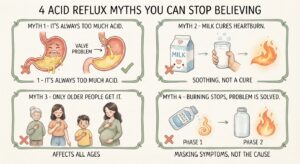
Myth 1: It is always caused by too much stomach acid. Often the problem is the valve, not the amount of acid.
Myth 2: Milk cures heartburn. It may feel soothing for a few minutes, but it is not a reliable fix.
Myth 3: Only older people get it. Acid reflux can affect young adults, children and pregnant women too.
Myth 4: If the burning stops, the problem is solved. Relief from an antacid hides symptoms for a while. If acid reflux keeps coming back, the cause still needs attention.
When It Is Time to See a Doctor
Book an appointment if:
- Your symptoms occur more than twice a week.
- They do not improve with lifestyle changes or over the counter medicines.
- You have a chronic cough or hoarse voice that will not go away.
Seek prompt medical care if you notice trouble or pain when swallowing, unintended weight loss, repeated vomiting, black stools or vomit containing blood.
A doctor can review your symptoms and, when needed, arrange tests such as an endoscopy or acid monitoring to see what is happening.
This article is for general information and does not replace personal medical advice.
Quick Answers to Common Questions
Is acid reflux the same as GERD? Not exactly. Acid reflux is the backflow itself. GERD is the long lasting, more serious form.
Can acid reflux go away on its own? Occasional episodes often settle when you change the trigger. Frequent symptoms usually need lifestyle changes and sometimes treatment.
Can stress cause acid reflux? Stress does not directly create more acid, but it can make symptoms feel stronger and lead to habits that trigger them.
Can I exercise with acid reflux? Yes, in most cases. Just avoid vigorous exercise right after a meal.
Final Thoughts: Calm the Burn, One Habit at a Time
Acid reflux can feel miserable, but it is also one of the most manageable digestive problems once you understand your triggers.
You do not need to change everything at once. Pick two habits this week, such as an earlier dinner and smaller portions, and see how your body responds.
Be patient with yourself. Relief often comes gradually, and the best plan is the one you can stick with.
And if the burning refuses to go away, do not suffer in silence. Your doctor is there to help.
With a little awareness, a few small changes and some patience, most people can enjoy their meals again without fear of the burn.



