
You went to bed early. You drank your water. You even tried that expensive eye cream your friend swears by. And yet, there they are in the bathroom mirror, staring back at you: the shadows under your eyes.
It is frustrating, and it is also confusing. Everyone says dark circles come from sleeping badly. So why do yours refuse to budge, even on your most well rested days?
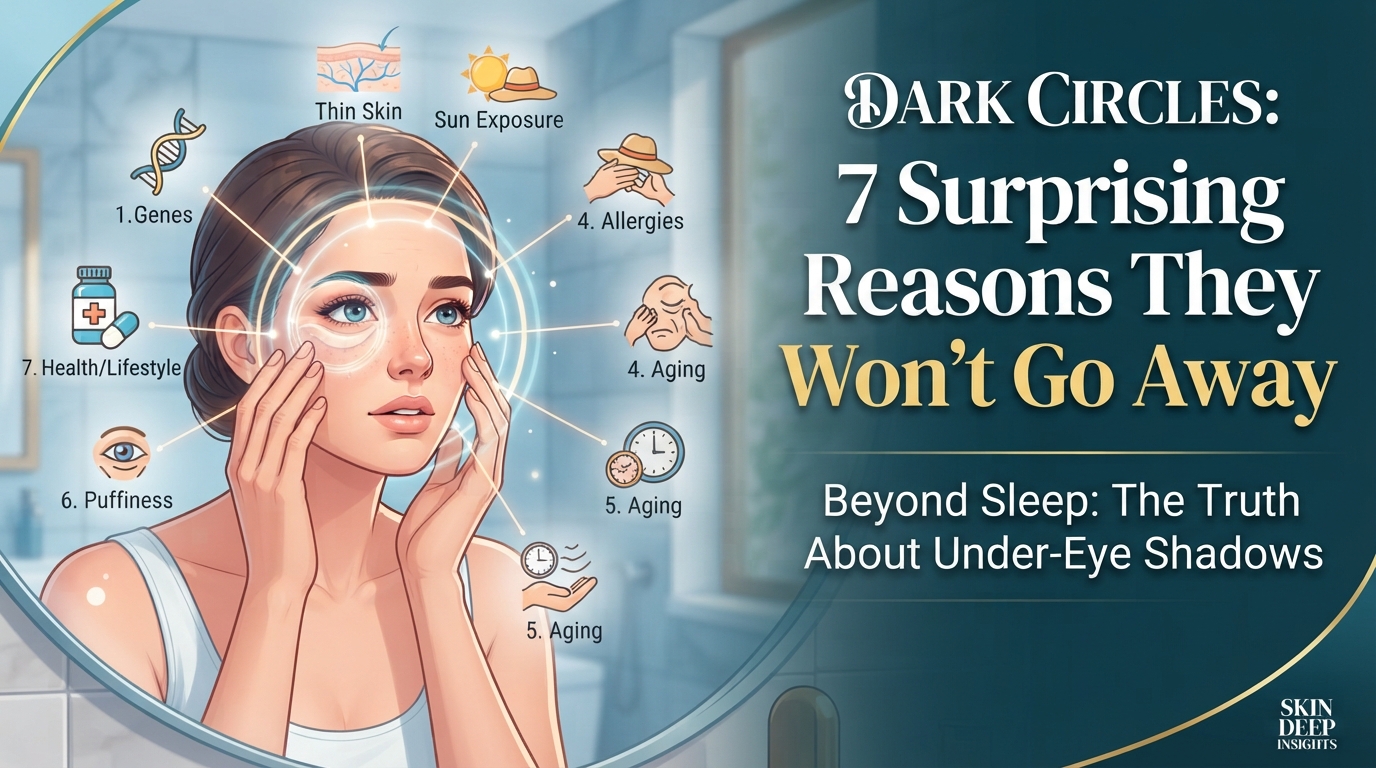
Here is the honest answer. Sleep is only a small part of the story. Dark circles can come from genetics, thin skin, sun exposure, allergies, aging and more. Because so many different causes overlap, a single quick fix rarely works.
The good news is that once you understand what is behind your own dark circles, you can choose the right approach instead of guessing.
In this guide, we will explain what dark circles really are, six signs they are not just about sleep, seven surprising reasons they stay, and the habits and treatments that actually help. Let’s get started.
So, What Are Dark Circles Really?
Dark circles are patches of darker skin under the eyes. Interestingly, the term is not a formal medical diagnosis. It is a catch all phrase that people use for many different problems in the same area.
Here is why this region is so prone to trouble:
- The skin under your eyes is among the thinnest on your body.
- It sits close to small blood vessels, which can show through.
- It has little fat to cushion it, so shadows form easily.
In most cases, dark circles are not a medical problem. For most people, they are simply part of how their face looks. But they can make you look tired or older than you feel, and that is a perfectly good reason to want to improve them.

The key is to find out which kind you have, because the best fix depends on the cause.
6 Signs Your Dark Circles Are Not Just About Sleep
Wondering if you are fighting the wrong battle? These six signs suggest something beyond a bad night.
1. They stay no matter how much you sleep. If a full week of early nights changes nothing, sleep is probably not the main cause.
2. They run in the family. Your parents or siblings have the same shadows, often since childhood.
3. They look bluish or purple. This usually points to blood vessels showing through thin skin.
4. They look brown or greyish. Extra pigment in the skin, often made worse by sun, is a likely cause.
5. They look like hollows or shadows. They seem deeper at certain angles or under overhead lights.
6. They come with itching, sneezing or puffiness. This often points to allergies or irritation.
You may notice more than one sign, and that is normal. Many people have a mix of causes.
Which of the Four Types of Dark Circles Do You Have?
Doctors often group dark circles into types, because each responds to different treatments.
- Pigmented: brownish shades caused by extra melanin in the skin.
- Vascular: bluish or purplish shades caused by blood vessels showing through thin skin.
- Structural: shadows caused by hollows or puffy eyelids, not by color at all.
- Mixed: a combination of two or more of the above, which is very common.
Here is a rough clue, though not a diagnosis. Stand in good light and gently stretch the skin under your eye. If the color stays, pigment is likely involved. If it fades, blood vessels are more likely. If the darkness changes with the angle of the light, structure is probably the main issue.
A dermatologist can tell you for sure, and it is worth asking because the right answer saves months of trial and error.
Who Is More Likely to Get Dark Circles?
Anyone can have them, but some people are more prone. You may notice them more if you:
- Have family members with the same shadows.
- Have a darker skin tone, which is more prone to extra pigment around the eyes.
- Are getting older, as the skin thins and the fat under the eyes shrinks.
- Have allergies, eczema or a habit of rubbing your eyes.
- Spend a lot of time in the sun without eye protection.
- Smoke, drink heavily or live with constant stress.
Having one or more of these does not mean you will definitely develop them. It simply tells you where to look first when searching for the cause.
Reason 1: It Is in Your Genes
This is the least glamorous reason, and the most common. Dark circles often run in families.
Some people are simply born with thinner under eye skin, more visible blood vessels or a tendency toward extra pigment. People with darker skin tones are also more prone to pigment related dark circles.
If you have had shadows under your eyes since you were young, genetics is a strong suspect.
The upside is that you can stop blaming yourself. You did nothing wrong. The downside is that sleep and water alone will not erase them, so a smarter plan is needed, including sun protection and targeted skin care.

Reason 2: Thin Skin and Visible Blood Vessels
Under your eyes, the skin is so thin that blood vessels beneath it can create a blue or purple tint. This is the vascular type.
It tends to look worse when you are tired, because your skin may look paler and the contrast increases. It can also look worse when the area is congested, for example during a cold or allergy flare up.
A few things can help:
- A cool compress can narrow blood vessels for a short time.
- Sleeping with your head slightly raised may reduce fluid build up.
- Concealers with a peach or orange tint can neutralize blue tones.
Treatments for this type usually aim to thicken the skin or reduce visible vessels, and a dermatologist can discuss options.
It also helps to remember that this type can look worse when you are tired or unwell. If your dark circles seem to change with your health and energy, the vascular type is a likely culprit.
Reason 3: Sun Exposure and Extra Pigment
Here is a cause many people overlook. The sun does not only darken your arms and face. It can also darken the skin around your eyes, which triggers your skin to make more melanin.
Over time, this can create a brown or greyish shadow that deepens each summer. Inflammation from rubbing or allergies can add to the effect.
Simple habits make a real difference:
- Apply a broad spectrum sunscreen of SPF 30 or higher around the eyes every day.
- Choose a product that is safe to use near the eyes.
- Wear sunglasses and a hat outdoors.
Sun protection will not erase existing pigment overnight. But it stops it from getting darker, and it helps any other treatment work better.

Make it automatic. Put sunscreen on right after your morning moisturizer, and reapply if you spend long hours outdoors. Many people forget the eye area entirely, which is exactly where thin skin needs protection most.
The Sleep Myth: Why Late Nights Are Not the Whole Story
Let’s address the elephant in the room. Everyone blames sleep. And to be fair, tiredness does matter, just not in the way most people think.
The Mayo Clinic explains that short nights alone do not usually cause under eye circles, but a lack of sleep can make shadows and circles you already have look more obvious (source). mayoclinic
In other words, sleep is a magnifier, not the root cause. When you are tired, your skin can look paler and more puffy, which makes any existing darkness stand out.
That does not mean you should skip sleep. Good rest helps your skin, your mood and your overall health. It just means that if your dark circles are genetic, pigment related or structural, extra hours in bed will not make them disappear on their own.
Think of it this way. A good night of rest takes away the extra emphasis, and a poor night adds it back. The underlying cause stays the same either way, so it still needs its own plan.
Reason 4: Rubbing Your Eyes and Allergies
If your eyes itch from allergies, dust or dryness, you probably rub them. Many people do it dozens of times a day without noticing.
Rubbing irritates the delicate skin, causes inflammation and can lead to extra pigment over time. Chronic rubbing can even thicken and darken the skin.
Allergies add another layer. When your nose is blocked, blood flow around the eyes can slow down, and the area may look darker and puffier. Doctors sometimes call this the “allergic shiner” look.

What helps:
- Treat the allergy itself, since controlling it may also ease the circles.
- Use cool compresses instead of rubbing.
- Remove eye makeup gently, and never sleep in it.
If allergy symptoms are frequent, speak with a doctor about the best treatment for you.
Reason 5: Aging and the Hollows Under Your Eyes
As we get older, the skin loses collagen and the small pads of fat under the eyes shrink. The area becomes thinner and slightly hollow.
That hollow, often called the tear trough, catches the light and creates a shadow. This can look like a dark circle, even though the skin color has not changed at all.
This is the structural type, and it explains why some people notice these shadows worsening in their thirties and beyond.
Skin care products can help the skin look healthier, but they cannot refill a hollow. For visible hollows, dermatologists sometimes use fillers or other procedures. These work best in experienced hands, so take your time choosing a professional.
For many people, the first step is simply understanding that the shadow is structural. Once you know that, you can stop spending money on creams that were never going to fill a hollow.
Reason 6: Puffiness That Casts Shadows
Sometimes the problem is not color. It is a small bump that creates a shadow. Even healthy people notice this after a salty meal or a night of poor sleep.
Puffy lower eyelids, from fluid or fat pads, cast a shadow that looks like a dark circle, especially under overhead lighting. Several things can make puffiness worse:
- Salty meals, particularly late at night.
- Sleeping flat or on your stomach, which lets fluid collect.
- Allergies and irritated eyes.
- Alcohol and too little sleep.
A few small changes can help. Try an extra pillow, cut back on very salty dinners and use a cool compress in the morning.

If puffiness is sudden, painful or only on one side, ask a doctor to take a look.
Reason 7: Health, Nutrition, Medicines and Lifestyle
This last reason is the most overlooked. Sometimes the cause is not in the skin at all.
Possible contributors include:
- Iron deficiency or anemia, which can make the skin paler so blood vessels show more.
- Certain medicines, including some eye drops and oral contraceptives.
- Smoking and heavy alcohol use.
- Ongoing stress.
- Other medical conditions, which a doctor can check for.
Evidence for some of these links is stronger than for others, so avoid jumping to conclusions. If your dark circles are new, sudden or come with tiredness, paleness or other symptoms, a simple check up and blood test can be useful.
Please do not stop a prescribed medicine on your own. Talk to your doctor if you suspect it plays a role.
When you see the doctor, mention how long you have had them, whether they changed recently and what medicines you take. That short history often points to the answer faster than any test.
What Actually Helps Dark Circles: 8 Daily Habits
You cannot change your genes, but you can improve the conditions around your eyes. Try these habits:
- Wear sunscreen and sunglasses every day.
- Get regular, good quality sleep.
- Sleep with your head slightly raised.
- Use a cool compress when your eyes look puffy.
- Avoid rubbing your eyes, and treat allergies properly.
- Remove eye makeup gently every night.
- Cut back on smoking and heavy alcohol.
- Eat a balanced diet with enough iron, protein and fresh produce.
These shadows often improve most when several small habits work together, rather than one big change. Think of it as building a routine, not finding a trick.
Give these habits at least four to six weeks before judging the results. Skin changes slowly, and the area under the eyes is no exception.
Creams, Treatments and What to Expect
If habits are not enough, there are treatments to consider. Their results depend on your type.
Skin care ingredients that may modestly help include vitamin C, retinol, and caffeine. Caffeine can narrow blood vessels briefly, so its effect is temporary. Retinoids should be avoided during pregnancy, so check with your doctor first.
Dermatologist treatments may include prescription lightening creams, chemical peels, lasers and fillers for hollows. A product such as hydroquinone can irritate the skin and should be used under medical guidance.

A realistic view helps. Mild to moderate dark circles often respond well to habits and home care. Stubborn ones may need professional help, and some improvement may be more subtle than the ads promise.
Home Remedies: What Is Worth Trying
You have probably seen cucumber slices, tea bags and cold spoons all over social media. Here is the honest picture:
- Cold compresses and chilled cucumber slices: the cooling can reduce puffiness for a short time.
- Cold tea bags: the cold helps, and there is little proof the tea itself adds much.
- Raw potato, lemon juice or toothpaste: please skip these, since they can irritate the skin around the eyes.
Treat home remedies as small helpers, not miracle cures.
4 Dark Circles Myths You Can Stop Believing
Myth 1: Dark circles always mean you are not sleeping enough. Sleep affects how noticeable they are, but it is rarely the only cause.
Myth 2: Drinking more water will make them vanish. Staying hydrated is good for your skin, but extra water alone will not erase dark circles.
Myth 3: Expensive creams work for everyone. The right product depends on the type of dark circles you have.
Myth 4: They are always a sign of serious illness. In most cases, they are harmless. Still, new or unusual changes deserve a check up.
When It Is Time to See a Doctor
Dark circles are usually harmless, but a professional opinion is useful if:
- They appeared suddenly or are getting worse quickly.
- Only one eye is affected and the change keeps growing.
- They come with swelling, pain, itching or vision changes.
- You feel unusually tired, look pale or have other new symptoms.
- Home care has not helped after several weeks.
A dermatologist can identify the type you have and suggest a treatment plan that fits.
This article is for general information and does not replace personal medical advice.
Quick Answers to Common Questions
Can dark circles go away permanently? Some types improve a lot with the right care. Others, especially genetic ones, may need ongoing maintenance.
Do dark circles mean I am unhealthy? Usually not. They are common and often just a feature of your face.
How long does it take to see results? Habits often need several weeks. Professional treatments vary.
Are dark circles more common in women? They affect men and women. Hormones, makeup habits and allergies can play a role, but there is no single group that is exempt.
Can dark circles in children be normal? Yes, they are often linked to allergies or family traits. A doctor can check if they seem unusual.
Final Thoughts: Make Peace With Your Mirror (And Treat Your Skin Kindly)
Dark circles can be stubborn, but they are rarely a sign that something is wrong. Most people who deal with dark circles find that understanding the cause is half of the solution. They are a mix of genes, skin, light and lifestyle.
Start with what you control: sunscreen, steady sleep, gentle habits and treating allergies. Then, if you want more, speak with a dermatologist about options that suit your type.
Be patient and kind to yourself. Your face is not a problem to fix. If you want to improve it, you now know where to begin.



