
Right now, as you read this, your heart is beating roughly 60 to 100 times every minute without asking for a single thing in return. It started before you were born. It will keep going tonight while you sleep, tomorrow while you rush to work, and next week when you forget to drink water.
Most of us only think about our hearts when something goes wrong. A scary moment at the clinic, a relative’s sudden diagnosis, a news story that hits close to home. We promise ourselves we will do better, and then life gets busy and the promise fades.
This blog is meant to change that pattern. No extreme diets, no punishing gym schedules. Just small, realistic choices that add up over time. Good Heart Health is rarely built in one dramatic moment. It is built in ordinary mornings and tired evenings.
Why Heart Health Deserves a Spot on Your Daily To-Do List
The numbers are hard to ignore. The World Health Organization describes cardiovascular diseases as the leading cause of death around the world, claiming more than 17 million lives every year. Behind every one of those numbers is a family that lost someone.
Here is the encouraging part. Many cases of heart disease are linked to things we can influence, such as what we eat, how much we move, whether we smoke, and how we handle stress. Strong Heart Health is not reserved for athletes or people born with lucky genes.
Genetics and age do matter, and you cannot change them. But think of your heart like a car engine. You did not choose the model, yet you can still choose how often it gets serviced.
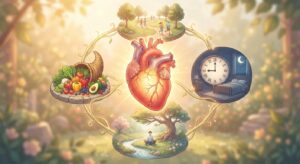
Small shifts that help:
- A ten minute walk after dinner
- One extra serving of vegetables
- Going to bed a little earlier
- A few slow breaths during a stressful afternoon
None of these feels dramatic. Together, they quietly protect your Heart Health.
6 Warning Signs Your Heart May Be Trying to Tell You Something
Before we get to the habits, let’s talk about symptoms. Your body often whispers before it shouts. These six signs deserve your attention:
- Chest discomfort: pressure, tightness, squeezing or fullness in the center of the chest that lasts more than a few minutes or keeps coming back
- Shortness of breath: struggling for air while doing simple things like climbing stairs, or even while resting
- Unusual tiredness: fatigue that feels far bigger than your day explains
- Swelling: puffy feet, ankles or legs, which can happen when the heart struggles to pump efficiently
- Dizziness or a racing heartbeat: lightheadedness, fainting or palpitations that feel out of the ordinary
- Pain in other areas: discomfort spreading to the jaw, neck, back, shoulder or arm
Women, in particular, may experience nausea, jaw or back pain and extreme tiredness without the classic crushing chest pain. This is one reason symptoms sometimes get missed.
If someone has sudden chest pain, trouble breathing or fainting, call emergency services right away. Do not wait to see if it passes. Knowing these signs is a real part of Heart Health, not an afterthought.
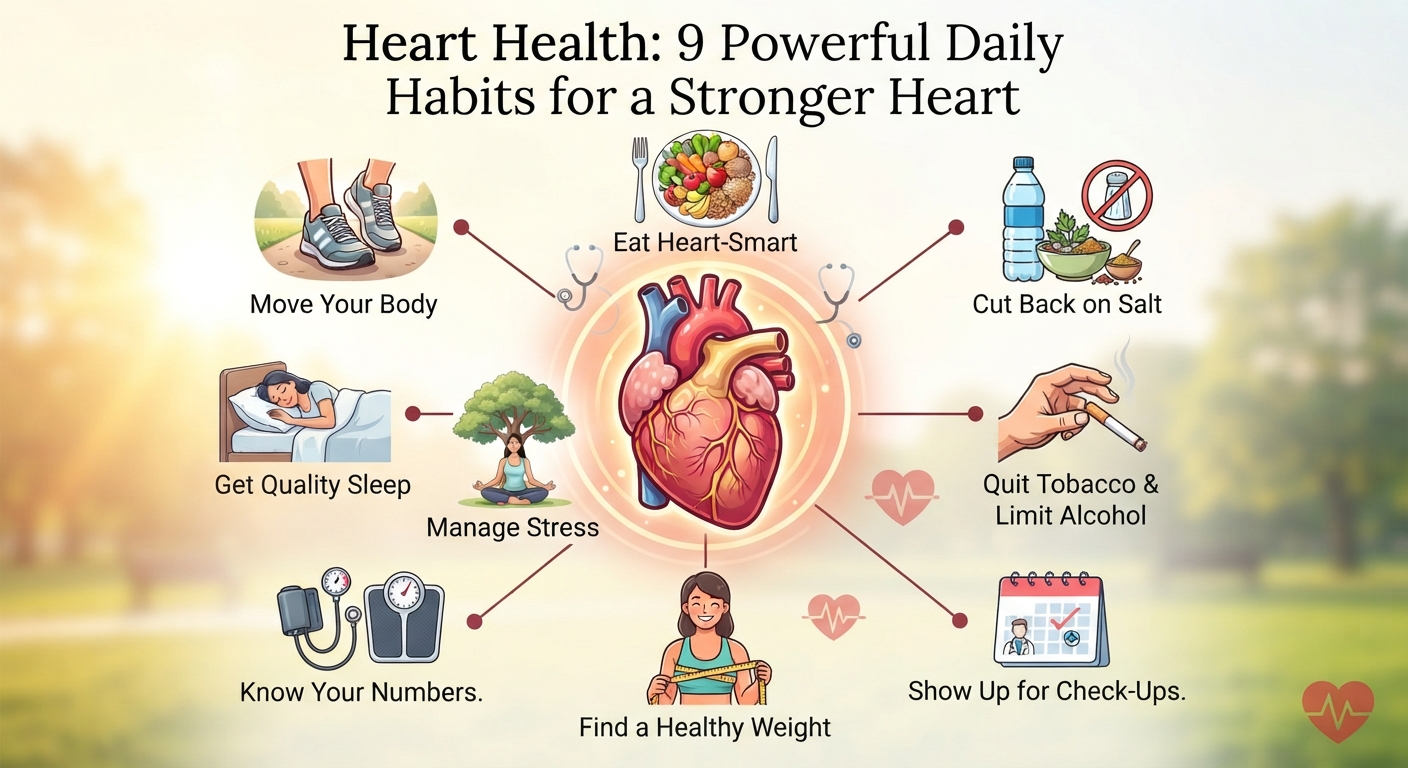
Habit 1: Move Your Body, Even When You Don’t Feel Like It
Your heart is a muscle, and like any muscle it grows stronger with use. Regular movement helps lower blood pressure, improves cholesterol, supports a healthy weight and helps the heart pump more efficiently.
The American Heart Association recommends that adults get at least 150 minutes of moderate activity each week, or 75 minutes of vigorous activity, along with muscle-strengthening work on two days. Broken down, that is about 30 minutes on five days.
Not a gym person? No problem. Try:
- A brisk walk around your neighborhood
- Cycling for short trips
- Dancing to your favorite songs at home
- Taking the stairs instead of the lift
- A friendly game of cricket or football
A simple check for moderate effort: you can talk, but you can’t sing. The best workout for your Heart Health is the one you will actually repeat, so choose something you enjoy.

If you have a heart condition or have been inactive for a long time, speak with your doctor before starting a new routine. Even short sessions add up, and over the years they do wonders for Heart Health.
Habit 2: Fill Your Plate With Foods That Love Your Heart
Food is not just fuel. It talks to your arteries every single day. A heart-friendly eating pattern centers on whole, minimally processed foods.
Make room for:
- Fruits and vegetables in many colors
- Whole grains such as oats, brown rice and whole wheat roti
- Lentils, chickpeas and beans
- A small handful of unsalted nuts
- Fish like salmon, sardines or mackerel, about twice a week
Cut back on:
- Processed meats
- Sugary drinks
- Deep-fried and heavily packaged snacks
- Foods high in saturated and trans fats
Think of it as adding more good food rather than banning everything you love. If you enjoy a fried samosa once in a while, nobody is going to arrest you.

Swapping a soft drink for water, or white bread for a whole grain option, may seem tiny. Yet these swaps are the foundation of lasting Heart Health. Herbs, spices, lemon and garlic can make simple meals delicious, so a heart-friendly plate never needs to be boring. Eating well is one of the most enjoyable ways to protect Heart Health.
Habit 3: Make Peace With Less Salt
Too much sodium can raise blood pressure, and high blood pressure is one of the biggest risk factors for heart attack and stroke. The American Heart Association suggests limiting sodium to no more than 2,300 milligrams a day, with an ideal target of 1,500 milligrams for most adults.
Here is a surprise. Most of the sodium we eat does not come from the salt shaker. It hides in bread, pickles, sauces, instant noodles, chips and restaurant meals.

Easy ways to cut back:
- Read nutrition labels and compare sodium levels
- Taste your food before adding salt
- Use lemon juice, herbs, cumin, coriander and pepper for flavor
- Go easy on pickles, salty snacks and processed sauces
- Cook at home more often, so you control what goes in
Your taste buds adjust faster than you might think. After a few weeks, food that once felt normal can start tasting too salty. That small adjustment is a gift to your Heart Health.
Remember that blood pressure often gives no warning signs. Lowering salt is a quiet, steady way to protect Heart Health even when you feel perfectly fine.
Habit 4: Sleep Like Your Heart Depends on It (Because It Does)
We treat sleep like a luxury, yet it is closer to a repair shift for your body. During good sleep, your heart rate and blood pressure dip, giving your cardiovascular system a chance to rest and recover.
The American Heart Association includes sleep in its Life’s Essential 8 checklist and advises most adults to aim for 7 to 9 hours each night. Long-term poor sleep is linked with higher blood pressure, weight gain, and a higher risk of heart problems.
For a trusted framework on the key factors behind a healthy heart, the American Heart Association explains its Life’s Essential 8 here: https://www.heart.org/en/healthy-living/healthy-lifestyle/lifes-essential-8

Try these bedtime habits:
- Keep a regular sleep and wake time, even on weekends
- Put your phone away at least 30 minutes before bed
- Keep your room cool, dark and quiet
- Avoid heavy meals and caffeine late in the day
Loud snoring, gasping at night or constant daytime sleepiness can signal sleep apnea, a condition linked to high blood pressure and irregular heart rhythms. If that sounds familiar, speak with a doctor. Protecting your sleep is a powerful step for Heart Health, and many people find it the easiest habit to improve. Better nights lead to better days and stronger Heart Health.
Habit 5: Tame Stress Before It Tames You
Everyone feels stress. The trouble starts when it never switches off. Long-term stress can push us toward habits that hurt the heart, like poor sleep, overeating, smoking or skipping exercise. Researchers are still studying exactly how stress affects the heart directly, but its indirect effects are well recognized.
You do not need a spa retreat to calm down. Think small and consistent:
- Slow, deep breathing for two minutes
- A short walk in fresh air
- Prayer, meditation or quiet reflection
- A chat with a friend or family member
- A hobby that makes you lose track of time
Strong relationships matter too. People who feel connected and supported tend to cope better with pressure. Call someone you love today, not for any reason except that it feels good.

If stress, anxiety or low mood feels heavy, talking to a counselor or doctor is a sign of strength, not weakness. Mental wellbeing and Heart Health are closely connected. Taking care of your mind is simply another way to invest in Heart Health.
Habit 6: Say Goodbye to Tobacco and Go Easy on Alcohol
If there is one habit that harms the heart more directly than almost anything else, it is smoking. Tobacco damages blood vessels, raises blood pressure, makes blood more likely to clot and is a major cause of coronary heart disease. Secondhand smoke harms the people around you as well.
Now the good news. The benefits of quitting begin quickly. According to the CDC, heart rate and blood pressure start to drop within about 20 minutes of the last cigarette. Within roughly a year, the added risk of coronary heart disease falls to about half that of a person who still smokes.

A few honest notes:
- Hookah and shisha are not safe alternatives
- Vaping still delivers nicotine, which raises heart rate and blood pressure
- Chewing tobacco and similar products carry their own serious risks
- Quitting is hard, and support from a doctor can make success more likely
Alcohol deserves a mention too. Heavy drinking can raise blood pressure and contribute to irregular heart rhythms and weakened heart muscle. If you do not drink, there is no reason to start for the sake of your heart. If you do drink, keep it modest.
Every step away from tobacco is a step toward better Heart Health. Choosing clean air and clear habits is one of the strongest moves you can make for Heart Health.
Habit 7: Know Your Numbers Before They Surprise You
High blood pressure and high cholesterol are called silent problems for a reason. Many people feel completely fine while their numbers creep upward. The only way to know is to check.
Numbers worth knowing:
- Blood pressure: normal is generally below 120/80 mm Hg. The American Heart Association considers readings consistently at 130/80 or higher to be high.
- Cholesterol: especially LDL, the “bad” cholesterol that can build up in artery walls
- Blood sugar: diabetes and prediabetes both raise the risk of heart disease
- Waist size and weight: extra fat around the middle is linked with higher risk
Ask your doctor how often you should be tested, especially if heart disease, diabetes or high blood pressure runs in your family. If you are prescribed medicine, take it exactly as directed, even when you feel well. Feeling well is often a sign the medicine is working.
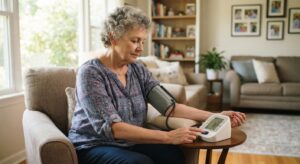
Tracking your numbers turns Heart Health from guesswork into a plan. A simple home blood pressure monitor can be a smart investment for Heart Health, particularly for anyone over 40 or with a family history.
Habit 8: Find Your Healthy Weight Without Obsessing
Carrying extra weight, especially around the waist, makes the heart work harder and raises the risk of high blood pressure, diabetes and abnormal cholesterol. The encouraging news is that you do not need dramatic transformation. Losing even 5 to 10 percent of body weight can improve blood pressure, cholesterol and blood sugar for people who are overweight.
Crash diets usually backfire. They are hard to sustain, and the weight tends to return. A better approach looks like this:
- Eat slowly and stop when you feel satisfied
- Use smaller plates for meals
- Keep fruit, nuts and roasted chickpeas ready for snacking
- Drink water or unsweetened tea instead of sugary drinks
- Stay active in ways you enjoy
Be kind to yourself along the way. Shame is a terrible motivator, and progress is rarely a straight line. Missed a walk? Walk tomorrow. Ate too much at a wedding? Eat normally the next day. Steady effort beats perfection every time.

Healthy weight is one piece of the larger puzzle of Heart Health. If you struggle, a doctor or registered dietitian can help you build a plan that supports Heart Health without extreme rules.
Habit 9: Show Up for Check-Ups and Know Your Family Story
Prevention works best when it starts early. Regular check-ups let your doctor spot trouble before it becomes a crisis, and they give you a chance to ask questions.
Talk to your family about their medical history. Did a parent or sibling have a heart attack, stroke or high blood pressure at a young age? That information helps your doctor judge your risk and decide when to start screening.

Come prepared to appointments:
- Write down any symptoms, even small ones
- Bring a list of medicines and supplements
- Share your family history honestly
- Ask what your personal risk looks like and what you can do about it
Many people avoid doctors out of fear or busyness. But a check-up is not a trial, it is a conversation. Think of it as a routine inspection that keeps your Heart Health on track. It is much easier to fix a small problem than a big one.
If you remember only one thing from this habit, let it be this: asking questions is a smart investment in Heart Health.
A Heart-Happy Day, From Morning to Midnight
Wondering how all this fits into real life? Here is one simple example:
- Morning: a glass of water, a short stretch and oats or eggs with fruit for breakfast
- Midday: a lunch with vegetables and lentils, and a ten minute walk afterward
- Afternoon: a fruit or nut snack and a few minutes of deep breathing during a busy hour
- Evening: 30 minutes of exercise, a lighter dinner and a call with someone you care about
- Night: screens off early and lights out in time for 7 to 9 hours of sleep
You do not have to copy this exactly. The point is that a day built around Heart Health can look completely normal and still be doing you a lot of good.
Common Heart Myths That Need to Retire
Misinformation can keep people from taking action. Let’s clear up a few popular beliefs.
Myth: Heart disease only affects older people.
Risk builds over many years, and younger adults can develop heart problems too. Early habits matter, which is why Heart Health is worth caring about at any age.
Myth: If I feel fine, my heart must be fine.
High blood pressure, high cholesterol and early artery changes often cause no symptoms at all. Regular testing is the only reliable way to know.
Myth: Heart disease is mainly a men’s problem.
It is a leading cause of death for women as well, and women’s symptoms can look different. Everyone benefits from paying attention to Heart Health.
Myth: Once I have a family history, nothing can be done.
Family history raises risk, but healthy habits and good medical care can still make a big difference.
How to Make These Habits Actually Stick
Reading about habits is easy. Living them is the hard part. Here is how to make change realistic:
- Start with one habit. Pick the easiest one and practice it for two weeks before adding another.
- Attach it to something you already do. Walk after your evening tea, or stretch while the kettle boils.
- Track your progress. A simple notebook or phone note can keep you motivated.
- Find a buddy. A friend, spouse or neighbor makes it harder to quit and more fun to continue.
- Celebrate small wins. A lower blood pressure reading or an extra walk deserves a little pride.
Setbacks are normal. What matters is returning to your routine without guilt. Over months and years, tiny actions create a lifestyle that supports Heart Health without feeling like a chore.
Final Thoughts: Start Small, Stay Kind to Your Heart
Your heart has carried you through every joy, every worry and every ordinary Tuesday. It never complains, and it never asks for a break. The least we can do is look after it in return.
You do not need to overhaul your life by Monday. Choose one habit from this list today. Take a walk, swap a salty snack, go to bed thirty minutes earlier, or book that overdue check-up. Then build from there.
Strong Heart Health is made of choices you repeat, not moments you perfect. Start where you are, use what you have, and be patient with yourself. Your future self will be grateful for every small step you take today.



