
Think about the last time you felt truly rested, calm, and energized at the same time. For many of us, that feeling is rare. We chase better sleep, less stress, stronger workouts, and a clearer mind, often looking for complicated solutions. Sometimes the missing piece is much simpler. It is a quiet, hardworking mineral that your body uses in hundreds of processes every single day.
That mineral is magnesium. Most people do not get enough magnesium from daily food, and they do not even realize it.
Why Magnesium Matters More Than You Think
Your body is an incredible network. Nerves fire, muscles contract, hearts beat, and bones rebuild. Behind all of that is a need for steady support. One of the most important forms of that support comes from magnesium. This single mineral participates in more than three hundred enzyme reactions.
Scientists often call it a cofactor. That means it helps other things work. Without enough magnesium, many systems start to feel off, even if your blood tests look normal at first glance.

It is involved in making energy in your cells, in building proteins, in keeping your DNA stable, and in moving calcium and potassium where they need to go. When you think about how much work your body does in a single hour, you can see why a shortage shows up in so many different ways. It is easy to overlook because the body keeps blood levels steady by pulling from bone when needed, so early shortage rarely shows on a basic lab.
6 Signs You Might Be Missing This Key Mineral
Before we talk about benefits, it helps to know what low levels can look like. These signs are common and often blamed on other things. Look for a pattern rather than one single symptom.
1. You Feel Tired Even After a Full Night
Energy is made inside your cells in tiny power plants called mitochondria. When cells cannot make energy efficiently, often because magnesium is low, you feel that drain quickly. You wake up tired, you hit an afternoon slump, and coffee only helps for a short time. People often think they just need more sleep, but sometimes the issue is how energy is made, not how long they sleep.
2. Your Muscles Twitch, Cramp, or Feel Tight
Have you ever had an eyelid twitch that would not stop, or a calf cramp at night that woke you up. Muscles need magnesium to relax after contracting. When there is not enough, they stay tight and twitchy. Athletes often notice this first because they push muscles harder and sweat out minerals.
3. Sleep Feels Light and Broken
You go to bed on time but you toss and turn. You fall asleep but wake at 2 or 3 in the morning. Research shows that magnesium helps regulate melatonin and GABA, both linked to calm sleep. Without enough, the nervous system stays a bit wired. Evening screen time and caffeine can make this worse.
4. You Feel More Anxious or On Edge
Stress feels bigger than it should. Small problems feel large. Your heart beats a bit faster when you worry. Low magnesium can make the nervous system more reactive. It is not a cause of anxiety on its own, but it can make it harder to bounce back. Many people notice they feel steadier when nutrition and sleep improve together.
5. You Get Frequent Headaches
Some studies suggest that people who get migraines often have lower magnesium levels. The link is not fully proven for everyone, but researchers think it has to do with how blood vessels and nerve signals behave when this mineral is low. Keeping a headache diary can help you spot triggers like dehydration, lack of sleep, and long gaps without food.
6. Your Heart Flutters or Pounds More Than Usual
Your heart is a muscle that depends heavily on magnesium for a steady rhythm. Palpitations, or that fluttery feeling, can have many causes. A shortage is one of them that doctors often check, especially if you also have fatigue or cramps. Any new or strong palpitations should be checked promptly.
The Real Health Benefits You Can Feel
Now for the good part. When you give your body enough of what it needs, you start to notice changes. Here are the most research backed benefits that people actually feel in daily life.
1. Better Sleep Without the Grogginess
One of the most talked about benefits of magnesium is better sleep quality. It does not work like a sleeping pill that knocks you out. Instead, it helps your brain and body shift into rest mode naturally.
It supports the activity of GABA, a calming brain chemical. It also helps lower nighttime cortisol, the alertness hormone. People who improve their intake of magnesium often report falling asleep faster and waking less at night. The effect is gentle and builds over days.
- Try a relaxing evening routine with dim lights and no screens for the last hour.
- Keep your bedroom cool, dark, and quiet.
- Avoid heavy meals and alcohol close to bedtime.
- Keep caffeine to the morning.
2. Calmer Mind and Less Everyday Stress
Life is stressful. Deadlines, family needs, traffic, and constant notifications keep the nervous system busy. Magnesium helps control the stress hormone system, so your body can return to calm after a tough day.
It also plays a role in how the brain handles serotonin, a mood related messenger. People who are low often describe feeling tense or easily overwhelmed. Restoring levels does not erase stress, but it can make it easier to handle. Pairing good nutrition with walks and time outside works better than nutrition alone.
3. Stronger Bones Than Calcium Alone Can Build
Calcium gets all the attention for bone health, but magnesium is equally important for keeping bones dense and strong. Bones store a large share of the body’s total supply of this mineral. In fact, about half to sixty percent of the total amount is found in bone.
According to the National Institutes of Health, magnesium is needed for bone formation and for keeping calcium in balance (reference: NIH Magnesium Fact Sheet).
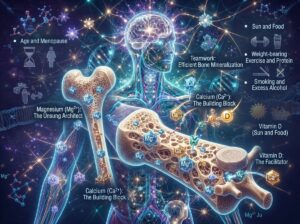
It helps activate vitamin D, which then helps calcium get into bone. Without enough, calcium may not be used well. That is why bone experts often talk about calcium, vitamin D, and this mineral together. They work as a team.
- Bone loss tends to speed up with age, especially after menopause.
- Adequate protein and weight bearing exercise also help keep bones strong.
- Smoking and excess alcohol can weaken bone over time.
- Get enough vitamin D from sensible sun and food.
4. Smoother Muscle Recovery After Workouts
If you exercise regularly, this mineral can help reduce soreness and support faster recovery. It works with calcium to control muscle contraction and relaxation. Think of calcium as the signal to contract and this nutrient as the signal to release.
During a workout, calcium helps muscles contract. Afterward, this mineral helps them relax again. It also helps move lactic acid and supports protein repair. Many trainers suggest focusing on food sources first, then considering a magnesium supplement if cramps are frequent. Hydration matters just as much.
5. Steadier Heart and Blood Pressure
Your heart beats about 100,000 times a day. That rhythm needs precise control of electrolytes. Magnesium plays a role in keeping blood vessels relaxed and blood pressure within a healthy range.
Large population studies have found that people with higher intakes tend to have healthier blood pressure levels. The effect is modest, not dramatic, but it adds up when combined with a balanced diet rich in fruits, vegetables, and whole grains. The DASH diet, which is rich in this mineral, is a good example.
6. Better Blood Sugar Balance
Food is turned into blood sugar for energy, and insulin helps move that sugar into cells. Studies have linked higher magnesium intake with better insulin sensitivity and steadier blood sugar levels.
This does not mean it treats diabetes on its own. It means it is one piece of a bigger picture that includes fiber, movement, and quality sleep. Whole grains, beans, nuts, and leafy greens are foods that provide both fiber and this mineral. They also help you feel full longer.
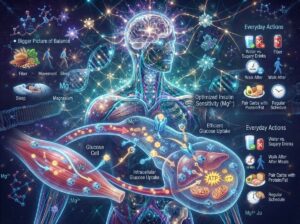
- Choose water over sugary drinks.
- Walk for ten minutes after meals to help sugar use.
- Pair carbs with protein or healthy fat for steadier energy.
- Keep a regular meal schedule.
7. Fewer Headaches and Migraines
For people prone to migraines, this mineral may reduce frequency by supporting nerve function and blood flow. Some headache clinics check intake as part of a routine review. Keeping a consistent sleep schedule also helps.
It is thought to help by calming overactive nerve signals and by supporting the tone of blood vessels. Results vary, and it is not a quick fix, but for those who are low, improvement can be noticeable over weeks. Tracking triggers is still important.
8. Improved Mood and Mental Clarity
Brain cells use magnesium to send signals clearly, and low levels have been linked to low mood. This mineral helps regulate NMDA receptors, which are involved in learning and memory. It also helps maintain the balance of other electrolytes that neurons need.
People who are low sometimes describe brain fog or trouble focusing. When levels improve, many report clearer thinking and a more stable mood. It works best alongside other basics like sleep, daylight, and social connection. No single nutrient replaces those foundations.
What Makes Levels Drop in the First Place
Modern diets are a big reason. Highly processed foods contain very little magnesium compared to whole foods. White flour, added sugars, and refined oils provide calories but not much mineral content. Even when you eat enough calories, you can still be low in micronutrients.
Stress also drains magnesium quickly, and long term stress can keep levels low. The body uses more of it during stress, and stress can also reduce appetite for mineral rich foods. Sleep loss has a similar effect.
Other factors include:
- Low intake of leafy greens, nuts, seeds, beans, and whole grains.
- Digestive conditions that reduce absorption, like celiac or long term gut issues.
- Certain medications that increase loss through urine, including some diuretics.
- High intake of soda, alcohol, and very salty processed foods.
- Intense exercise without enough recovery nutrition.
- Very low calorie diets that limit overall food variety.
Aging also matters. As we get older, we tend to eat less overall, absorb less efficiently, and take more medications that affect balance. That makes food quality even more important.
Best Food Sources That Actually Add Up
If you want to increase magnesium naturally, start with food. Food provides the mineral plus fiber, potassium, and antioxidants that work together. Supplements cannot match that mix.
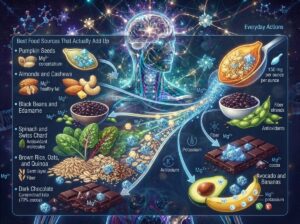
Top sources include:
- Pumpkin seeds, about 150 mg per ounce, one of the richest sources.
- Almonds and cashews, a handy snack with healthy fats and some protein.
- Black beans and edamame, great for plant protein and fiber.
- Spinach and Swiss chard, leafy greens rich in many nutrients and low in calories.
- Brown rice, oats, and quinoa, whole grains that still keep their bran.
- Dark chocolate with at least 70 percent cocoa, in small amounts as a treat.
- Avocado and bananas, which also provide potassium and creamy texture.
Cooking tips that help:
- Soak beans before cooking to improve digestibility and reduce gas.
- Lightly toast seeds to bring out flavor without deep frying in oil.
- Add greens at the end of cooking to keep more nutrients and bright color.
- Use nuts as a topping for yogurt or oatmeal instead of sugary cereals.
- Blend spinach into smoothies where you will not even taste it.
If you track food for a few days, you might be surprised. Many people get only half of what they need without realizing it. A simple app or a notebook can reveal gaps quickly.
How Much Do You Actually Need
Daily needs for magnesium depend on age and sex, but most adults need between 310 and 420 mg per day. Pregnant and breastfeeding people may need a bit more, and athletes may need more as well.
Needs can be higher if you:
- Train hard for sports or manual work and sweat heavily.
- Experience chronic stress or poor sleep for long periods.
- Have a digestive condition that limits absorption.
- Eat a diet low in whole plant foods and high in processed foods.
- Are older and eat smaller portions.
Blood tests can check levels, but they are not perfect. Most of this mineral is stored in bone and inside cells, not in blood. So a normal blood test does not always mean your tissues have enough. A diet review is often more useful than a single lab number.
Smart Ways to Supplement Without Overdoing It
Food first is always best, but many people choose a magnesium supplement to fill the gap. Quality matters, and more is not better. High doses can cause loose stools.
Different forms of magnesium absorb differently, so choosing the right one matters. The market has many options and labels can be confusing. Look at elemental amount per serving.
Many people tolerate magnesium glycinate well for sleep, while magnesium citrate is often used for regularity. Those two are among the most popular because they balance absorption and tolerance.
Here are other common forms you will see:
- Glycinate, often chosen for calm and sleep and gentle on stomach.
- Citrate, well absorbed and often used for digestion and regularity.
- Malate, sometimes suggested for energy and muscle comfort.
- L Threonate, studied for brain health and focus.
- Oxide, cheaper but less absorbed and more likely to cause loose stools.
- Chloride flakes for baths, which some people find relaxing.
Tips for safe use:
- Start low, for example 100 to 150 mg in the evening, and see how you feel over a week.
- Take it with food if your stomach is sensitive or if you notice any discomfort.
- Avoid taking very high doses at once, spread it if needed.
- Talk to your doctor if you have kidney issues or take blood pressure or diuretic medicines.
- Look for third party tested brands with clear labeling and no mega dosing.
- Keep supplements away from children.
Timing can help too. Some people prefer evening use for relaxation, while others split the dose morning and night. There is no single best time for everyone. Consistency matters more than exact timing.
Everyday Habits That Help You Keep It
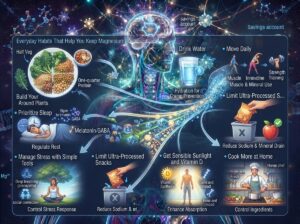
Supplements help only if your daily habits support them. Small changes make a big difference over months, not just days. Think of it as building a savings account for your health.
- Build your plate around plants. Half vegetables, one quarter whole grains, one quarter protein, plus a handful of nuts or seeds.
- Drink water regularly. Dehydration makes cramps more likely and focus harder.
- Move daily. Walking, stretching, and light strength work help muscles use minerals well.
- Prioritize sleep. Aim for a consistent bedtime and wake time, even on weekends.
- Manage stress with simple tools. Deep breathing, short walks outside, time with friends, or a quiet hobby you enjoy.
- Limit ultra processed snacks. They crowd out mineral rich foods and add extra sodium.
- Get sensible sunlight and check vitamin D, since these nutrients work together for bone and mood.
- Cook more at home. You control ingredients and keep more of the good stuff.
Final Thoughts: A Small Mineral With a Big Impact
Paying attention to magnesium is one of the simplest ways to support your whole body. From sleep to stress to bones and heart, it touches almost every system quietly in the background. You do not need a complicated plan.
Start with food. Add more greens, beans, whole grains, nuts, and seeds. Notice how you sleep, how your muscles feel after a walk, and how calm you feel in the evening. Small steps add up when you repeat them.
If you suspect a shortage, talk to your doctor or a registered dietitian. A simple diet review can show gaps and help you choose the right next step. Your body has been waiting for this support, and once you give it, you may wonder how you missed it for so long.
Signs You Are On The Right Track
- After a few weeks of better intake, people often notice:
- Falling asleep more easily and waking more refreshed in the morning.
- Fewer muscle twitches and less tension in shoulders and legs after work.
- Steadier mood and better focus during the day, especially in the afternoon.
- Smoother digestion and more regular habits.
- Better recovery after exercise and less next day soreness.
These changes are not instant. They build slowly as stores are refilled. Be patient and stay consistent. Keep your expectations realistic and track what you notice in a small journal.
A final reminder. Health is never about one nutrient alone. It is about the whole pattern. Balanced meals, daily movement, enough water, restorative sleep, and time outdoors all work together. This essential mineral is a key part of that pattern, and now that you know how important it is, you can give it the place it deserves in your daily routine.