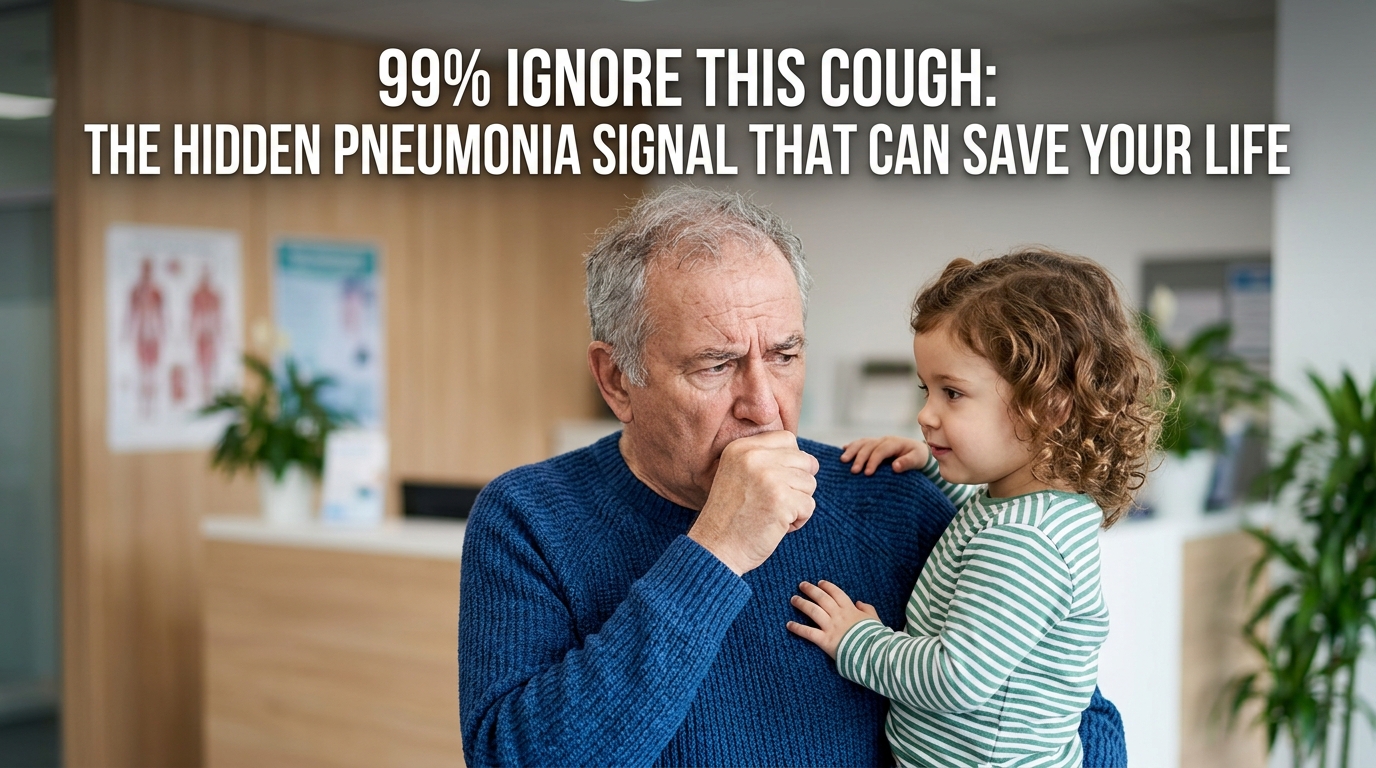
Picture this. A man wakes up with a cough, a mild fever and a chest that feels a little heavy. He sips ginger tea, skips the doctor and tells his family it is just the change in weather. Four days later, he cannot climb a single flight of stairs without stopping to catch his breath.
Stories like this are painfully common. A cough feels so ordinary that we stop listening to it. We have coughed through colds, dust, smoke and allergies, so why would this one be any different?
Sometimes it is different. Sometimes that cough is the first quiet signal of pneumonia, a lung infection that can go from mild to dangerous faster than most people expect.
This blog is a calm, practical walk through what pneumonia really is, who it hits hardest, which signs deserve your attention and what you can do today to protect yourself and the people you love. No scare tactics. Just clear facts and simple steps.
What Is Pneumonia, Really? A Plain English Explanation
Pneumonia is an infection that inflames the air sacs in one or both lungs.
Inside your lungs sit millions of tiny air sacs. Every time you breathe in, they fill with air and pass oxygen into your blood. When an infection takes hold, those sacs can fill with fluid or pus. Oxygen then struggles to get through, and your body starts to feel the shortage.
That is why you may end up coughing, tired, feverish and short of breath all at the same time.
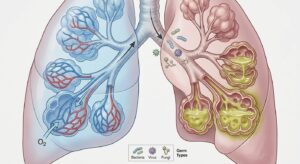
Here is the part many people miss. Pneumonia is not one disease with one cause. It is a name for lung infections triggered by different germs, and the germ involved often decides how the illness behaves and how it is treated.
The Tiny Troublemakers Behind the Infection
Three main groups of germs are responsible for most cases:
- Bacteria. A germ called pneumococcus is the best known bacterial cause in adults. These infections often hit hard and fast and usually need antibiotics.
- Viruses. The flu virus, respiratory syncytial virus (RSV) and the virus that causes COVID-19 can all reach the lungs. Viral cases are often milder, but not always.
- Fungi. These are less common and mostly trouble people with weak immune systems.
You may also have heard the phrase “walking pneumonia.” It is not an official diagnosis. It is a casual name for a mild case, where a person feels unwell but is still able to move around. Mild does not mean harmless, so it still deserves a doctor’s opinion.
How do the germs get in? Most often you breathe them in, for example from droplets when an infected person coughs or sneezes. Sometimes germs that already live in your nose and throat slip down into the lungs when your body’s defences are low. Hospital stays and breathing machines can also raise the risk.
Who Needs to Be Extra Careful?
Anyone can get pneumonia, but some people face a higher risk of becoming seriously ill:
- Babies and children under the age of two
- Adults aged 65 and above
- Smokers and people who breathe polluted air every day
- People with long term conditions such as asthma, COPD, heart disease or diabetes
- Anyone with a weak immune system, including people on chemotherapy
- People who struggle to swallow or cough properly after a stroke or major illness
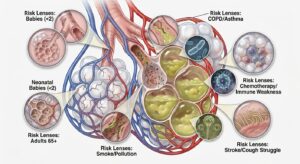
If someone in your home fits into one of these groups, a stubborn cough should never be treated casually, and an early check for pneumonia can make a real difference.
6 Warning Signs Your Lungs Are Begging You to Notice
Pneumonia does not always announce itself loudly. Watch for these six signals, especially when two or three appear together.
1. A cough that refuses to leave. It may start dry and later bring up thick phlegm that looks yellow, green or even rust coloured. A cough that lasts beyond a week, or keeps getting worse, needs attention.
2. Fever with shivering. High temperature, chills and heavy sweating often travel together. Older adults can surprise you here, because some run a lower than normal temperature instead.
3. Breathing that feels like hard work. Shortness of breath during simple tasks, like walking to the kitchen, is a loud alarm. Fast, shallow breathing counts too.
4. Chest pain that sharpens with each breath. Pain when you inhale deeply or cough is a classic sign that the lungs are irritated.
5. Exhaustion that sleep cannot fix. Deep tiredness, weakness and a lost appetite are easy to blame on stress, but together with the other signs they matter.
6. Sudden confusion. In older adults, a new state of confusion or unusual drowsiness can be the first and sometimes the only clue that something is wrong.
About That Cough Nobody Takes Seriously
Let us be honest about the headline. The exact percentage is not the point. The point is that most of us treat a cough like background noise.
The hidden signal is rarely the cough alone. It is the cough behaving in a way a normal cold cough does not.
Look out for these patterns:
- You were slowly improving, then suddenly felt worse again
- Your cough is paired with fever, chest pain or breathlessness
- You feel winded just talking or walking a short distance
- Your cough has dragged on for more than a week without easing
A usual cold peaks within a few days and then fades. When a cold seems to turn a corner in the wrong direction, that is the moment to ask whether pneumonia has joined the party.
Your body is rarely dramatic without a reason. Trust the feeling that something is off. A short visit to a doctor costs far less than a late diagnosis of pneumonia.
Cold, Flu or Something Worse? Spotting the Difference
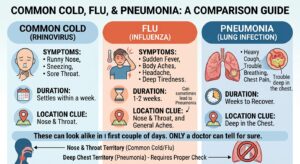
These three can look alike in the first couple of days. Here is a simple way to compare them:
- Common cold: Mostly a runny nose, sneezing and sore throat. Usually mild and settles within a week or so.
- Flu: Comes on suddenly with fever, body aches, headache and deep tiredness. It can sometimes lead to pneumonia.
- Pneumonia: Lives deeper in the chest. Expect a heavy cough, trouble breathing, chest pain and a fever that lingers.
Only a doctor can tell for sure. Still, the location gives a clue. Trouble in the nose and throat is usually cold territory. Trouble deep in the chest deserves a proper check.
Pneumonia and Little Ones: What Every Parent Should Know
Children deserve special attention because their small bodies can slide downhill quickly.
According to the World Health Organization, no other infectious disease takes more young lives worldwide than pneumonia (WHO fact sheet).
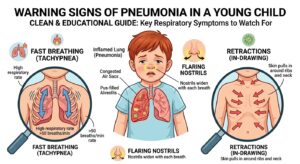
The good news is that it is both preventable and treatable. Knowing the signs is half the battle. In children, watch for:
- Fast breathing or flaring nostrils
- The skin below the ribs pulling inward with each breath
- Grunting sounds while breathing
- Refusing to feed or drink
- Fever with cough
- Unusual sleepiness or irritability
Babies may cough very little. Pneumonia in a baby can show up as poor feeding, fussiness and quick, laboured breathing.
If you notice these signs, do not wait for the next morning. Get your child checked, and never give medicines without proper advice on the right type and dose.
If You Suspect It, Do This Without Delay
See a doctor the same day if:
- A cough comes with a fever that is not settling
- You feel chest pain when you breathe or cough
- Breathing feels harder than usual
Go to an emergency department right away if:
- You are struggling to breathe or cannot speak a full sentence
- Lips, face or fingertips look blue or grey
- You or an older family member suddenly seem confused
- A baby is breathing fast, pulling in the ribs or refusing feeds
If you suspect pneumonia, do not wait for it to pass on its own.
Many families hesitate because they do not want to overreact or they worry about the cost of a visit. But a quick check is almost always easier, cheaper and safer than a hospital stay after waiting too long.
How Doctors Confirm What Is Going On
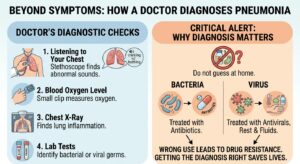
Symptoms alone cannot confirm pneumonia, so a doctor usually combines several checks:
- Listening to your chest with a stethoscope for crackling or bubbling sounds
- A small clip on your finger (a pulse oximeter) that measures oxygen in your blood
- A chest X-ray to see which part of the lung is affected
- Blood tests, and sometimes a phlegm sample to find the germ
Please resist the urge to guess at home. Buying antibiotics on your own is a risky habit. They work against bacteria, not viruses, and wrong use helps germs become resistant. Getting the diagnosis right matters because pneumonia caused by bacteria and pneumonia caused by a virus are not treated the same way.
Treatment: What Healing Actually Looks Like
The plan depends on the cause and on how sick you are.
- Bacterial infection: Your doctor will prescribe antibiotics. Finish the whole course exactly as advised, even when you start feeling better.
- Viral infection: Rest and fluids are the base of care. In some cases, such as flu, a doctor may add an antiviral medicine.
- Severe illness: Hospital care with extra oxygen, fluids and medicines through a drip may be needed.
Fever and pain relievers can make you more comfortable, but check the right medicine and dose with your doctor or pharmacist, especially for children.
One more point. Coughing is annoying, yet it helps your lungs clear out mucus. Ask your doctor before taking any cough suppressant, because stopping the cough completely is not always helpful during pneumonia.
Many people start feeling better within a week or two, and treatment of pneumonia works best when it begins early.
Home Care That Genuinely Helps
If your doctor says you can recover from pneumonia at home, these habits make a real difference:
- Rest as much as your body asks for
- Drink water, soups and warm fluids through the day
- Eat small, simple meals even if appetite is low
- Stay away from smoke, incense, dust and strong fumes
- Sleep with your head slightly raised if lying flat makes you cough more
- Cover your mouth when you cough and wash your hands often
- Keep track of your temperature and call your doctor if breathing worsens
Home remedies like honey in warm water or herbal tea may soothe a sore throat, but they cannot replace medicine. Think of them as comfort, not cure. And never give honey to babies under one year old.
Your Best Shield: Simple Ways to Lower the Risk
The encouraging truth is that many lung infections can be prevented. Pneumonia prevention is built from small daily choices.
- Vaccines. The pneumococcal vaccine, the yearly flu shot, vaccines against Hib, whooping cough and measles, and COVID-19 vaccines all help protect against infections that can reach the lungs. Ask your doctor which ones suit your age and health.
- Hand washing. Wash with soap before eating, after coughing and after being in crowded places.
- No smoking. Smoking damages the natural defences of the lungs. Quitting is one of the best gifts you can give your chest, and keeping children away from second hand smoke matters just as much.
- Breastfeeding. For babies, the WHO recommends exclusive breastfeeding for the first six months of life, which supports their natural immunity.
- Cleaner air at home. Smoke from cooking fires and heaters harms lungs, so good ventilation helps.
- Healthy basics. Balanced food, enough sleep and regular movement support your immune system.
- Chronic conditions. Keep asthma, diabetes and heart problems well controlled.
None of these steps is dramatic. Together they make your body a much harder place for germs to win.
Mistakes That Make Things Harder
Even careful people slip up. Here are the most common ones:
- Believing cold air alone causes it. Chilly weather does not infect your lungs by itself. Germs do. Winter simply keeps people indoors and close together, where germs travel easily.
- Thinking it only affects the elderly. Pneumonia can affect healthy young adults too.
- Stopping antibiotics early. Feeling better does not mean every germ is gone.
- Waiting too long. Many people reach a doctor only when breathing becomes difficult, which is later than ideal.
- Trusting home remedies to do everything. Steam, herbs and honey may comfort you, but they cannot treat an infection deep inside the lungs.
- Assuming it cannot spread. The germs that cause pneumonia can pass from person to person through coughs and sneezes.
- Rushing back to a full routine. Your body needs time, and pushing too hard can bring a setback.
Pneumonia Recovery: A Marathon, Not a Sprint
Here is something people rarely hear. Feeling better and being fully recovered are two different things. After pneumonia, it is normal for tiredness and a mild cough to hang around for a few weeks, and some people need even longer to feel like themselves again.
Be kind to your body during this stretch:
- Return to work and exercise slowly
- Take short walks and add a little each day
- Keep eating well and drinking fluids
- Attend follow up visits, since doctors sometimes advise a repeat chest X-ray for older adults or smokers
- Call your doctor if fever returns, breathing gets harder or chest pain comes back
Final Thoughts: Listen to Your Lungs Before They Shout
Your lungs work quietly for you every single second of the day. They rarely ask for anything, which is exactly why we ignore them until something goes wrong.
A cough that lingers, a fever that will not settle, a chest that hurts when you breathe: these are not small details. They are messages. Pneumonia is serious, but it is also something we know how to prevent and treat, especially when we catch it early.
So the next time you hear yourself say “it’s just a cough,” pause for a moment. Ask how long it has lasted, how you feel when you breathe and whether anything is getting worse. If the answers worry you, see a doctor.
Share this with someone who coughs and shrugs it off. It might be the nudge that protects their health, or even saves their life.
This blog is for general awareness and is not a substitute for medical advice. Always consult a qualified doctor about your own health.