Pick up your phone right now and count how many times you’ve unlocked it today. Most people lose count somewhere past thirty. That number isn’t a personal failing. It’s the quiet signature of something bigger, something most of us have started calling screen burnout without fully understanding what it means.
Screen burnout isn’t just tired eyes after a long workday. It’s a specific, measurable state where your attention, your patience, and your ability to focus on slow, boring, important things have all been worn down by hours of fast, bright, constantly refreshing content. It creeps in slowly, then all at once, until scrolling feels less like a choice and more like a reflex.
This post isn’t here to guilt you into throwing your phone in a lake. It’s here to walk you through seven uncomfortable, evidence backed truths about what actually happens inside your brain when screen time crosses the line from useful to harmful. Once you see the mechanism clearly, screen burnout stops feeling like a mysterious mood and starts looking like exactly what it is: a predictable response to a very specific kind of overstimulation.

Most of us assume screens are neutral, just tools we pick up and put down. But the way modern apps are built means every scroll, swipe, and notification is engineered to keep you hooked. Understanding that design isn’t about blame. It’s about finally recognizing why screen burnout hits so many people so hard, and why willpower alone rarely fixes it.
It also helps to understand that screen burnout isn’t a single symptom. It’s a cluster of overlapping effects, mental, physical, and behavioral, that build on each other until the combination feels like a permanent fog rather than a temporary rough patch. The seven truths below break that cluster apart so you can actually see what’s driving it.
1. Your Attention Span Is Shrinking, And It’s Not In Your Head
There’s a reason a two hour movie feels harder to sit through than it used to, while a stream of fifteen second videos feels effortless. Fast paced, constantly switching content trains your brain to expect novelty every few seconds. Slower tasks, like reading a report or listening through a full meeting, start to feel almost physically uncomfortable by comparison.
This isn’t a character flaw. It’s a trained response. Researchers who study media and attention describe this as a mismatch between how our brains adapt to stimulation and the pace at which digital content is designed to deliver it.
Common signs of this shrinking attention window include:
- Feeling restless a few minutes into a long email or document
- Reaching for your phone during any small pause, a red light, an ad break, a quiet moment
- Struggling to finish a book chapter without checking notifications
That restlessness is one of the earliest, most common signals of screen burnout. It rarely announces itself loudly. It just quietly makes everything slower and less interesting than your phone.

It’s worth noticing how this plays out at work or in school. A task that should take twenty focused minutes stretches into an hour because attention keeps splintering toward a buzzing phone on the desk. That stretched out, inefficient version of your day is often screen burnout operating in the background, not a sudden drop in intelligence or effort.
2. Your Brain’s Reward System Is Being Rewired
Every notification, like, and autoplay video is built around the same neurological trigger: a small, unpredictable hit of dopamine. Unpredictability is the key word. Slot machines work the same way, and so does your notification bar.
Over time, frequent small dopamine bursts train your brain to crave that stimulation more often. Ordinary, slower sources of satisfaction, a walk outside, a face to face conversation, finishing a task without checking your phone, start to feel flat by comparison.
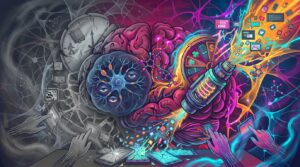
This is one of the clearest drivers of screen burnout. Your brain isn’t broken. It has simply adapted to a reward schedule that real life, quite reasonably, cannot match.
- Real conversations feel slower and less stimulating than they used to
- Boredom becomes almost unbearable within seconds
- The urge to check your phone shows up even when nothing is actually happening
None of this means you’re addicted in some dramatic sense. It means your reward system has recalibrated around a pace of stimulation that ordinary life was never designed to provide.
That recalibration is precisely why screen burnout can feel so hard to reason your way out of. You can know, intellectually, that scrolling isn’t making you happy, and still feel the pull anyway, because the craving lives in the reward circuitry, not in your logic.
3. Screen Burnout Is Quietly Stealing Your Sleep
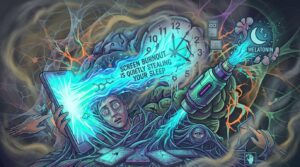
Screens emit blue light, a wavelength that suppresses melatonin, the hormone responsible for making you feel sleepy. Scroll in bed for even thirty minutes and you’re actively telling your brain it isn’t nighttime yet, regardless of what the clock says.
The result is a familiar, frustrating cycle. You stay up later than planned, sleep less than you need, wake up groggy, and reach for your phone first thing to compensate, which only feeds the same pattern the next night.
This sleep disruption compounds screen burnout in a very direct way. A tired brain has far less capacity to resist the pull of easy, fast, dopamine rich content, which means the very thing keeping you up is also the thing you reach for hardest the next day.
Common patterns worth noticing:
- Scrolling in bed “for just a few minutes” that turns into an hour
- Waking up feeling unrested despite technically getting enough hours
- Reaching for your phone within minutes of opening your eyes
4. Digital Eye Strain Is Real, And It’s More Than Tired Eyes
There’s a physical layer to screen burnout that often gets overlooked entirely. Staring at a screen for hours changes how often you blink, which dries out your eyes, and forces your eye muscles to hold a fixed focusing distance far longer than they’re built for.
According to the American Optometric Association, this cluster of symptoms is formally known as digital eye strain, or computer vision syndrome, and it typically develops after as little as two hours of continuous screen exposure (American Optometric Association, via EyeWiki).
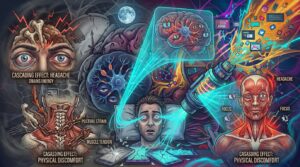
Symptoms commonly include:
- Dry, itchy, or watery eyes
- Blurred or double vision by late afternoon
- Headaches that seem to start right behind the eyes
- Neck and shoulder soreness from poor screen posture
These physical symptoms rarely stay isolated. Eye strain headaches make focus harder, poor posture drains energy, and general physical discomfort adds another layer to the mental fog that defines screen burnout for so many people.
5. Your Memory Is Taking a Quiet Hit
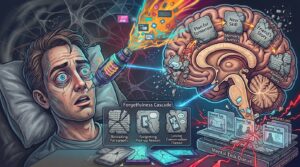
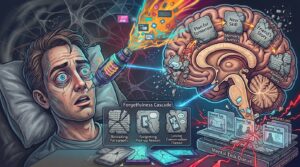
Deep focus, the kind required to properly encode new information into memory, needs sustained, uninterrupted attention. Constant screen switching directly undermines that process.
Every time a notification pulls your attention away mid task, your brain has to disengage, then re-engage, then rebuild the mental context it just lost. Do that dozens of times a day, and information simply doesn’t get stored as effectively as it would with fewer interruptions.
This is part of why screen burnout so often shows up as forgetfulness that has nothing to do with actual memory problems. You didn’t forget the plan for tomorrow because your memory failed. You forgot it because you never properly encoded it in the first place, your attention was scattered across four tabs and a notification when you first heard it.
- Losing track of conversations shortly after they happen
- Rereading the same paragraph multiple times without retaining it
- Forgetting why you picked up your phone in the first place
6. It’s Changing How You Handle Boredom, And Not For the Better
Boredom used to be a normal, even useful, part of daily life. It gave the brain space to wander, process, and occasionally solve problems in the background. Constant screen access has largely eliminated that space.
The moment boredom appears, most people now reach for a phone before the feeling even has time to register. Over months and years, this erodes your tolerance for stillness almost entirely.
This intolerance for boredom is a subtle but significant symptom of screen burnout. It shows up as:
- Feeling anxious or antsy during any unstructured downtime
- An automatic reach for a device during elevators, waiting rooms, or bathroom breaks
- Difficulty simply sitting with your own thoughts for more than a minute or two
Losing the ability to be bored isn’t a small thing. Boredom is often where creativity, reflection, and genuine rest actually happen. Screen burnout quietly closes that door, and once it’s closed, people often don’t notice it’s missing until they try to sit quietly and realize how uncomfortable that used to feel effortless.
7. Chronic Screen Overload May Be Reshaping Brain Structure
This is the truth that tends to land hardest. Some research on heavy, sustained screen use has pointed to measurable changes in brain regions tied to attention, impulse control, and emotional regulation, including reductions in gray matter density in areas associated with focus and self control.
That doesn’t mean casual phone use is rewiring your brain overnight. It means that years of chronic, poorly managed screen exposure appear to leave a physical fingerprint, not just a behavioral one.
In other words, screen burnout isn’t purely psychological. There’s growing evidence it has a structural dimension too, which is exactly why “just put the phone down for an hour” often isn’t enough to reverse it once the pattern has been running for years.

This doesn’t mean the damage is permanent or unfixable. The brain remains adaptable well into adulthood, and reduced, more intentional screen habits over months can meaningfully shift these patterns back in a healthier direction. But it does mean expecting an overnight fix is unrealistic, and treating gradual, sustained change as the real goal serves you far better than a single dramatic detox weekend.
Bonus Truth: Notifications Are Designed to Interrupt You
It’s worth pausing on notifications specifically, since they’re the single biggest daily driver of screen burnout for most people. Every app on your phone is competing for the same limited resource, your attention, and notifications are the cheapest, most reliable way to win that competition.
A single buzz can pull you out of deep focus in under a second, but getting back to that same level of concentration afterward takes far longer. Some attention research suggests it can take upward of twenty minutes to fully regain focus after a meaningful interruption. Multiply that by the dozens of notifications most people receive daily, and it becomes obvious why sustained concentration feels almost impossible for so many people by mid afternoon.
This is one of the most fixable contributors to screen burnout, because unlike deeper neurological patterns, notification settings are something you can change in under five minutes:
- Turn off non essential app notifications entirely
- Batch remaining alerts into two or three check in times per day
- Use “do not disturb” during any task that genuinely requires focus
Small as it sounds, this single change often produces the fastest noticeable improvement in daily focus.
Who’s Most Exposed to Screen Burnout
Screen burnout doesn’t affect everyone equally. Certain habits and roles make it far more likely.
- Remote workers, whose entire job lives inside a screen from morning to night.
- Students, who study, socialize, and unwind all on the same devices.
- Heavy social media users, especially those drawn to short form video content.
- Anyone with poor sleep habits, since tiredness dramatically weakens resistance to compulsive scrolling.
- People without any offline hobbies, leaving screens as the default option for every spare minute.
If several of these describe your week, the mental fatigue you’ve been chalking up to stress or a busy schedule may actually be screen burnout wearing a more socially acceptable name.
It’s also worth noting that severity varies a lot within these groups. A remote worker who takes regular walks and closes their laptop firmly at 6pm experiences this very differently from one who answers messages in bed until midnight. The exposure matters, but so does the structure, or lack of it, around that exposure.
How to Actually Reduce Screen Burnout
None of this requires deleting every app or buying a flip phone. Small, consistent changes tend to work far better than dramatic, short lived detoxes.
- Use the 20-20-20 rule. Every 20 minutes, look at something 20 feet away for 20 seconds to rest your eyes and mind.
- Set phone free zones. Keep devices out of the bedroom and away from the dinner table, no exceptions.
- Batch your notifications. Check messages and social apps at set times instead of reacting to every buzz.
- Reintroduce boredom on purpose. Sit through a red light or a waiting room without reaching for your phone.
- Protect one screen free hour daily. Ideally right after waking and right before bed, when the effects hit hardest.
None of these steps will feel dramatic on day one. Screen burnout built up slowly, over months or years of habit, and it eases the same way, through small, repeated choices rather than one dramatic reset.
Give any of these changes at least two full weeks before deciding whether they’re working. Most people try one screen free evening, feel a little bored and restless, and quit right when the discomfort was actually a sign the change was starting to work. Rebuilding tolerance for stillness takes longer than a single night, but it does happen.
Signs Your Fatigue Is Actually Screen Burnout
Not every foggy, unfocused day traces back to your phone, but a few patterns are worth watching for. If your mental fatigue:
- Feels worse after long stretches of scrolling or screen work
- Improves noticeably after a screen free evening or weekend
- Comes with eye strain, headaches, or neck and shoulder tension
- Peaks late at night or first thing after waking
then screen burnout is very likely playing a central role, even if other factors are contributing as well.
The Real Takeaway
Screen burnout isn’t a personal weakness, a lack of discipline, or proof that you’re “too addicted to your phone.” It’s a predictable outcome of spending hours a day inside systems specifically engineered to capture and hold your attention.
You can keep pushing through it, plenty of people do for years. But the seven truths above make one thing clear: the fatigue isn’t random, and it isn’t permanent. It’s a direct, traceable consequence of how your brain has adapted to constant digital stimulation, and it responds, often faster than expected, once you start treating screen time as something to manage rather than something to endlessly absorb.
Your brain wasn’t built to process this much fast moving information all day, every day. It’s not broken. It’s just overloaded.
If there’s one thing worth remembering from everything above, it’s this: screen burnout is feedback, not failure. It’s your brain’s way of saying the pace has been too fast for too long. Slow it down consistently, and the fog lifts on its own, no dramatic detox or expensive app blocker required. The fix was never complicated. It was just inconvenient in a world built to keep your eyes on a screen, which is exactly why so many people let screen burnout become their baseline instead of an occasional bad week.
The next notification can wait a few seconds. Your attention span will thank you.
None of this means treating your phone as the enemy. It’s a genuinely useful tool, for work, for connection, for navigating a busy life. The goal isn’t to eliminate screens. It’s to notice when their pace has quietly started dictating your own, and to hand that pace back to yourself, one small boundary at a time.
Start with one change this week, not all seven. Pick the one that felt most uncomfortable to read, since discomfort is usually a decent signal of where the actual habit lives, and give it a real, honest two week trial before deciding whether it’s working.