You sit down to work. You open your laptop. And then… nothing. Your thoughts feel like they’re wading through syrup. You reread the same email three times and still can’t remember what it said.
If this sounds familiar, you’re not lazy, and you’re definitely not alone. What you’re experiencing has a name: brain fog.
Brain fog isn’t officially a medical diagnosis, but it’s real, it’s common, and it’s frustrating. Millions of people deal with brain fog every single day without realizing there are actual, fixable reasons behind it.
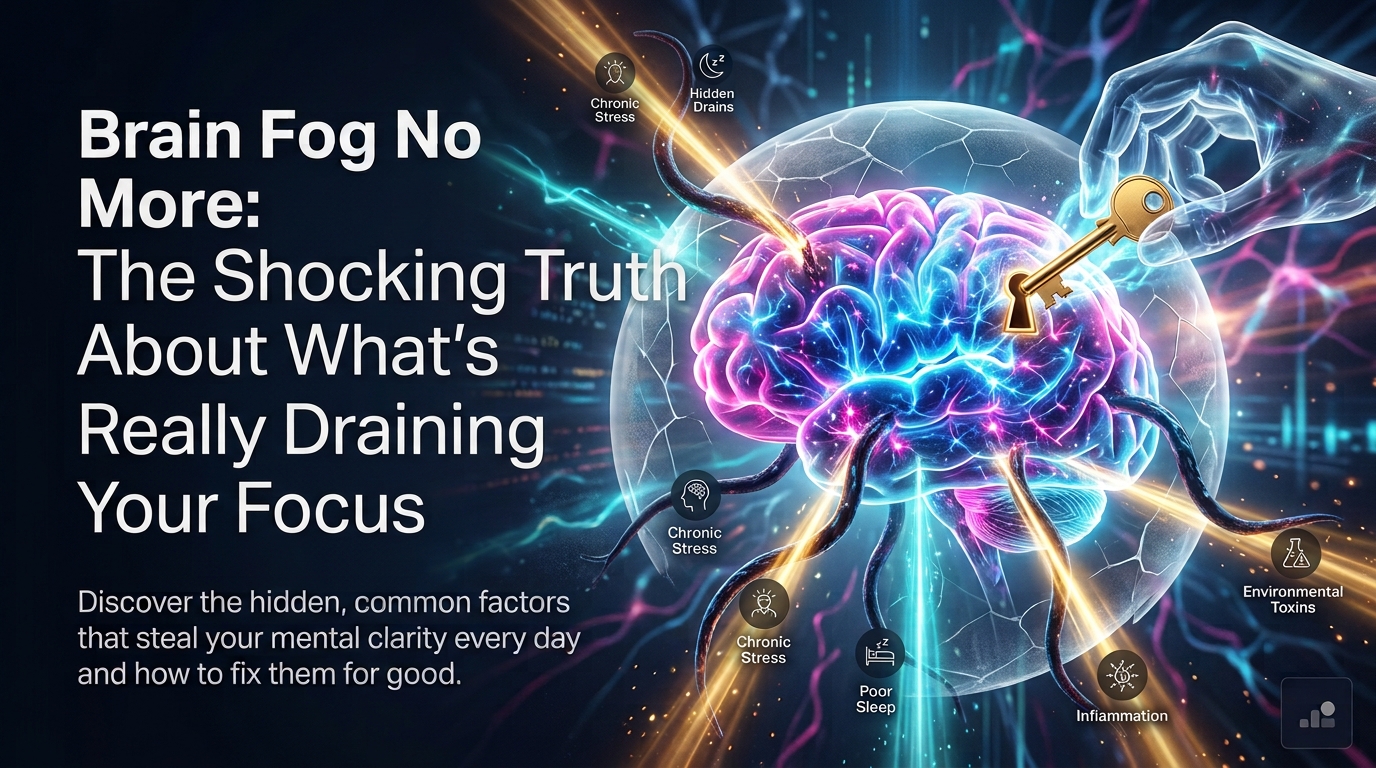
In this post, we’re pulling back the curtain on brain fog. What causes it, why it’s more common now than ever, and what you can actually do to clear it.
What Exactly Is Brain Fog?
Brain fog is the umbrella term people use to describe a cluster of frustrating mental symptoms. It’s not one single thing. It’s a pattern.
People dealing with brain fog often describe:
- Difficulty concentrating on simple tasks
- Forgetting things almost immediately after learning them
- Feeling mentally slow or “cloudy”
- Struggling to find the right words mid-sentence
- Losing track of conversations
- Mental fatigue that doesn’t go away with rest
It can feel like your brain took a vacation without telling you. One minute you’re functioning normally, and the next you’re staring blankly at a screen, unsure of what you were even doing.
The tricky part about brain fog is that it doesn’t show up on standard medical tests. You can’t get a blood test that says “confirmed: brain fog.” That’s part of why so many people just accept it as normal, when it really isn’t something you have to live with.
Why Brain Fog Has Become So Common
Brain fog isn’t new, but it’s become dramatically more common in recent years. A few reasons stand out.
Modern life is louder, faster, and more demanding on the brain than ever before. Constant notifications, endless scrolling, back-to-back meetings, and information overload all compete for the same limited mental resources. Your brain wasn’t designed to process this much input all day, every day.
On top of that, sleep quality has quietly declined for a large portion of the population. Stress levels are higher. Diets have shifted toward processed, sugar-heavy foods. All of these factors combine to create the perfect environment for brain fog to thrive.
Let’s break down the biggest individual causes one at a time.
Cause 1: Poor Sleep Is Enemy Number One
If there’s one factor that shows up in nearly every conversation about brain fog, it’s sleep.
Sleep isn’t just downtime for your body. It’s active repair time for your brain. During deep sleep stages, your brain clears out metabolic waste, consolidates memories, and resets the systems responsible for attention and focus.
When sleep gets cut short or becomes low quality, none of that repair work happens properly. The result is brain fog the next day, and often for several days after, if the sleep debt keeps building.
According to Yale Medicine neurologist Dr. Carolyn Fredericks, sleep deprivation can cause parts of the brain to shift into sleep-like rhythms even while a person is technically still awake, which disrupts how well different brain regions coordinate with each other (Business Insider).
That single insight explains a lot. Your brain isn’t fully “on” when you’re sleep deprived, even if your eyes are open and you’re technically functioning.

Signs your sleep might be fueling your brain fog:
- You need caffeine just to feel human in the morning
- You wake up feeling unrested even after 7 to 8 hours
- Your focus crashes hard by mid-afternoon
- You struggle to fall or stay asleep
Even one night of poor sleep can noticeably reduce attention, working memory, and reaction time. Chronic sleep loss makes brain fog a near-permanent houseguest.
Cause 2: Chronic Stress Keeps Your Brain on High Alert
Stress isn’t just an emotional experience. It’s a biological one, and it hits your brain hard.
When you’re stressed, your body releases cortisol, a hormone designed to help you respond to short-term threats. The problem is that modern stress rarely goes away quickly. Work deadlines, financial pressure, and constant multitasking keep cortisol elevated for far longer than your brain was built to handle.
Chronically elevated cortisol interferes with memory formation and makes it harder to concentrate. This is one of the most overlooked contributors to brain fog, especially for people juggling demanding jobs or personal responsibilities.
Common stress-related brain fog symptoms include:
- Racing thoughts that make it hard to focus on one task
- Feeling mentally “scattered” throughout the day
- Forgetting small details, like where you put your keys
- Struggling to make decisions, even simple ones
Managing stress isn’t just good for your mood. It’s directly tied to clearing brain fog and protecting long-term cognitive health.
Cause 3: Your Diet Might Be Quietly Sabotaging You
What you eat has a bigger impact on brain fog than most people realize.
Your brain is an energy-hungry organ. It relies on steady blood sugar levels and key nutrients to function properly. Diets high in refined sugar and processed foods can cause blood sugar spikes followed by crashes, and those crashes often show up as brain fog, irritability, and fatigue.
Certain nutrient deficiencies are also strongly linked to brain fog, including:
- Low vitamin B12, common in people who eat little to no animal products
- Iron deficiency, which reduces oxygen flow to the brain
- Omega-3 fatty acid deficiency, since your brain is largely made of fat
- Dehydration, which can impair concentration surprisingly quickly

Even mild dehydration has been shown to affect mood and cognitive performance. Something as simple as not drinking enough water throughout the day could be a hidden driver of your brain fog.
Cause 4: Hormonal Changes Play a Bigger Role Than You Think
Hormones and brain fog are deeply connected, especially for women.
During perimenopause and menopause, declining estrogen levels are commonly linked to brain fog, memory lapses, and difficulty concentrating. Pregnancy and postpartum periods can trigger similar effects due to major hormonal shifts.
Thyroid imbalances are another major, often missed cause of brain fog. Both an underactive and overactive thyroid can lead to noticeable changes in mental clarity, energy, and focus.
If your brain fog seems to come in waves tied to your cycle, pregnancy, or a major life stage, hormones are worth investigating with a healthcare provider.
Cause 5: Too Much Screen Time and Mental Overload
Here’s an uncomfortable truth. The device in your hand right now might be a major contributor to your brain fog.
Constant notifications, multitasking between apps, and nonstop information intake keep your brain in a state of partial attention almost all day. This is sometimes called “continuous partial attention,” and it’s exhausting in ways that aren’t always obvious.
Your brain wasn’t designed to switch tasks hundreds of times a day. Every switch has a cost, and that cost adds up to mental fatigue and brain fog by the end of the day.

Simple ways to reduce screen-related brain fog:
- Turn off nonessential notifications
- Set specific times to check email and social media
- Take short screen breaks every hour
- Avoid screens for at least 30 minutes before bed
Giving your brain fewer things to juggle at once can dramatically reduce the mental static that leads to brain fog.
How to Actually Start Clearing Brain Fog
Understanding the causes is only half the battle. Here’s what actually helps when it comes to fighting brain fog day to day.
Prioritize consistent, quality sleep. Aim for 7 to 9 hours, and try to go to bed and wake up around the same time daily. Consistency matters just as much as total hours.
Manage stress proactively, not reactively. Simple tools like deep breathing, short walks, or even five minutes of quiet can lower cortisol and reduce brain fog symptoms over time.
Eat to stabilize blood sugar. Focus on protein, healthy fats, and fiber-rich meals instead of quick sugar hits that lead to crashes.
Stay hydrated throughout the day. Keep water nearby and sip consistently rather than waiting until you’re already thirsty.
Move your body regularly. Physical activity increases blood flow to the brain and has been shown to improve focus and reduce brain fog, even short walks count.
Limit multitasking. Focus on one task at a time when possible. Your brain performs better with single-tasking than constant switching.
None of these solutions require expensive products or drastic life changes. They’re small, repeatable habits that add up to real improvement in brain fog over time.
When Brain Fog Might Mean Something More
In most cases, brain fog is tied to lifestyle factors like sleep, stress, diet, and screen habits. But persistent, severe brain fog that doesn’t improve with lifestyle changes deserves a conversation with a doctor.
Brain fog can sometimes be linked to underlying conditions such as:
- Thyroid disorders
- Vitamin deficiencies
- Depression or anxiety
- Chronic fatigue syndrome
- Long-term effects following viral infections
If your brain fog is severe, sudden, or paired with other concerning symptoms, don’t just push through it. Getting evaluated can rule out underlying issues and point you toward the right treatment.
Final Thoughts
Brain fog can feel isolating, like you’re the only one struggling to keep up while everyone else seems sharp and focused. The truth is, brain fog is incredibly common, and most of the time, it’s tied to fixable, everyday habits.
Better sleep, lower stress, smarter eating, proper hydration, and less screen overload can all work together to lift the fog and bring your focus back.
You don’t have to accept brain fog as your new normal. Small, consistent changes really can clear the mental clutter and help you think clearly again.
Start with just one change from this list today. Your focus, and your future self, will thank you.